Trump, Modi’s post-call statements reveal a noticeable gap in tone on Russian oil, other trade details, says Chinese expert
By Published: Feb 03, 2026 10:38 AM

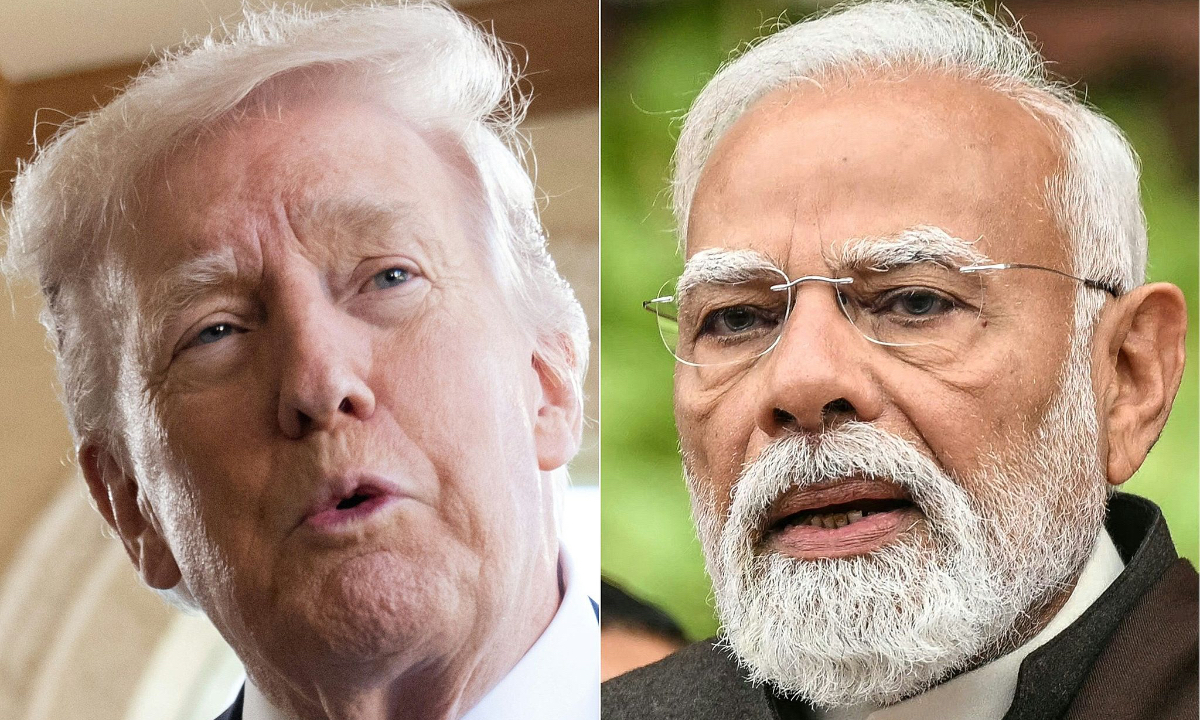
US President Donald Trump and India's Prime Minister Narendra Modi. Photo: VCG
In a post on social media, Modi wrote that he was “delighted” by the tariff reduction but was spare on details, including whether his country would stop buying Russian oil as Trump had claimed.
“When two large economies and the world’s largest democracies work together, it benefits our people and unlocks immense opportunities for mutually beneficial cooperation,” Modi wrote.
Modi also didn’t mention what Trump said India is “committed to ‘BUY AMERICAN,’ at a much higher level, in addition to over $500 BILLION DOLLARS of US Energy, Technology, Agricultural, Coal, and many other products,” and that India will “move forward to reduce their Tariffs and Non Tariff Barriers against the United States, to ZERO.”
There was a noticeable gap in tone between the statements issued by the US and Indian leaders following their phone call, said Qian Feng, director of the research department at Tsinghua University’s National Strategy Institute. He noted that it was not the first time the US president had claimed that India would stop purchasing Russian oil, and that such details could only be confirmed once official documents are released.
US, India ties soured since Trump has for months been calling on India to cease purchasing Russian oil, citing India's continued purchases of cheap Russian oil in escalating his trade war. In August last year, Trump announced a 25 percent tariff on India as a penalty for importing Russian oil and gas, building on a previously announced 25 percent tariff rate.
In October last year, Trump said Indian Prime Minister Narendra Modi had “assured me today that they (India) will not be buying oil from Russia,” which is subject to US sanctions, describing it as a “big step,” according to CNN.
But later India’s foreign ministry spokesperson Randhir Jaiswal told reporters he was “not aware of any conversation” between Trump and Modi, or any assurance from the Indian leader that he would stop purchasing Russian oil.
In January this year, Trump again acknowledged Modi’s assurances last fall that the South Asian nation would draw down on the procurement of Russian oil, and Trump said, “He wanted to make me happy, basically. Modi’s a very good man, he’s a good guy.”
However, he threatened, “They do trade, and we could raise tariffs on them very quickly.”
The Times of India has linked the US-India “deal” with India’s trade deal with the EU, saying that “the deal comes days after India and the EU announced what both sides called the 'mother of all' trade deals. While European Union is India's largest trading partner as an economic bloc, US continues to be the single largest trading partner.”
After Trump and Modi’s call on Monday, some India netizens also questioned the fairness of their agreement. “Kindly quote in return India will not charge any tariff from America also. 0 tariff on American but 18% from them on us. What kind of foreign policy is this?” wrote Yatin Bahasin, a X user.
Some international media have expressed skepticism about the likelihood that India will stop buying Russian oil.
CNN pointed out in a report that Indian government officials have defended purchasing Russian oil previously, calling it essential to the country’s energy security. India is the world’s third-largest consumer of oil, and Russia is a close-by seller. India relies on its crude to support its fast-growing economy, fueled by the world’s largest population.
And Russian oil has traded at a significant discount – roughly $16 a barrel – to OPEC or US crude, making it hard for India to quit, CNN quoted Robert Yawger at Mizuho Securities as saying. Even after this agreement with the United States, Yawger said he expected India may flout sanctions and purchase Russian oil, as it has throughout the past several years.
Trump’s remarks suggesting that India would stop purchasing Russian oil need official confirmation to substantiate, expert said. Russia and India share a long-standing and relatively stable relationship, making it unrealistic for India to abruptly halt such imports in the short term, said Qian, noting that a partial reduction, rather than a complete cutoff, is likely far more consistent with practical considerations.
RELATED ARTICLES