Exclusive: US ‘Confidence Gap’ between top and bottom tiers widening, American economist Peter Atwater warns
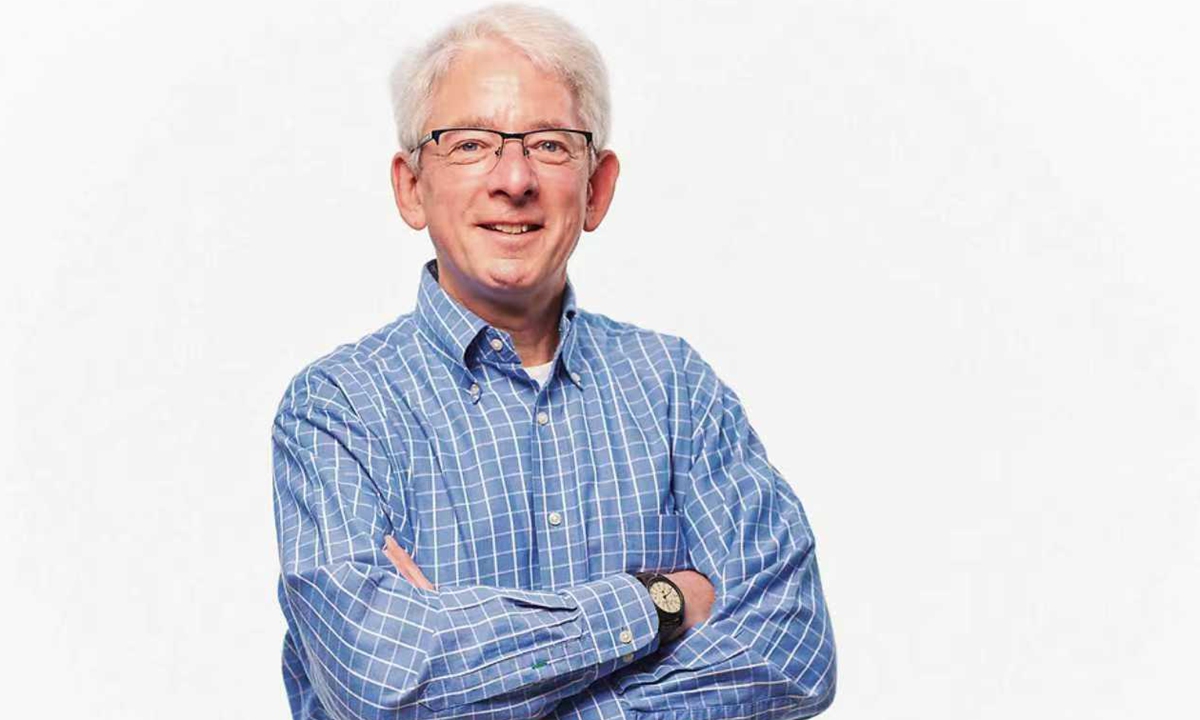
Peter Atwater: Courtesy of Peter Atwater
Editor's Note:
Wealth inequality and the ''K-shaped'' economy have reached unprecedented levels, data shows. This trend, which has dominated since 2025 and persisted into 2026, has seen economic pressure mount for families like a bitter, biting wind. Media reports, such as Fortune and CNN, describe a US where "the rich get richer and the poor get poorer." Economist Peter Atwater, who coined the term K-shaped economy, defines it as a post-pandemic recovery where paths diverge sharply: Some sectors soar while others stagnate, tracing a K shape. In his new book The Confidence Map: Charting a Path from Chaos to Clarity and an interview with the Global Times (GT) reporter Yang Shasha, Atwater points to widening divides in voter sentiment, airline seating, and culture as economic warning signs. He warns that this deepening "confidence gap" between economic tiers threatens America's future.
When Taylor Swift was defeated
GT: Since you first proposed and promoted the concept of the "K-shaped economy" in 2020, has the "K-shaped divergence" in the US economy become more pronounced or has it slowed down? What have been the respective changes in the assets of bottom- and top-tier US households over the past five years?
Peter Atwater: Those at the bottom of the US economy tend not own assets beyond their cars. They rent their homes, and because of their monthly wages barely cover their expenses. They have not had the opportunity to save. Only about half of Americans have a retirement plan at work.
On the other hand, those at the top own their own home and many their own businesses, too. They have wealth that has grown substantially thanks to the rising stock market and rising home prices. This is especially true for corporate leaders who benefit from stock options and stock grants as well as tech entrepreneurs whose businesses have benefitted from the extraordinary boom in AI-related shares.
The net result is that while those at the bottom have fallen further and further behind, those at the top have seen their wealth skyrocket.
GT: How did you come to notice and promote the concept of "K-shaped economy"?
Peter Atwater: In March 2020, when I first wrote about what is now the "K-Shaped Economy", the consequences of COVID were just unfolding. My first column on the topic focused not on the economic divide, but the divide in confidence that was all but immediate as white-collar workers pivoted to working from home, while blue collar workers, like nurses, truck drivers, and supermarket workers, continued to face the worst of the pandemic. Those at the top immediately felt more certainty and control in their lives, while those at bottom felt more and more uncertain and powerless.
I believed that, in time, this "confidence divide" would show up in the economy, so as other economists began to forecast "U" and "V" shaped recoveries from the pandemic, I foresaw a "K" - where the rebound in confidence among those at the top would lead to significant growth in the economy and the drop in confidence at the bottom would result in weak economic growth.
GT: In your book, you mentioned that in 2020, American singer Billie Eilish — known for her "dark" style — swept the Grammy Awards, defeating pop singer Taylor Swift. You argued that this was a significant reflection of damaged consumer confidence at the time and that market anxiety had already begun before the COVID-19 pandemic. In recent years, what signals have you observed in society that could indicate whether consumer confidence is improving or worsening?
Peter Atwater: Today, for example, there are many signs in American politics that reflect falling confidence: from voting out incumbents to favoring more extreme candidates (on both the left and the right) to favoring candidates with a preference for nationalism/isolation.
In music, our songs are becoming sadder, too. There is also a cultural want for nostalgia, which is something we crave when confidence is low.
At the same time, those at the top, where confidence is especially high, now crave abstract, futuristic technology, like AI, and are eager for space travel. All of those are common desires near peaks in confidence.
What is so unusual about this moment in American history is that the divide in confidence is so wide that at times it seems like the preferences of those at the top are all but in opposition to those at the bottom.
America divides seen from cabin seat
GT: The Federal Reserve's policies seem to primarily target the upper half of the "K-shaped" economy (such as financial markets), with limited support for the lower half (such as real wages and financing for small and medium-sized enterprises). Does this expose the failure of traditional macroeconomic tools in addressing structural cracks? Does the current US still have the consensus and ability to reverse the "K-type"?
Peter Atwater: Both fiscal and monetary policymaking in the US have emphasized "trickle down" initiatives, where efforts have been taken to boost the confidence of those at the top, in industry and in the financial system, with the expectation that the benefits will ultimately flow through to those at the bottom.
Recent economic experience has challenged that expectation, especially in an environment where investments in technological innovation have enabled labor reductions.
Today, while we are seeing a broad range of initiative focused on addressing the affordability issues facing those at the bottom, there is no clear consensus on what can or should be done about the divide.
GT: What direction will this "K-shaped economy" lead the US economy? What are the underlying reasons for the popularity of this term?
Peter Atwater: What we see are the airlines configuring their planes with record-large premium seating sections (first class, business class, and premium economy). Some of these tickets can cost more than 10 times the cost of an economy ticket. The financial result for the airlines is that they now have an enormous need to fill the front of the plane. Without premium consumers, their business model doesn't work.
I believe the recent widespread interest in the term the "K-Shaped Economy" reflects two things. First, it is hard not to notice the extraordinary abundance those at the top now experience versus the scarcity of those at the bottom. One need only board an airplane to see rows and rows of opulent premier seating in contrast to the tight quarters in the back in economy.
Second, the surge in interest correlates with a significant drop in consumer confidence, especially among those at the bottom. Meanwhile the confidence of those at the top remains high (likely as a consequence of financial markets near their all-time highs.) That we've also seen a spike in the term "affordability" fits the moment, too.
GT: Will the flourishing development of AI reverse the "K-shaped" divergence in the US? In your opinion, will AI bring more benefits to certain people, whether in employment or other markets? What is your view on Time magazine selecting eight "Architects of AI" as its 2025 Person of the Year?
Peter Atwater: Currently, many believe that AI will exacerbate the divide because it will replace low wage workers. I don't have an opinion. With respect to the Time magazine selection, magazine features such as this often mark the peaks in enthusiasm for popular cultural trends. Money manager, Paul McCrae Montgomery, for example, believed that they serve as useful contrarian indicators. If that is the case here, we should soon see a substantial decline not only in the enthusiasm for AI but also in the valuation of companies in the sector.
GT: If the "K-type economy" of the US continues or even deteriorates, what "tipping points" events should its major trading partners and global financial markets be prepared for?
Peter Atwater: With so much of American consumption concentrated among those atop the K, suppliers need to be especially mindful of the consequences of falling confidence among the elite.
Suppliers would also be wise to appreciate that falling confidence naturally fuels isolationist tendencies and a demand for greater, more localized resilience. Both efforts are inherently inflationary, too, as businesses trade global efficiency for national redundancy.
GT: Some Chinese readers on the Chinese book review platform sharing their reading reflections have mentioned that the message you aim to convey in your book is similar to Warren Buffett's philosophy—"be fearful when others are greedy, and greedy when others are fearful." How can ordinary people cultivate this kind of confidence in investment? What advice would you give to average American families living in the lower half of the "K-shape"?
Peter Atwater: What Warren Buffett, and I hope readers of my book, learned is that moments of extreme uncertainty and powerlessness - panic - are, objectively, moments of extraordinary opportunity. We make the most money when we invest near the bottom rather than near the top of the market.
This is why I encourage investors to keep track of the certain and control other investors feel - to watch them almost like they are a science experiment. Do their behaviors suggest they feel too confident, in which case you should consider selling, or do they feel hopeless, in which case you should consider buying.
The most important aspect of the K-Shaped Economy is not its economic impact; it is its impact on confidence. Today, in America we have a small number of individuals who feel invulnerable amid a growing sea of despair.
What is underappreciated is that the preferences of those without confidence aren't just different from those at the top; they run in opposition.
With the two ends of the economic spectrum wanting different things, there is now an open question as to which end will prevail and ultimately set the American agenda going forward.
RELATED ARTICLES