Multiple US companies report earnings, driven by robust Chinese market performance
Stability of nation’s economy, policies provide strong support: expert
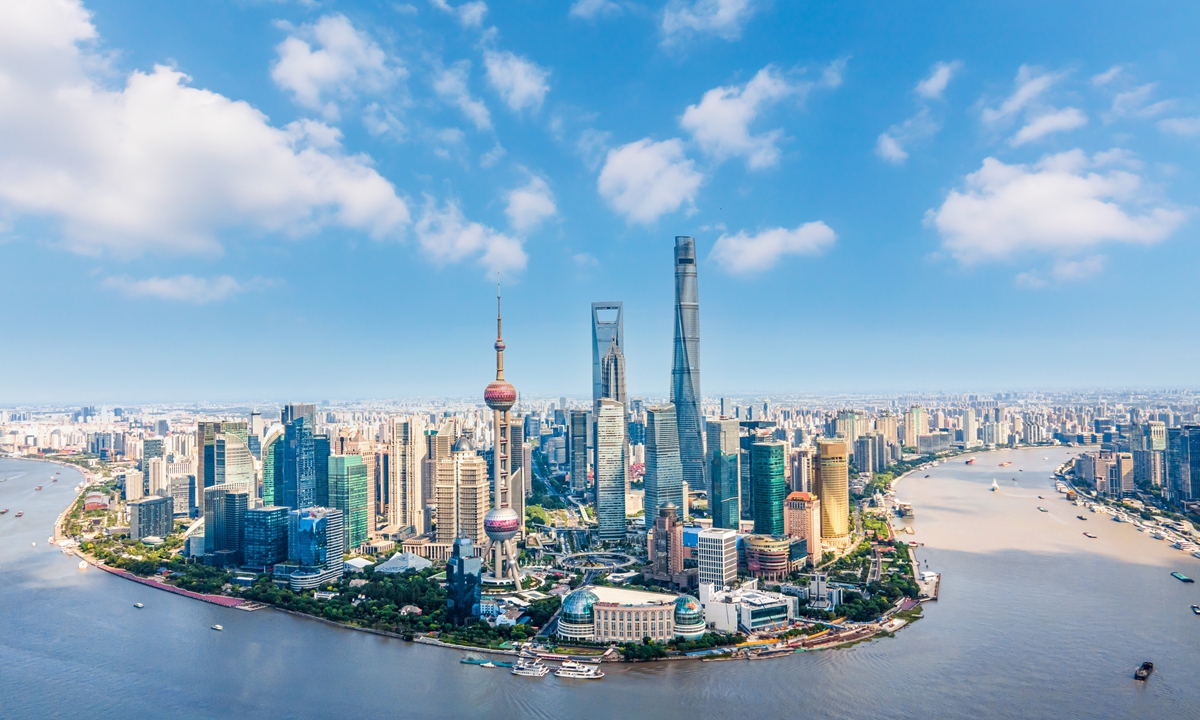
A view of the Lujiazui area in Shanghai Photo: VCG
Several US companies, including chipmaker AMD and auto giant Tesla, have released their latest financial results, showing strong performances in the Chinese market.
A Chinese expert said on Thursday that the stability and predictability of China's economy and policies provide a reliable foundation for the standout performance of multinational enterprises in China, urging the US to work together with China to provide transparent and fair business environments for enterprises on both sides.
AMD on Wednesday (US time) announced its results for the fourth quarter and full year of 2025. The company noted that while its fourth-quarter performance benefited by about $360 million in previously released AMD Instinct MI308 inventory and related charges, its fourth-quarter revenue from AMD Instinct MI308 sales to China reached approximately $390 million.
In the first quarter of 2026, AMD said it estimated its revenue would reach $9.8 billion, including approximately $100 million of AMD Instinct MI308 sales to China, according to a press release from the company.
Yum China, which runs KFC, Pizza Hut and other fast-food chains in China, reported a 3 percent increase in its fourth-quarter same-store sales in its results released on Wednesday.
Same-store sales grew for the third consecutive quarter, and same-store transactions grew 4 percent year-on-year, the 12th consecutive quarter of growth.
"Our fourth-quarter performance capped off 2025 on a high note... Looking ahead, we are on track to reach over 20,000 stores in 2026 and are targeting more than 30,000 stores by 2030 with an equity-and-franchise hybrid model. We are also broadening our addressable market through front-end segmentation and back-end consolidation," said Joey Wat, CEO of Yum China.
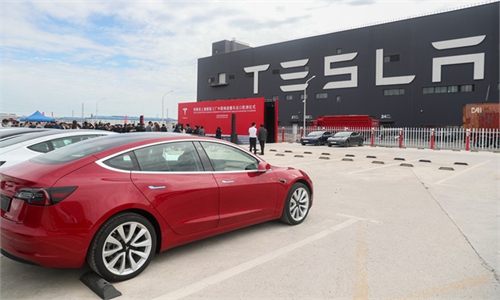
US auto giant Tesla also highlighted the driving force of the Chinese market. According to a statement it sent to the Global Times on Thursday, Tesla's Shanghai factory delivered 851,000 electric vehicles in 2025, accounting for more than half of the company's global total deliveries, with the Model Y firmly holding the top spot as China's best-selling sport utility vehicle.
"This fully demonstrates the strategic importance and core role of Chinese manufacturing in Tesla's global supply chain," the company said.
Tesla Vice President Grace Tao Lin said in the statement that the Chinese market is not only a crucial growth engine for Tesla, but also a key hub for its technological innovation and globalization strategy.
Apple reported a blockbuster quarter for iPhone sales as holiday purchases and a rebound in China helped it beat its already ambitious expectations with a record $144 billion in revenue, the Financial Times reported on January 30.
A strong launch for the iPhone 17 pushed smartphone revenue up 23 percent year-on-year in the three months to the end of December, Apple said. That drove overall revenue growth of 16 percent, far ahead of its guidance of 10 to 12 percent.
The smartphone group said that sales in the crucial Chinese market jumped 38 percent year-on-year, while it reported $42 billion in net income for the quarter, well ahead of expectations, said the report.
"In the context of rising global uncertainty, the stability and predictability of China's economy and policies provide a reliable foundation for the standout performance of multinational enterprises in China," Li Yong, an executive council member of the China Society for WTO Studies, told the Global Times on Thursday.
For companies such as Tesla and Apple, China serves not only as a critical manufacturing hub but also as a massive consumer market, Li said, noting that under the country's commitment to further opening-up, China continues to provide these companies with a favorable business environment.
On January 16, the American Chamber of Commerce in China released a report showing that China remains a critical market for American companies. Among the respondents, 57 percent said they plan to increase investment in China. Companies cited China's strategic importance and long-term market potential as the primary drivers of expanded investment, the report showed.
In addition, 71 percent of companies reported no intention to relocate operations overseas, citing China's strategic market position as a primary anchor.
"China's business environment continues to improve, with efforts including institutionalized dialogue with foreign investors that address specific issues faced by enterprises. These factors enable multinational companies to make stable long-term forecasts and plans, reflecting their strong confidence in the market," Li said.
However, the US has recently taken certain actions targeting Chinese companies, including unwarranted interrogations and checks on personnel from a Chinese enterprise.
Chinese Foreign Ministry spokesperson Lin Jian on Monday said that China deplores and firmly opposes these moves, noting that such harsh law enforcement actions severely violate the legitimate and lawful rights and interests of Chinese nationals, and dampen the atmosphere for sound business cooperation and people-to-people exchanges.
Li said that the facts have proven that win-win cooperation is the essence of China-US economic and trade relations, as well as the common expectation of the business communities in both countries.
"The US should work together with China to jointly provide transparent and fair business environments for enterprises on both sides, thereby promoting stable and healthy economic ties," the expert said.
RELATED ARTICLES