Chinese-made generators provide energy for BRI partner countries
‘Ningbo power’ going global
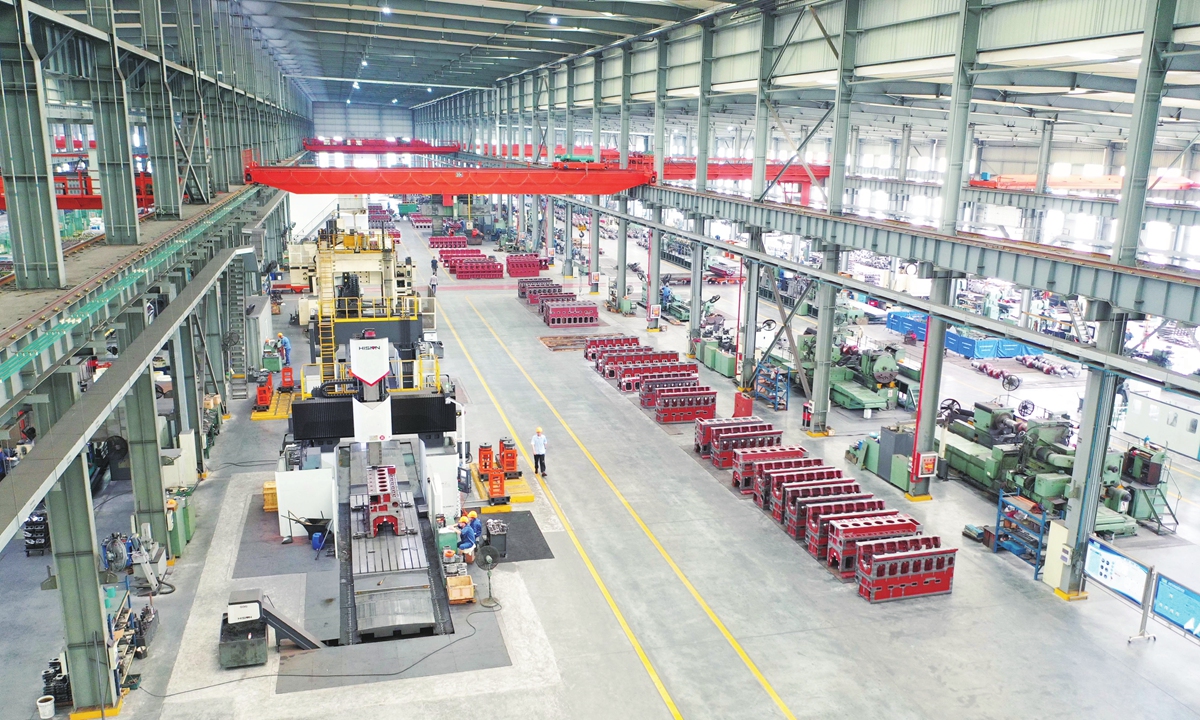
A view of a precision machinery processing workshop in Ningbo, East China's Jiangsu Province, on August 12, 2025. Photo: Courtesy of Ningbo C.S.I. Power & Machinery Group
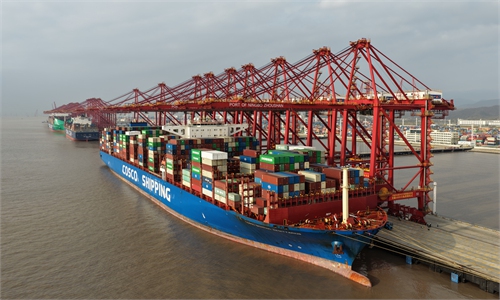
On Tuesday, a shipment of Chinese-made power generator sets worth more than 100 million yuan ($14.4 million) departed Ningbo Zhoushan Port and other ports in East China's Zhejiang Province, bound for Iraq, the Democratic Republic of the Congo and other partner countries along the Belt and Road Initiative (BRI).
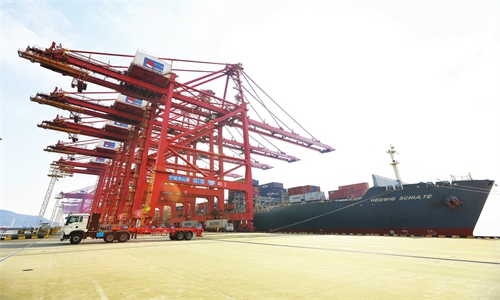
As a major logistics hub with world-class ports like Ningbo Zhoushan Port, the world's largest port in terms of annual cargo throughput, such a scene of vast ships departing for destinations across the world is quite normal; however, this particular shipment highlights two growing trends in Ningbo - its ever-expanding logistics network and growing export of large equipment to BRI partner countries.
From a broader picture, this demonstrates the sustained global competitiveness of China's power generation equipment and other goods, and injects fresh momentum into energy infrastructure development in many countries and regions around the world, experts noted.
Global expansion
Thanks to advantages in logistics and manufacturing, companies in Ningbo have long been expanding in overseas markets.
"We began doing business in Africa in 1999, and today our footprint includes Sudan, Nigeria, Liberia, Chad and other countries," said a senior manager at Ningbo C.S.I. Power & Machinery Group, a marine equipment manufacturer with a long history of operation.
The company's land-based power station equipment and marine engines have been widely exported to Africa and Southeast Asia. Since 1999, Ningbo C.S.I. has built more than 80 power stations in Nigeria, generating roughly 10 billion yuan in total output value. In Vietnam, the firm has gained about 80 percent of the high-power marine engine market, while its passenger ro-ro ships over 100 meters account for roughly 80 percent of that segment in Indonesia, according to the company.
Overall, the group has assembled some 300 upstream and downstream partners and offers main and auxiliary marine engines, as well as integrated land-based power station solutions. In 2025, more than half of the company's revenue came from overseas sales, with hundreds of power station projects delivered abroad.
"Nearly 1,000 power stations worldwide now use our systems," Wu Jie, general manager of Ningbo C.S.I., told the Global Times, adding that going froward, the company has even greater goals.
"Our vision is to bring 'Ningbo Power' to markets worldwide. As we promote Ningbo manufacturing and Chinese power equipment globally, we are also enhancing the international reputation and brand value of Ningbo's marine equipment industry," he said.
Close connectivity
Supporting such a vision is Ningbo's growing connectivity with the rest of the world, including countries and regions along the BRI, thanks to its world-class ports.
On January 9, Ningbo-Zhoushan Port launched its first new foreign trade route of 2026, with the MSC Jessenia R making its maiden call at the Chuanshan Port Area in Ningbo. The vessel carried 2,000 twenty-foot equivalent units (TEUs) of goods, including electronics, chemicals, daily necessities and building materials, and was scheduled to reach Brisbane 14 days after departure.
The newly launched route service will deploy seven 4,000-TEU modern container vessels weekly, linking Qingdao, Shanghai and Ningbo with Brisbane and Sydney, and is expected to generate nearly 3,600 TEUs of monthly export throughput for Ningbo-Zhoushan Port, according to information the port's operator shared with the Global Times.
"The new service reduces transit time from Ningbo to Brisbane from about 20 days to 14," said Zhang Guanghao, deputy manager of operations at China Ningbo Shipping Agency Co. The timing also coincides with the Spring Festival shipping peak, allowing seasonal goods to reach markets sooner, Zhang told the Global Times.
With the new route launched, Ningbo Zhoushan Port Group now operates 309 container routes, connecting more than 700 ports in over 200 countries and regions. Notably, in 2025, the port operated 132 Belt and Road container services, with 6,389 annual sailings and a throughput of 17.41 million TEUs, according to the port.
Situated at the junction of the Silk Road Economic Belt and the 21st Century Maritime Silk Road, Ningbo Zhoushan Port is a vital node for China's foreign trade and supply chains, Zhong Zhechao, founder of One Shipping, an international logistics consultancy, told the Global Times.
Recent logistics advances in Ningbo - from the China-Europe Arctic Express launched in September last year, which offers faster and lower-carbon options for high-end manufacturing and new-energy industries, to the opening of the Ningbo-Australia route in January - are expected to help exporters manage global trade uncertainties, expand international logistics channels and help integrate Belt and Road cooperation into the global logistics system, Zhong said.
Notably, amid closer connectivity under the BRI, more Ningbo-based companies are expanding in overseas markets.
Xue Jingli, general manager of Consinee Group in Ningbo, said that the company's lightweight plush products are popular in markets such as India, Mongolia, Nepal and Turkey, and that sales in Belt and Road partner countries have surged in recent years.
Founded in 1999, Consinee is a leading Chinese producer and exporter of high-end cashmere yarn. It has built a green, integrated manufacturing base covering dyeing, woolen and worsted spinning, fancy yarns, high-quality fabrics, import-export operations, digital logistics and intelligent manufacturing. The group produces and sells about 10,000 tons of yarn and fabrics annually, including more than 3,000 tons of 100 percent cashmere fiber - some 15 to 20 percent of global cashmere output, Xue told the Global Times.
And much of that output will be shipped overseas via Ningbo's growing logistics network - just like the shipment of Chinese-made power generators - and they will help boost trade and economic development in those countries and region.
RELATED ARTICLES