ARTS / CULTURE & LEISURE
China issues action plan to revitalize theatrical arts; move welcomed by industry insiders
By Published: Feb 09, 2026 11:27 PM

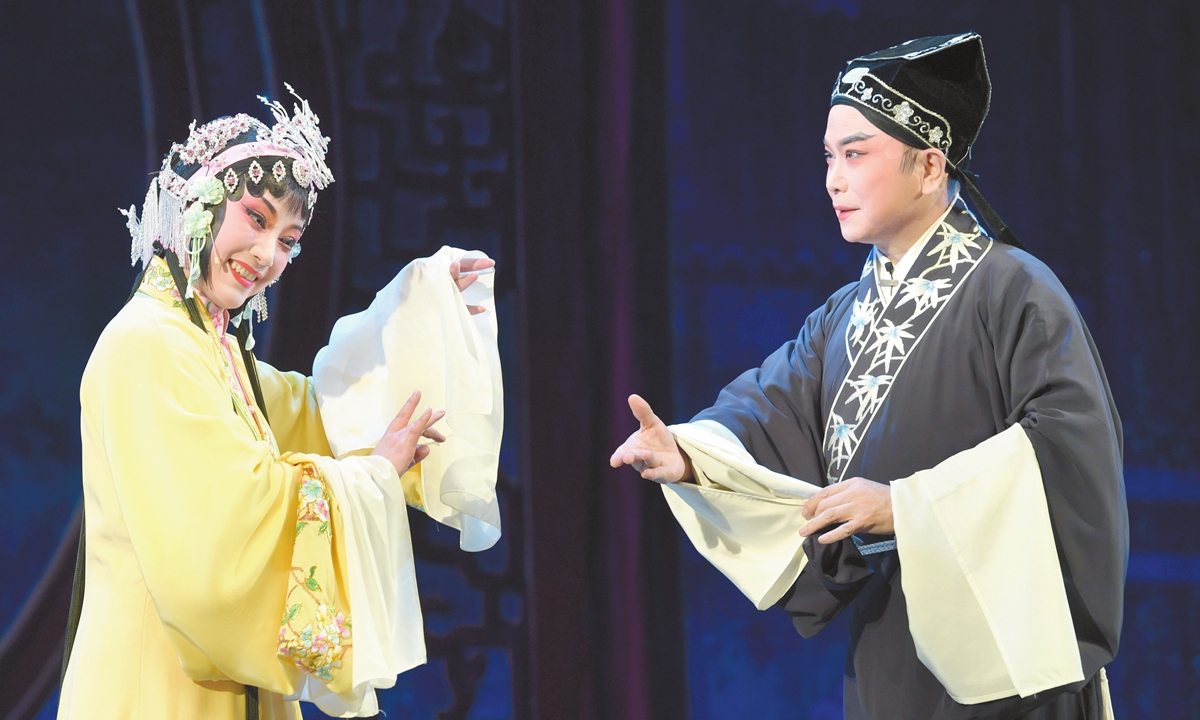
Photo: VCG
Chinese authorities have revealed an action plan to promote the inheritance and development of the theatrical arts over the next three years starting from 2026.According to the plan, efforts will be made to invigorate innovation and creativity in theater, significantly improve the quality of productions, and produce a new batch of outstanding theatrical works.
The plan aims to expand the ranks of theater professionals, with a steady emergence of leading young talent. It also emphasizes the establishment of a sound mechanism to support, guide and coordinate theatrical creation, along with a marked improvement in the industry ecosystem.
The action plan, which covers seven aspects across 24 measures, specifies measures such as supporting the development of theater troupes, enhancing the effectiveness of production evaluation and funding support, strengthening the inheritance of theatrical arts, and promoting public outreach.
After the plan's release, these measures have been welcomed by China's theater insiders, thus raising the expectations for China's theatrical arts.
For Cai Yu, director of the Wuxi Xiju Theater in Jiangsu Province and also a renowned Xiju Opera performer, this action plan addresses every aspect and provides comprehensive, multi-dimensional support for local troupes.
"We can rely on regional characteristics to create works that belong to Xiju Opera and embody the local flavor of Wuxi," she told the Global Times on Monday.
"We are absolutely thrilled to see the three-year action plan," Yu Shouying, vice chairman of the Fujian Theater Association, told the Global Times on Monday. She noted that over the next three years, more state-owned troupes across the country will "stage outstanding productions, numerous private theater companies will obtain high-quality scripts, and more young people will have the opportunity to enter theaters and be enriched by traditional classic plays."
Wang Wei, deputy dean of the School of Fashion Art and Engineering at the Beijing Institute of Fashion Technology, said that theatrical arts are expanding their expressive forms and enhancing their contemporary expressive capacity in new communication environments and public spaces, taking on a more distinct mission amid the times.
"Traditional arts are not objects to be statically preserved but rather a cultural force that continuously generates meaning through new ways of viewing, spatial forms, and communication mechanisms," she told the Global Times.
Wang has long been committed to promoting and facilitating exchanges in drama. She once organized a fashion show themed on traditional Chinese opera, observing the contemporary expressive pathways of traditional opera in cross-disciplinary contexts and showcasing its practical transition from professional stages to urban public spaces and international exchange scenarios.
Her practical approach, oriented toward contemporary life and international contexts, aligns precisely with the three-year action plan's encouragement to "expand the ways drama is expressed, cultivate young audiences for drama, and strengthen international exchange and promotion of drama."
The plan was jointly issued by the Publicity Department of the Communist Party of China Central Committee, the Ministry of Education, the Ministry of Finance, the Ministry of Culture and Tourism, and the China Federation of Literary and Art Circles.
RELATED ARTICLES