US-Japan 'Iron Fist' drills an attempt to meddle in Taiwan question; joint military move can hardly conceal weakening control over first island chain: Chinese expert
By Li Yu and Published: Feb 11, 2026 03:08 PM

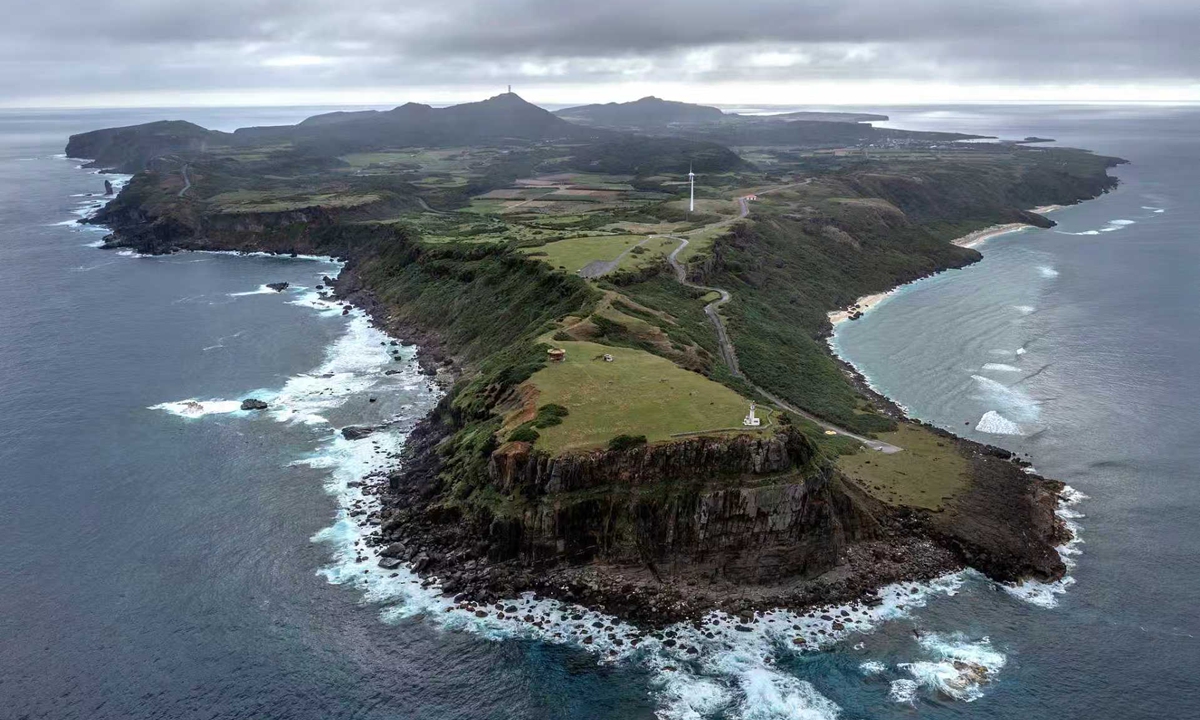
Yonaguni island of Ryukyu Islands Archipelago. Photo: VCG
In another attempted move to meddle in the Taiwan question, the US and Japan are scheduled to launch their annual joint military exercise "Iron Fist" on Wednesday local time, with drills scheduled to run through March 9, according to US military newspaper Stars and Stripes and Japanese official releases. A Chinese military affairs expert said on Wednesday that the US-Japan military calculation will find it difficult to realize their intended purposes.According to a release issued by Japan's Ground Self-Defense Force (JGSDF) on January 20, the exercise, officially titled "Iron Fist 26," is a joint training program conducted with the US 3rd Marine Expeditionary Brigade and involves integrated exercises related to amphibious operations.
Stars and Stripes described the exercise as an "expanded version" of US and Japan's annual exercises in the area. It claimed that the drills will hone the two sides' ability to make amphibious landings together and defend the area just east of Taiwan. During a visit to Okinawa on January 7, Japan's Defense Minister Shinjiro Koizumi claimed that improving deterrence and response capabilities in the southwest region is an urgent issue.
This came amid Japanese Prime Minister Sanae Takaichi's obstinate refusal to retract her erroneous remarks on the Taiwan question and what Chinese experts noted a dangerous resurgence of Japanese right-wing militarism.
Song Zhongping, a Chinese military affairs expert, told the Global Times on Wednesday that it is unsurprising that the Iron Fist drills have expanded toward the Ryukyu Islands, noting that the area is highly sensitive. The expert said the Ryukyu Island chain has long been a focal point, with Japan attempting to consolidate its control while the US views the region as a key component of the so-called first island chain. Song said that the US and Japan see the islands as geographically close to the Taiwan Island, which has led to a convergence of interests in strengthening military activities in the area.
The drills are set to be conducted across multiple locations in Japan, including 19 spots, three more than last year, in the Ryuku Islands. Exercises are planned in Okinawa at US Marine Corps Camp Hansen and Kin Blue and Red beaches, according to the Stars and Stripes, citing the JGSDF.
Citing a spokesman for Japan's Ground Staff, the newspaper claimed that about 800 US Marines, 2,100 US Navy personnel and around 2,000 members of Japan's Ground and Maritime Self-Defense Forces are expected to take part in the exercise.
It added that training will also be carried out in "wild areas" of Ryukyu Islands, with additional Japanese amphibious units participating this year, according to the spokesman.
Song noted that training extending into so-called "wild areas," along with references by Japanese official to enhancing "deterrence and response capabilities," reflects a growing trend toward more forward-deployed and combat-oriented exercises.
From a military perspective, Song said such moves are intended to facilitate external interference in the Taiwan question and to reinforce the US island-chain strategy. However, the expert noted that with the PLA's capabilities having significantly improved, the ability of the US and Japan to intervene in the Taiwan question or effectively control the island chain has been steadily declining. China has maintained strategic resolve while continuing to strengthen its comprehensive national strength, and such external strategic calculations by the US and Japan won't prevail, Song said.
At a regular press conference of China's Ministry of National Defense on Tuesday, Senior Colonel Jiang Bin, spokesperson for the ministry, responded to a media inquiry regarding reports that Takaichi had called for writing the Self-Defense Forces (SDF) into Japan's Constitution and defining them as a "force with capabilities" through constitutional revision.
Jiang said that for a long time, the Japanese government has repeatedly broken through the principle of "exclusive defense" through so-called constitutional "interpretations," lifted restrictions on collective self-defense and developed offensive weapons under the pretext of "defense," dressing re-militarization in the guise of the "rule of law." He said the latest push to enshrine the SDF in the Constitution is not about improving the legal system, but about hollowing out the foundations of Japan's pacifist Constitution and loosening military constraints.
Jiang added that Japan's right-wing forces are seeking to challenge the post-war international order through military, public opinion and legal means, and said the international community should remain vigilant and work together to safeguard the outcomes of World War II and regional peace and stability.
RELATED ARTICLES