Exclusive: China should consider anti-dumping, anti-subsidy probes into French wine as part of countermeasures against France’s proposed 30% tariffs on Chinese goods: expert
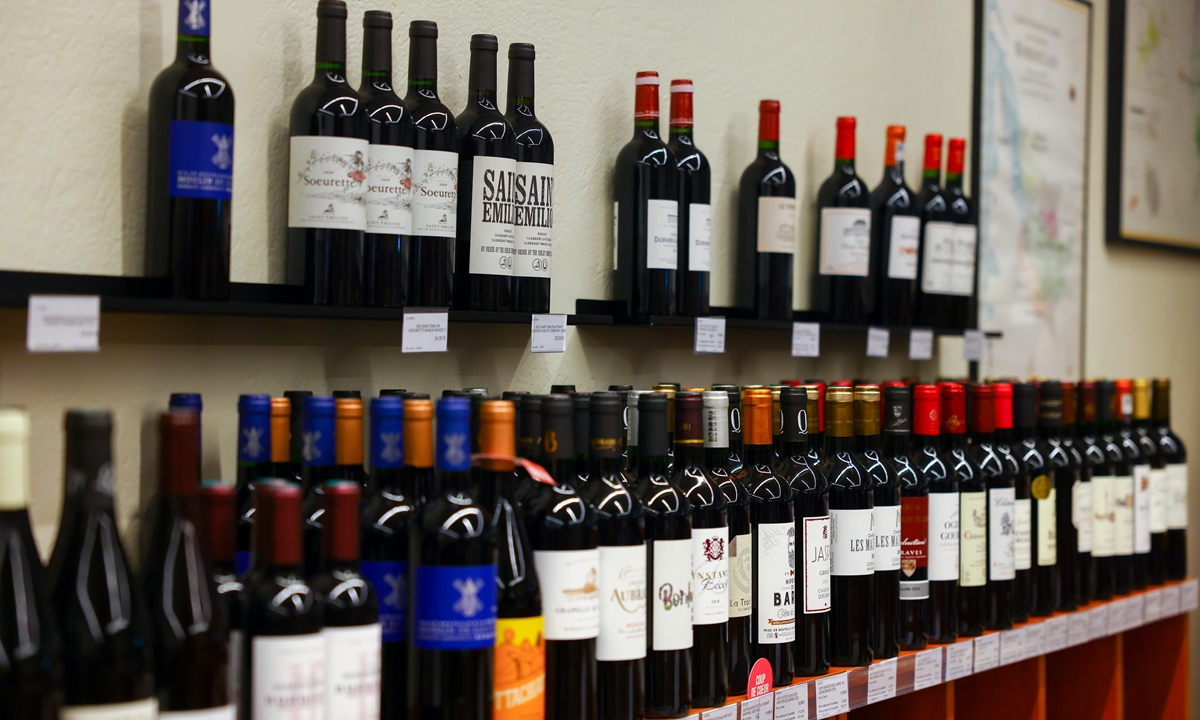
French wines are displayed on the shelves of a store in Saint-Maur-des-Fossés, France. Photo: VCG
China should consider launching anti-dumping and anti-subsidy investigations into the EU, particularly French wine, or imposing reciprocal tariffs on relevant EU products as part of countermeasures against the proposal of a French advisory body's report for imposing 30 percent tariffs on Chinese imports, a Chinese expert familiar with the matter told the Global Times on Wednesday.
China may also launch anti-discrimination probes against the EU or France and take reciprocal countermeasures according to relevant legal authorizations if the EU adopts France's proposal and directly imposes broad, discriminatory tariffs on Chinese products, said the expert, who asked to remain anonymous.
The comments came after the French strategic report released on Monday suggested that the EU should consider either an unprecedented 30 percent across-the-board tariff on Chinese goods or a 30 percent depreciation of the euro against the yuan to counter a so-called flood of cheap imports, Reuters reported.
It was prepared by the Haut-Commissariat à la Stratégie et au Plan, a French government advisory body that reports directly to the prime minister and guides long-term public policy, Reuters reported.
The Chinese expert's comments came after French Finance Minister Roland Lescure said on Tuesday that China's large trade surplus with Europe was "unsustainable," and Paris was ready to play its part in rebalancing trade, which would require targeted tariffs to address instances of so-called "obvious unfair competition."
The French advisory body's proposal to impose broad tariffs on Chinese exports to Europe is blatant trade protectionism. It resembles the unilateral tariff measures adopted by the US administration, but it is even more targeted and discriminatory, as it directly targets products exported from China to the EU. It is nothing more than deliberately provoking China, the Chinese expert said.
Unilaterally imposing tariffs on Chinese exports to Europe clearly violates World Trade Organization (WTO) rules. Even though Lescure on Tuesday sought to tone down the proposal by calling for more "targeted tariffs" rather than a blanket tariff approach, the expert said, such targeted actions would still be discriminatory in nature, in clear breach of WTO rules and contrary to the EU's long-standing commitment to free trade.
Countermeasures
China is an important export market for EU wine. According to data from China's General Administration of Customs, in 2024, EU wine exports to China totaled nearly $700 million, accounting for more than 30 percent of China's total wine imports, with almost half of that coming from France.
It is suggested that the Chinese government consider launching anti-dumping and anti-subsidy investigations into EU, particularly French wine, or to adopt reciprocal tariff measures on relevant EU products, the expert said.
France's recent series of unfriendly measures toward China is evident. For example, certain French industries and companies had pushed behind the scenes for the EU to launch anti-dumping and anti-subsidy investigations into Chinese electric vehicles and mobile access equipment and levy tariffs against China, according to media reports.
If the French side does not take steps to improve the bilateral economic and trade environment and continues to take a tough stance toward China, the Chinese side should respond accordingly, the expert said.
If the EU adopts France's proposal and directly imposes broad, discriminatory tariffs on Chinese products, China may in accordance with relevant legal authorizations, initiate anti-discrimination investigations against the EU or France and take reciprocal countermeasures.
Regarding the trade surplus, Chinese officials said on various occasions that "China has never deliberately sought a trade surplus," which is a natural result of the combined influence of different industrial structures, industrial specialization, methods of trade and external factors, the expert said.
The competitive edge of Chinese products does not stem from subsidies, but from significant investment in research and development, full market competition, and the combined effect of a complete industrial chain, the expert said.
However, the French side has not taken these concerns on board. Instead, it is attempting to use higher tariffs to compensate for the competitiveness challenges facing EU industries and products. This approach is clearly misguided and counterproductive. In the end, it will only backfire, undermining the competitiveness of EU industries and harming the interests of EU consumers, said the expert.
Call for dialogue
Mutually imposing targeted or retaliatory tariffs will only trigger a spiraling escalation of China-EU trade frictions, potentially leading to a full-blown trade war, the expert said, noting that "such a trade war would benefit neither side and ultimately result in a lose-lose outcome."
The Chinese government has consistently advocated resolving differences through dialogue and consultation. The expert said that it is hoped that the EU will adopt a long-term perspective and an open mindset, work with China, and promote the sustained and healthy development of China-EU economic and trade relations.
"Dialogue and consultation are always the right ways to resolve trade disputes," the expert said.
"If tariffs are unilaterally imposed on Chinese products, the EU cannot expect China to remain passive," the expert further noted.
Citing the stance repeatedly emphasized by Chinese officials, the expert said "We will fight, if fight we must. Our doors are open, if one wants to talk."
RELATED ARTICLES