China’s commerce ministry calls for enhancing adequacy of trade-in program funds to spur domestic consumption
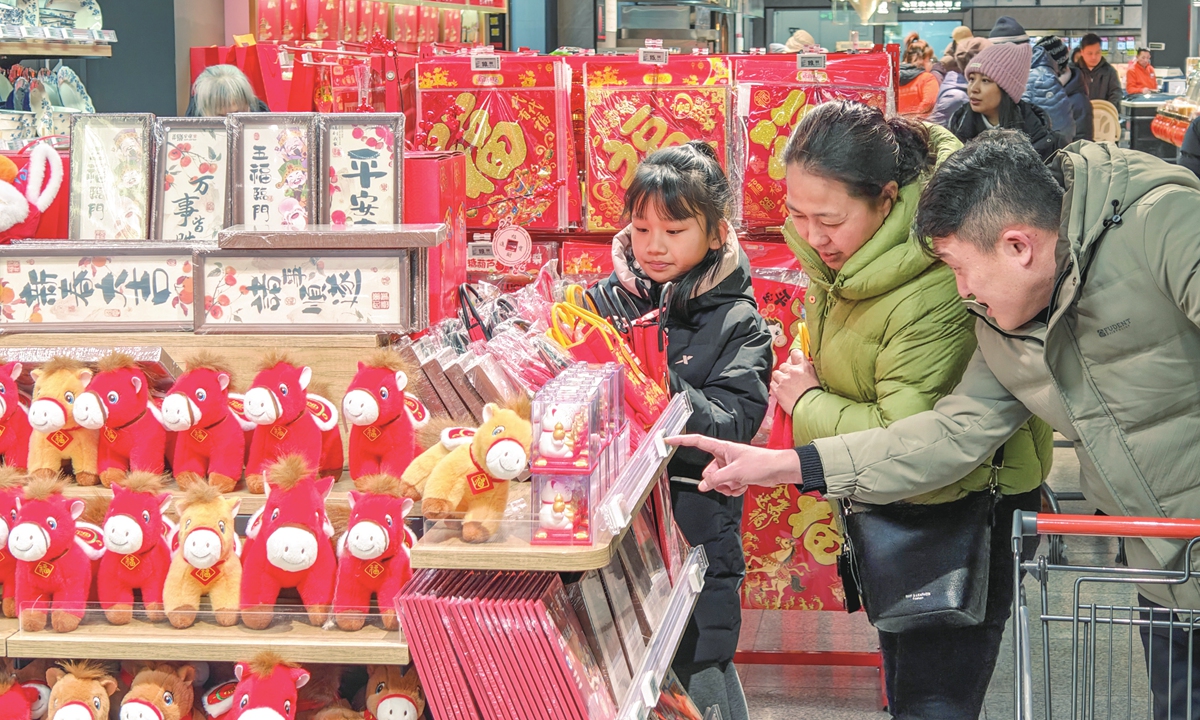
Consumers shop for festive decorations at a supermarket in Beijing on January 25, 2026, as demand is on the rise ahead of the upcoming Year of the Horse. Since the start of 2026, China's market sales have expanded, with solid growth recorded in sales of essential goods and selected upgraded consumer products. Photo: VCG
China's Ministry of Commerce (MOFCOM) on Thursday urged provincial governments to strengthen the adequacy of subsidies for the consumer goods trade-in program and leverage the advantages of various channels to ensure the effective implementation of policies and better meet consumer demand, as part of the country's latest efforts to ramp up domestic spending during China's Spring Festival holiday.
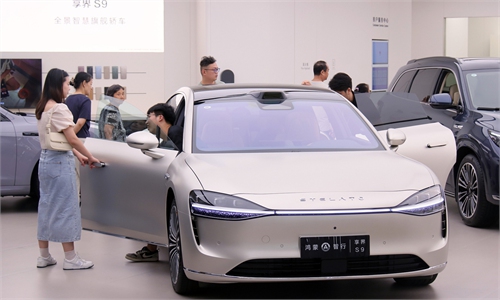
According to the notice seen on MOFCOM's website, during the nine-day holiday (from Sunday to February 23), efforts should be made to fully ensure that consumers can apply for subsidies for home appliance trade-in and for purchasing new digital products through offline channels. Additionally, consumers who purchase new cars during the holiday can apply for automobile trade-in subsidies.
A new round of the consumer goods trade-in policy has been rolled out now. Combined with the traditional peak consumption season of the Spring Festival, demand for the so-called "replacement purchase" of home appliances and digital devices continues to grow.
A Suning retail store manager surnamed Wang in Beijing's Chaoyang District told the Global Times on Thursday that consumer inquiries about trading in of home appliances like televisions, fridges, and rice cookers are on the rise. "Thanks to national trade-in subsidies and other consumption vouchers, a refrigerator priced at around 14,000 yuan ($2,028) can now be purchased for just over 8,000 yuan," Wang said.
Data from MOFCOM show that in January, sales of home appliances and digital products exceeded 15 million units under the subsidy program, with total sales revenue nearing 59 billion yuan.
Beyond boosting retail sales, the subsidy program has also supported other related sectors such as dining and entertainment by drawing shoppers back to brick-and-mortar stores, according to the ministry.
The lasting effect of the consumer goods trade-in program reflects the great potential of China's domestic market, suggesting that consumption will play an increasingly important role in driving economic growth and transformation, Cao Heping, an economist at Peking University, told the Global Times on Thursday.
Domestic demand has become a key focus for international observers of China's economy. The retail sales of consumer goods, a major indicator of the country's consumption strength, climbed 3.7 percent year-on-year in 2025 to reach 50.1 trillion yuan, according to the National Bureau of Statistics (NBS). Last year, the contribution rate of final consumption expenditure to economic growth stood at 52 percent, up 5 percentage points from the previous year, NBS data showed.
In an action plan released on November 26, China's Ministry of Industry and Information Technology and five other departments mapped out key measures to better align supply with demand for consumer goods to stimulate consumption.
By 2027, the supply structure of consumer goods is expected to be significantly optimized, fostering three trillion-yuan consumption sectors and 10 consumption hotspots each worth 100-billion-yuan, according to the plan. The plan also states that by 2030, the contribution rate of consumption to economic growth will rise steadily.
Looking ahead, multiple favorable factors are expected to continue supporting steady consumption growth this year despite ongoing pressures and challenges, including enormous potential in consumption upgrading, the continuous effectiveness of pro-consumption policies, and the ongoing improvement in the consumer environment, Cao said.
RELATED ARTICLES