ARTS / ART
From lion dances to ice festivals, diverse regional customs reflect both deep heritage and contemporary reinvention
Spring Festival in Full Bloom
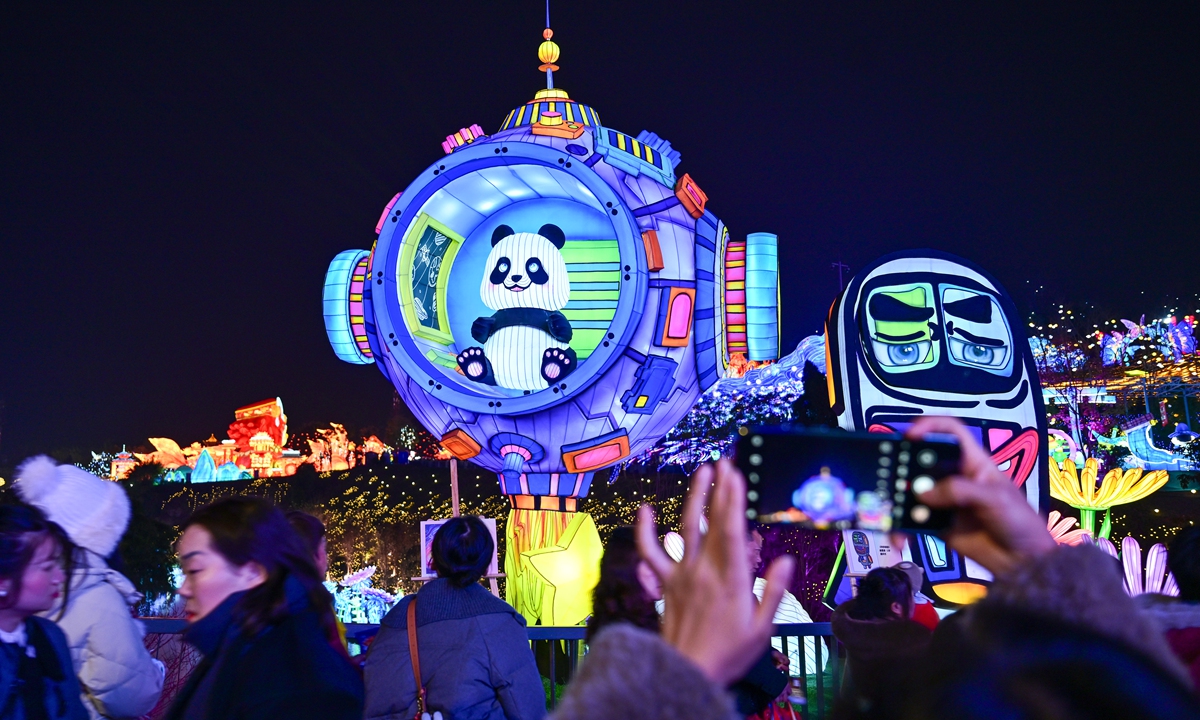
People explore the Zigong International Dinosaur Lantern Festival. Photo: VCG
Editor's Note:From tech-enabled flower fields to ice kingdoms, and from intangible cultural heritage traditions like the lion dance and Zigong Lantern Show, China's Spring Festival unfolds as a journey across climate and culture, a season when centuries-old customs are not only preserved but also reimagined, illuminating how tradition continues to evolve across a vast and varied nation.
This article explores the vibrant spectrum of Spring Festival traditions across China, showing how these customs continue to evolve nationwide.
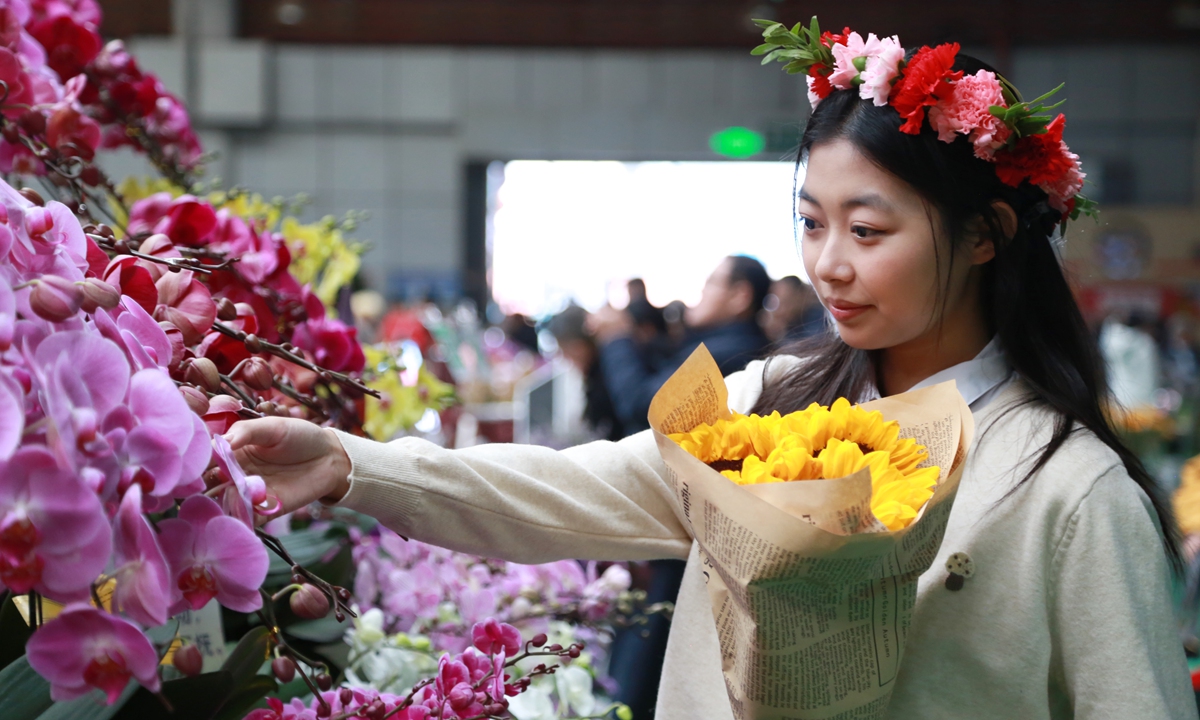
A woman checks out flowers at the Dounan flower market, in Kunming, Southwest China's Yunnan Province. Photo: VCG
On the eastern shore of Dianchi Lake in Dounan, Kunming, Southwest China's Yunnan Province, 2 million fresh blossoms of over 100 varieties unfurl in a riot of color. At the heart of Dounan Flower Market, known as the "flower capital of Asia," the hum of activity continues from dawn to dusk, as forklifts weave between crates of orchids, lilies, and other blooms destined for homes across China and beyond, filling the air with fragrance and the promise of the Spring Festival.
Thousands of miles north, the scene transforms dramatically. At the Harbin Ice-Snow World, the world's largest ice-and-snow theme park in Harbin, Northeast China's Heilongjiang Province, towering sculptures carved from ice glow electric blue against the winter night, their frozen walls embedded with smart lighting and interactive displays that add a futuristic layer to the spectacle.
In South China's Guangdong Province, lion dance performances, known locally as "awakening lion," remain a centerpiece of Spring Festival celebrations. Performers maneuver beneath vividly colored lion heads crafted from bamboo frames and silk fabric, bringing centuries-old traditions to life.
The ongoing 32nd Zigong International Dinosaur Lantern Festival has turned Zigong in Southwest China's Sichuan Province into a luminous sea of over 200 lantern sets, drawing inspiration from fairy tales, children's drawings, and, most fittingly, the prehistoric dinosaurs unearthed in the region.
From tech-enabled colorful flower fields to ice kingdoms, and from intangible cultural heritage traditions like the lion dance and Zigong Lantern Show, China's Spring Festival unfolds as a journey across climate and culture, a season when centuries-old customs are not only preserved but also reimagined, illuminating how tradition continues to evolve across a vast and varied nation.
Bu Xiting, an associate researcher with the School of Cultural Industries Management at the Communication University of China, told the Global Times that Chinese Spring Festival customs vary widely across the country, shaped by geography, history, and local traditions. Yet despite regional differences, these customs share a common thread: bringing families together, offering blessings, and celebrating the hope for a better life.
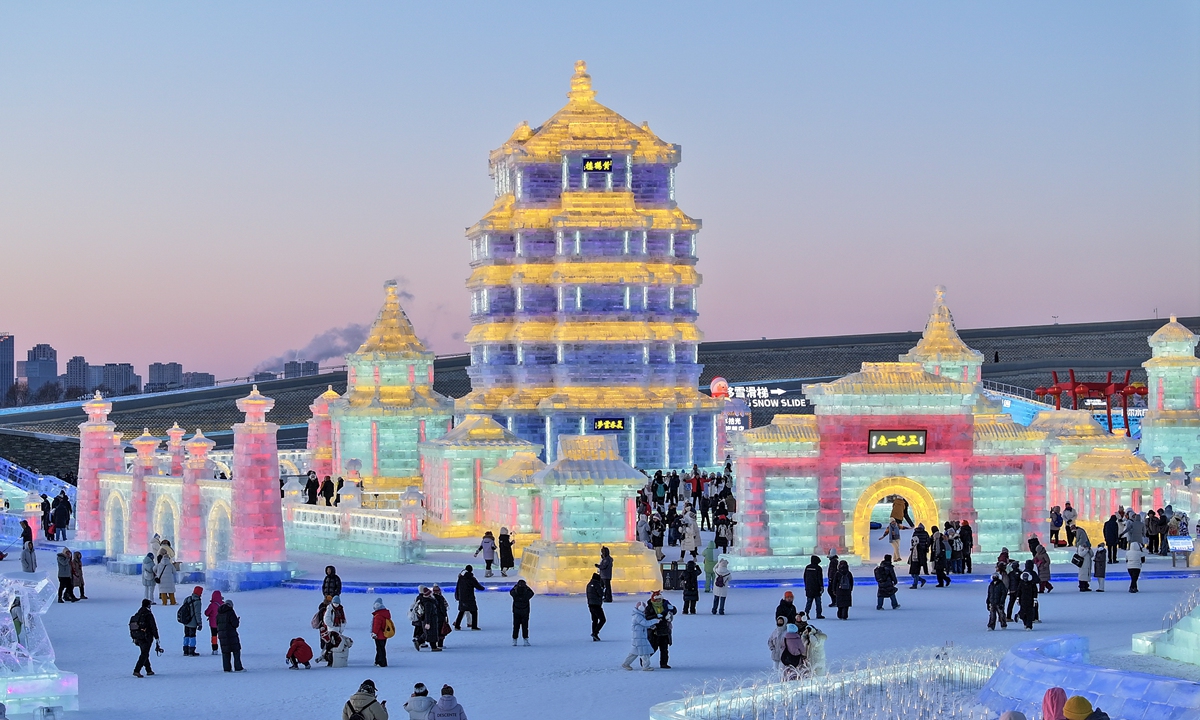
People enjoy themselves at Harbin Ice-Snow World. Photo: VCG
Innovation lights up winterAhead of the Spring Festival, Dounan is experiencing its annual holiday rush. Inside climate-controlled greenhouses, workers carefully pack orchids and cymbidiums cultivated with smart agricultural technology. On the trading floor, wintersweet and lilies are especially popular as shoppers prepare homes and businesses for the Year of the Horse.
Data showed the Dounan flower market's daily transaction volume has exceeded 30 million stems recently, equivalent to more than 340 flowers sold every second, shipped to over 50 countries and regions, according to China Radio International.
Farther north, the scene shifts dramatically. The 27th edition of the ice-and-snow theme park in Harbin features three main landscape axes, a large parade, an outdoor performance stage, and a newly built 5,000-square-meter air-supported structure. Smart lighting systems and AI interactive installations add a technological layer to the frozen spectacle.
Beyond Ice-Snow World, Harbin is promoting two additional winter attractions: the 1.5-million-square-meter Sun Island Snow Expo and an ice-and-snow carnival along the frozen Songhua River, featuring hundreds of snow sculptures and dozens of entertainment projects.
Sun Xin, 26, traveled from Beijing to Harbin in January. "Whether you're playing or just looking around, it feels like a winter wonderland," she told the Global Times. Walking through the city streets, she encountered intricately carved ice sculptures illuminated in shifting colors, making it feel as if the frigid landscape had been transformed into a luminous stage.
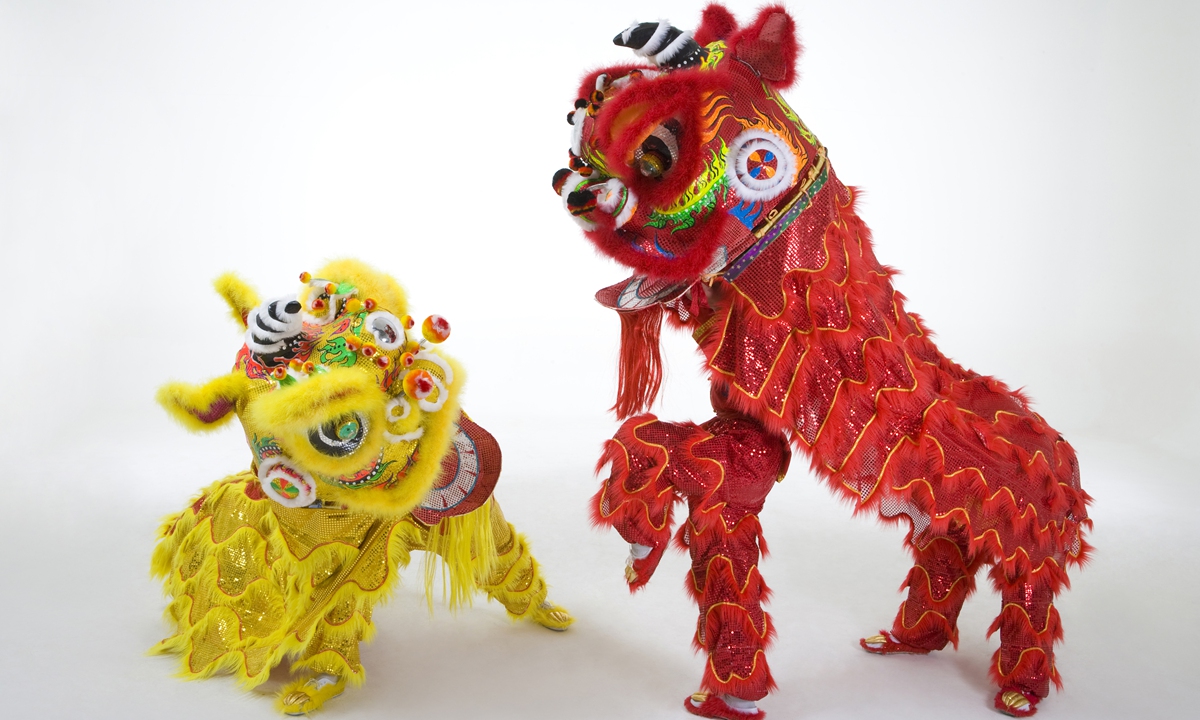
A Xing Shi performance Photo: VCG
Celebrating ICH traditionsWhile Harbin embraces ice, southern China celebrates with drums and lions. In Guangdong, Xing Shi, or literally "awakening lion," is the name for the southern style of the lion dance, which historically evolved from a court dance over 1,000 years ago.
"Xing Shi performances are especially popular in southern China and have been deeply connected to local folk culture," Zou Weiming, captain of the Lion Dance Team at Guangzhou Sport University, told the Global Times.
According to Zou, during the holiday, lion troupes visit homes and businesses in rituals meant to dispel misfortune and usher in good luck. In some parks, visitors can participate in "dotting the eyes," a ceremonial act believed to awaken the lion's spirit and bless the year ahead.
Further inland, the ongoing 32nd Zigong International Dinosaur Lantern Festival, blending local paleontological heritage with Chinese mythology, showcases creations such as majestic beasts described in the ancient Chinese text The Classic of Mountains and Seas.
Among them stands a commanding, a nearly 4-meter-tall winged creature, lion-like in shape, with a mane woven from real straw that glows softly as embedded LED lights cast a warm golden radiance through the natural fibers.
This luminous artistry is rooted in a centuries-old tradition. During the Tang and Song dynasties (618-1279), Zigong, then a prosperous salt-producing hub, developed a tradition of crafting festive lanterns to celebrate the Spring Festival, symbolizing hopes for abundance and happiness.
Over time, the tradition evolved from simple lanterns into a sophisticated art form that blends paper-cutting, painting, embroidery, and sculpture. Today, the Zigong Lantern Show is recognized as a National Intangible Cultural Heritage of China.
In recent years, this lantern tradition has been revitalized through technological innovation and environmental awareness.
Chen Zhuo, 36, a recognized inheritor of Zigong lantern craftsmanship, told the Global Times that Zigong lanterns have become a calling card for the city. "Our lantern makers have participated in festivals across China and abroad," he said. "The craftsmanship reflects a pursuit of excellence."
In northern and central agricultural regions, traditions often revolve around ancestral worship and family reunion, with local intangible heritage crafts integrated into holiday rituals. In the south and southwest, folk arts such as lion dances and lantern festivals serve as important expressions of blessing and celebration, according to Bu.
Despite differences in form, he noted that Spring Festival customs share core cultural themes, including reunion, gratitude, renewal, and aspirations for a better life.
"These diverse celebrations enrich the meaning of China's Spring Festival, blending centuries-old traditions with modern innovations and bringing people together across the country," remarked Bu.
RELATED ARTICLES