ARTS / FILM
Yuen Woo-ping and Wu Jing highlight wuxia spirit as film ‘Blades of the Guardians’ launches global release
By Published: Feb 14, 2026 05:59 PM

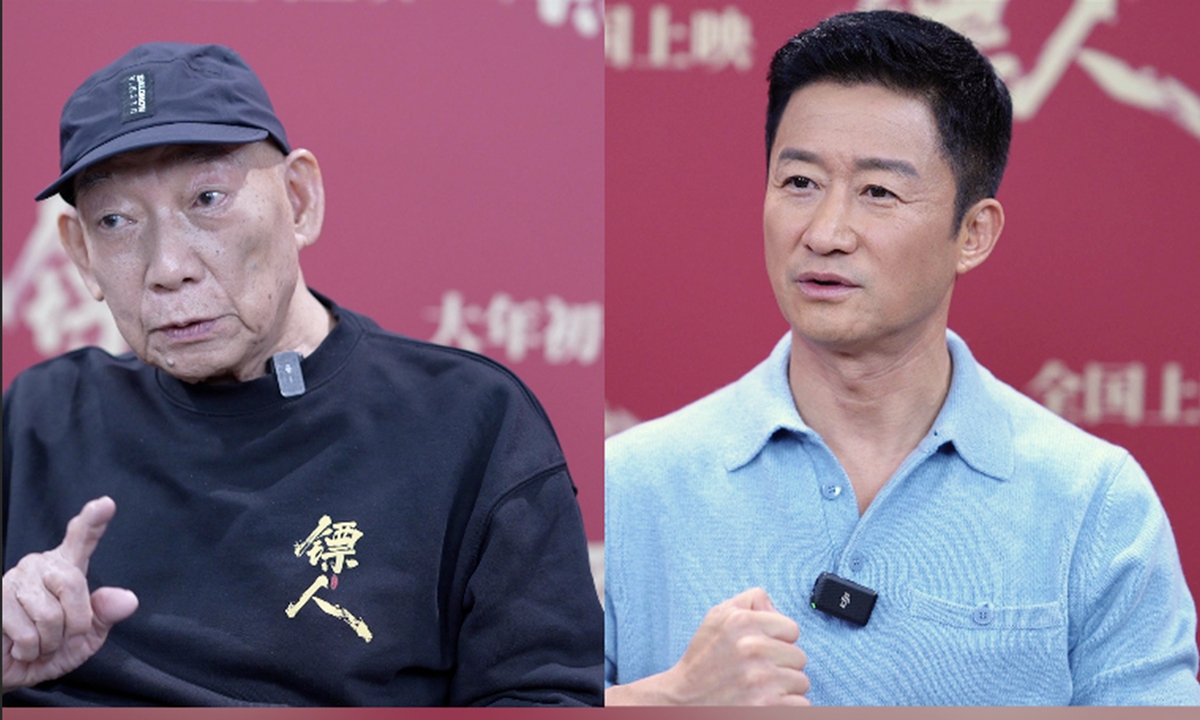
Yuen Woo-ping (left) and Wu Jing Photo: Global Times
As the sole wuxia (martial heroes) film gracing the Spring Festival schedule, Blades of the Guardians brings together four generations of martial arts filmmakers in what its creators call "a long-awaited martial arts feast."
Set against the backdrop of the late Sui Dynasty (581-618), the film follows a desert escort named "Daoma" tasked with transporting a mysterious figure back to the imperial capital Chang'an, navigating constant ambushes and unravelling fate's tangled threads.
In an exclusive interview with the Global Times, the film's director and renowned action choreographer Yuen Woo-ping and martial arts actor Wu Jing laid bare their interpretations of wuxia spirit, their creative philosophy for the film and their hopes for the genre's future - both at home and abroad.
As the film prepares for its global rollout, including screenings across North America starting February 17, the filmmakers hope international audiences will find their own connection to this ancient tradition
An iconic figure who brought Chinese kung fu to Hollywood with The Matrix and Crouching Tiger, Hidden Dragon, Yuen's decision to direct Blades of the Guardians stemmed from a single quality he found in the original comic: authenticity. "The characters' personalities and actions were very down-to-earth, each distinct in their own way," he told the Global Times.
This group of martial heroes rooted in the desert dust, rather than being ethereal, made him decide to adapt it into a film and bring it to the big screen.
When asked to define the essence of wuxia spirit, the veteran filmmaker said he still hasn't fully figured it out after all these years. But he pointed out that "I see something unfair, and I want to step in."
"Wuxia is about helping the weak and fighting against the strong," he added.
It is the instinctive sense of justice that forms the moral compass guiding every character in Blades of the Guardians.
In addition, the commitment to authenticity is also evident in the film's action design, where Yuen opted for "subtraction" over spectacle.
"We want to minimize all the flashy stuff in kung fu and use real movements to fight," Yuen explains. "Every slash of the blade, every thrust of the spear, every sword strike must feel substantial. I don't want those posed showy stances. I want it real."
This philosophy of subtraction extends to every frame. The fight between Wu Jing and Nicholas Tse pursues what Yuen calls "the beauty of strength," which is veins bulging, muscles straining, sand and sweat mixing in brutal poetry.
As a pioneer in bringing Chinese wuxia to the global stage, Yuen has previously shaped the fighting styles of Jackie Chan, Jet Li, and even Neo from The Matrix.
"(The Hollywood) feels that the Kungfu in wuxia films is visually stunning and powerful. That's why they invited us over, and we brought the essence of wuxia to them. I put the wuxia theory into their minds, helped them understand the logic behind every motion," Yuen recalled.
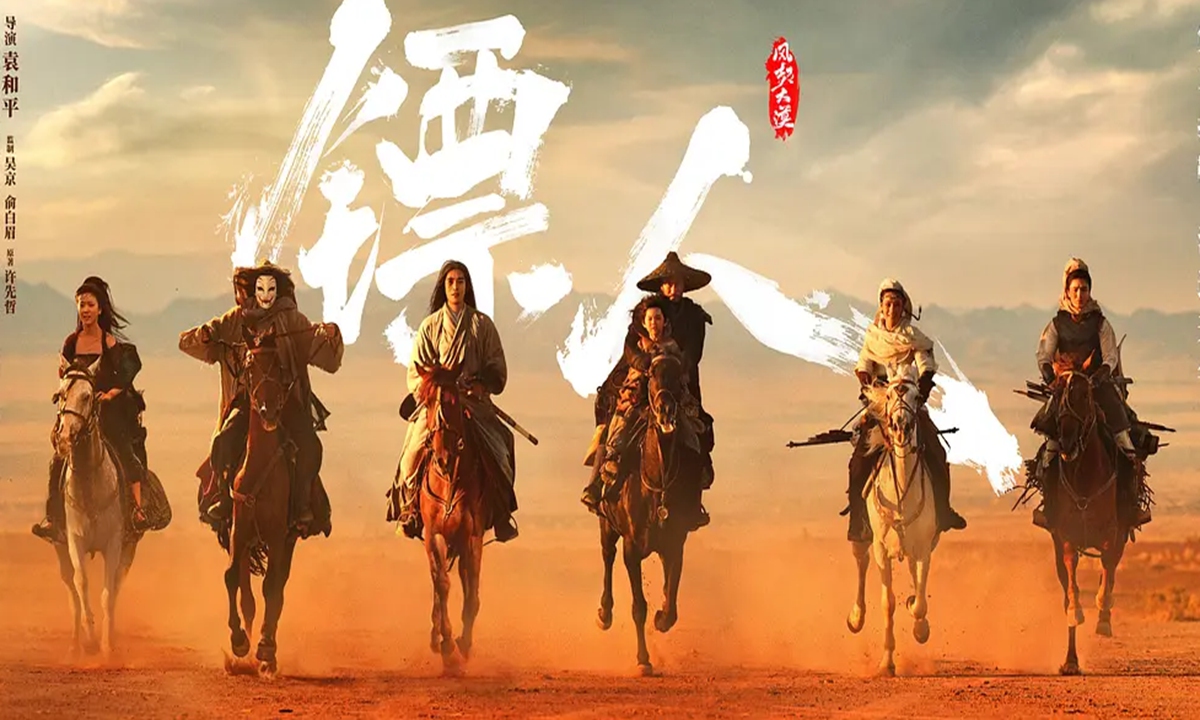
Promotional material of Blades of the Guardians Photo: Douban
Wu Jing, who serves as both the film's producer and main actor, has grown from a young martial artist into one of the China's most bankable action stars. His character Daoma represents something deeply personal.Wu told the Global Times that Daoma is a man with a complicated past. Daoma adhered to the rule of "get paid, finish the job and leave." Fame matters little to him; his only desire is to find peace and guard the precious relationships around him.
Wu draws an unexpected parallel between his ancient warrior and modern life. "Daoma's mission is like today's deliverymen. Whether the package is precious or ordinary, they must deliver it, fulfilling their promise to the client and to themselves. Every one of us is guarding our own 'package' - that commitment in our hearts."
The actor's eyes light up when discussing the intergenerational dedication on set. The crew, he said, included creators spanning four generations - from 91-year-old Hong Kong director Chang Hsin-Yen and 81-year-old "Baye" [Yuen Woo-ping] to young actors born in the 2010s.
"Seniors would ask 'Can we do it again?' after every shot to get it perfect; young actors worked hard to refine their performances for a better presentation," he recalled. "That cross-generational pursuit of excellence touched me deeply."
For those who wonder whether wuxia, with its flying swordsmen and wandering knights, still matters in contemporary China, both filmmakers offer the same answer: the spirit never left.
"Today's understanding of 'great hero' might differ from that of the past. But everyone is a hero. If you protect yourself in your heart, you would be a hero," Wu reflected.
"Kung fu films and wuxia are China's cultural calling cards," Wu said. "Through this film, we hope to show the global audiences that no matter how different our languages or cultures, everyone can find their own 'wuxia' within."
RELATED ARTICLES