China urges US to revoke unilateral duties; US latest 15% global tariff stokes frustration among allies, deals in limbo as chaos returns
By Chi Jingyi and Published: Feb 23, 2026 12:35 PM

Tariff File photo: VCG
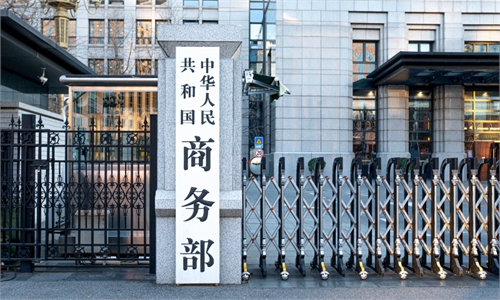
A spokesperson for China's Ministry of Commerce (MOFCOM) said on Monday, "We have noted the US Supreme Court's announcement of its ruling in the tariff litigation case and are conducting a comprehensive assessment of the relevant content and implications," when asked to comment on the ruling that multiple tariffs imposed by the US government were unlawful.
China has consistently opposed unilateral tariff increases in all forms and has repeatedly stated that there are no winners in a trade war and that protectionism leads nowhere, said the MOFCOM spokesperson, noting that the unilateral measures taken by the US, including the reciprocal tariffs and fentanyl-related tariffs, not only violate international trade and economic rules but also contravene US domestic law, and they do not serve the interests of any party.
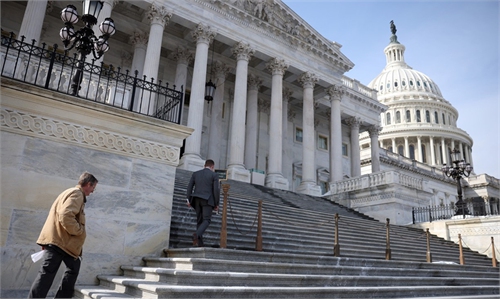
US President Donald Trump raised his newly announced global tariff to 15 percent on Saturday, less than a day after announcing a 10 percent worldwide duty, following a US Supreme Court ruling on Friday that struck down many of his previous country-specific tariffs.
The move has sparked widespread international reactions, ranging from frustration, delayed trade talks to wait-and-see approach amid renewed uncertainty, international media reported.
Li Haidong, a professor at the China Foreign Affairs University, told the Global Times on Monday that the latest 15 percent global tariff is likely aimed at proving the cherished tariff tool by the Trump administration still works, reflecting an increasingly extreme reliance on tariffs. "Such domestically driven tariff chaos will inevitably heighten global supply-chain uncertainty and deepen instability in the world trade order," he said.
The new tariff is slated to take effect on Tuesday (US time) and will last for 150 days, with exemptions for sectors under separate probes, according to a White House fact sheet.
"Global trade order and supply-chain expectations will stay volatile, with front loading of trade activity likely in the next 150 days to hedge against tariff risks," Li Yong, an executive council member of the China Society for WTO Studies, stressed.
The Trump administration would seek ways to "implement more appropriate or pre-negotiated tariff rates" down the line, AFP reported citing a White House official.
US allies across Europe voiced alarm and frustration, NBC reported.
The European Commission on Sunday local time said in a statement that it "requests full clarity on the steps the US intends to take following the recent Supreme Court ruling on the International Emergency Economic Powers Act."
"The current situation is not conducive to delivering 'fair, balanced, and mutually beneficial' transatlantic trade and investment, as agreed to by both sides and spelled out in the EU-US Joint Statement of August 2025," read the statement.
In July 2025, the EU and the US reached an agreement following Trump administration's imposition of a 30 percent tariff on goods from the 27 EU member states. The negotiated settlement reduced the tariff rate on EU exports to the US to 15 percent. However, the agreement has not yet taken effect. The European Parliament's Committee on International Trade is scheduled to vote on the EU-US trade deal on Tuesday local time.
Bernd Lange, chairman of the EU parliament's trade committee, said he will propose suspending legislative work on approving the EU-US trade deal at an emergency meeting on Monday "until we have a comprehensive legal assessment and clear commitments from the US," Bloomberg reported.
As for India, the latest 15 percent rate was described by Indian media NDTV as "India now faces a reduced tariff rate."
The US and India earlier this month announced they reached a framework for an interim agreement on trade, which reduced the reciprocal duties on India from 25 percent to 18 percent. India said it will eliminate or reduce tariffs on all US industrial goods and a range of agricultural products. However, India and US have decided to postpone the official meeting that will finalize details of the bilateral trade agreement, NDTV reported on Sunday local time, citing reliable sources.
South Korea's Trade Ministry called for an emergency meeting Saturday to understand the new landscape. Some specific exports to the US, like automobiles and steel, aren't affected by the US supreme court decision. Those that are affected will likely now be covered by the new tariff rate of 15 percent, Fortune reported.
Brazil's President Luiz Inacio Lula da Silva urged Trump on Sunday to treat all countries equally. He is expected to travel to Washington next month for a meeting with Trump, AFP reported.
After the latest 15 percent tariff rate was announced, US Trade Representative Jamieson Greer stated on Fox News that imports from countries such as Malaysia and Cambodia would continue to face the negotiated 19 percent rate - higher than the new universal 15 percent tariff set.
"Today's economic globalization, where supply chains and industrial chains are deeply integrated across countries, means any attempt by the US to pursue selfish gains through unilateral tariffs will ultimately backfire on itself and disrupt the world trade order," said Li Yong.
RELATED ARTICLES