ARTS / CULTURE & LEISURE
Contributions of naturalized skaters should not be neglected despite disappointing outcome at Olympics
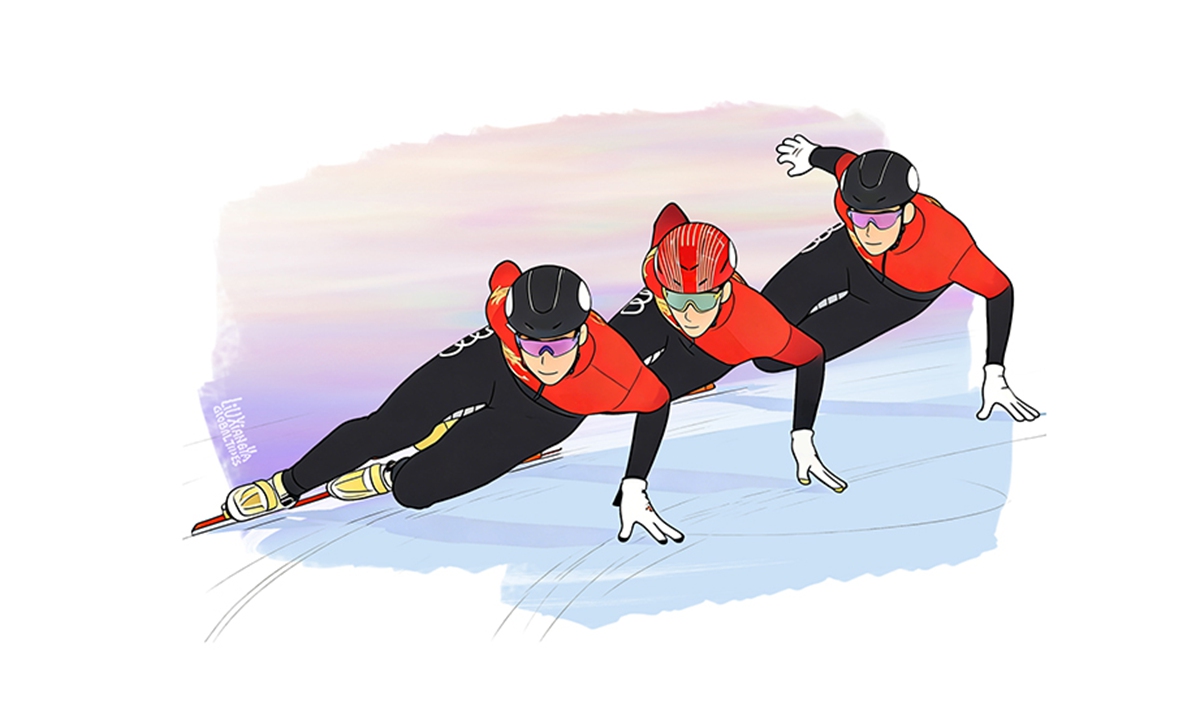
Illustration: Liu Xiangya/GT
The 2026 Milan-Cortina Winter Olympics was a reality check for the Chinese short track speed skating team as the outcome of only one silver medal has led to discontent among many and skepticism concerning whether the naturalization of three former Olympic champions was worth the effort to bring veteran experience to the team.Expectations for the team were high after brothers Liu Shaolin and Liu Shaoang, previously representing Hungary, joined the Chinese short track team in 2023, following former South Korean skater Lin Xiaojun's naturalization in 2020, which had already boosted China's medal hopes.
None of them contributed any medals - with Shaolin missing the cut for the Olympics - leading to what has been described as the team's worst performance since 1998. Only one silver medal in the men's 1,000 meters was won by homegrown skater Sun Long.
Disappointment is understandable, but dismissing the contributions of these athletes overlooks their broader impact on the team and the sport's development in China. To understand the context, it's essential to revisit the backgrounds of these athletes and the rationale behind their naturalization.
Lin became a Chinese citizen in 2020 after facing career setbacks in his home country, including a suspension related to a harassment charge that was later overturned. The move was aimed at filling gaps in China's lineup, particularly in individual events where he had proven dominant, such as his 2018 Pyeongchang Olympic gold in the men's 1,500 meters.
The Liu brothers, born in Hungary to a Chinese father and Hungarian mother, switched to China after the 2022 Beijing Games, where they had competed for Hungary and won multiple medals, including golds in the men's 500 meters and relay. Their naturalization was seen as a strategic boost, given their Olympic champion status and family ties to China.
Globally, naturalization of athletes is not uncommon as it has been widely seen in football, basketball and other sports. Countries such as Italy, Spain, and France have historically recruited foreign talent to accelerate competitiveness. For China, this approach aligned with efforts to build on the success of the 2022 Beijing Games, where the team secured two golds, and to maintain momentum.
In the lead-up to Milan, the naturalized athletes delivered tangible results that justified the strategy. Lin, Shaolin, and Shaoang collectively contributed to multiple golds at World Championships and World Tour events, including a men's relay gold by a squad consisting of the trio at the 2024 ISU World Championships in Rotterdam. These achievements helped China maintain international competitiveness during the post-Beijing cycle. They also provided valuable training opportunities for younger Chinese skaters, fostering a more dynamic team environment through shared techniques and competitive pressure.
The naturalized athletes did not earn their position on the team because they came from overseas but because they were competitive. If that had not been the case, Shaolin missing the cut would not have happened. However, the outcome of the 2026 Olympics exposed the need for more balanced adjustments to the team.
The team secured just the one silver by Sun Long in the men's 1,000 meters, leading to China's overall short track tally of zero golds, a stark contrast to the team's 12 gold medal history since 2002 when Yang Yang started China's short track Olympic gold medal tally.
Critics have labeled this a "historic disaster," pointing to the naturalization strategy as a short-term gamble that backfired. Yet, competitive sports are inherently unpredictable. Even dominant teams can falter like Canada, which had won 15 gold out of 36 medal races in the 2025-26 Short Track World Tour season leading up to the 2026 Olympics but ended with just one gold in Milan.
The Chinese team's results in Milan should not negate the naturalized athletes' contributions but serve as a catalyst for reflection on the team's current path, considering its previous history of success. The presence of top-level naturalized athletes has undeniably provided short-term relief, keeping the team competitive in international competitions and exposing domestic skaters to elite-level tactics. However, the Olympics highlighted risks such as integration challenges and the potential displacement of homegrown young talent.
Moving forward, China must balance naturalization with robust domestic cultivation to achieve lasting elevation. Continuing to explore naturalization is viable, but it requires enhanced risk assessment, better support for cultural and team integration, and viewing imports as supplements rather than core assets.
Simultaneously, investing in youth programs is crucial: Expanding grassroots infrastructure, scientific training methods, and talent scouting could nurture more homegrown skaters. By fostering a stable ecosystem where naturalized and native athletes coexist, China can mitigate the squeeze on emerging talents and build resilience against Olympic uncertainties.
The debate over naturalization reflects deeper questions about short-term gains versus long-term sustainability in short track speed skating. By learning from this cycle, embracing the unpredictability of competition and prioritizing balanced development, China's short track team can reclaim its place on the global stage. The path to renewed glory lies not in blame, but in strategic evolution that honors all contributors to the sport's progress.
The author is a reporter with the Global Times. life@globaltimes.com.cn
RELATED ARTICLES