Zimbabwe bans exports of raw minerals, lithium concentrates; Chinese analyst notes short-term supply shortage, urging market diversification
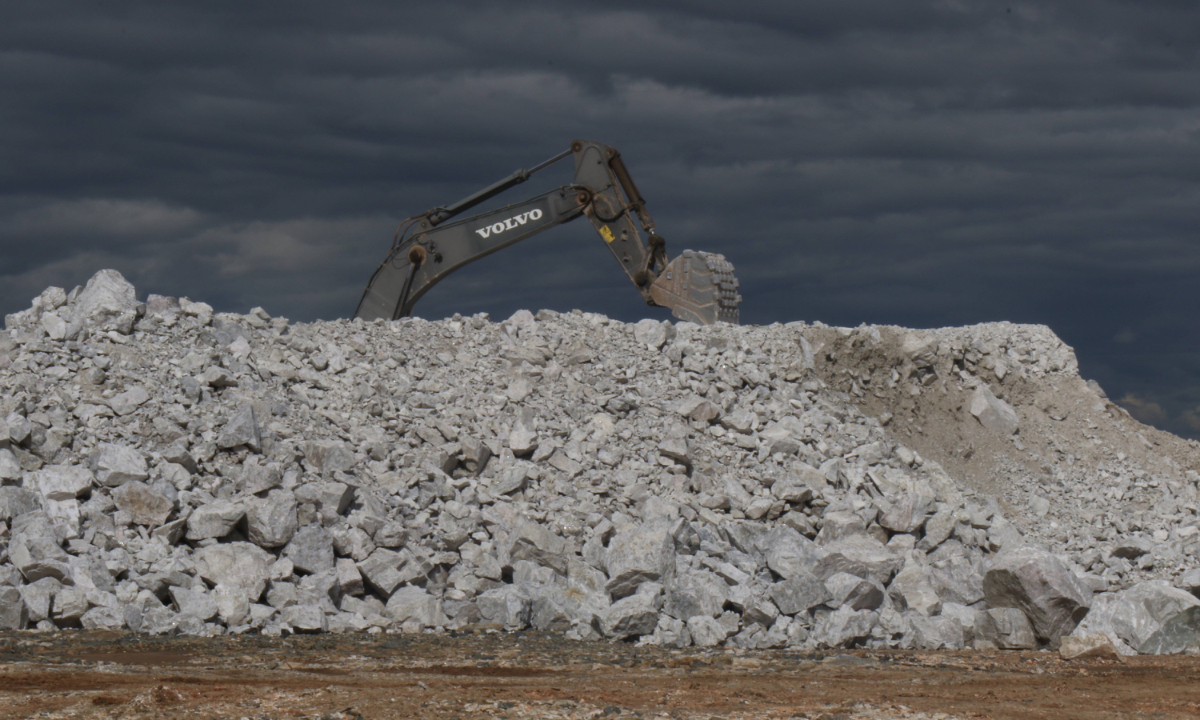
An earth moving vehicle operates during a lithium mining process at Sandawana Mines in Mberengwa, Zimbabwe on November 19, 2025. Photo: VCG
Zimbabwe has suspended exports of all raw minerals and lithium concentrates with immediate effect, its mines ministry said in a statement on Wednesday. The African country's move is expected to affect global supply chain including the Chinese market in the short term, as Zimbabwe is one of the world's major lithium suppliers, a Chinese expert said on Thursday.
According to the statement by Zimbabwe's Ministry of Mines and Mining Development, the suspension includes all minerals currently in transit, and only mining companies holding valid mining titles and approved beneficiation plants will be authorized to export minerals.
Wu Chenhui, an independent analyst who closely follows the critical minerals industry, told the Global Times on Thursday that lithium concentrate is the primary upstream raw material that is chemically processed to produce lithium carbonate, the key mid-stream lithium compound used in electric batteries.
"The export ban could lead to global lithium supply shortages in the short term, as Zimbabwe is a major lithium producer in the world," Wu said.
Bloomberg reported on Thursday that Zimbabwe accounted for about 10 percent of the world's mined lithium last year, citing the US Geological Survey. According to the report, Zimbabwe ranked 4th in mine production last year.
A report from Great Wall Securities said on Thursday that its calculations indicate 2026 lithium carbonate supply and demand at 2.1 million tons and 2.04 million tons, respectively, while factoring in the impact of this ban, the full-year supply-demand balance could shift to a shortage of 37,000-57,000 tons.
As for China, Wu said that China has a relatively high external dependence on lithium. According to a report showed on the National Development and Reform Commission, in 2024, China's import dependency on lithium raw materials was approximately 60 percent.
"In the short term, upstream lithium salt companies may face accelerated inventory destocking and production cut risks. Rising lithium-related prices could, to some extent, impact downstream sectors like battery manufacturing and the new-energy vehicles," the expert said.
According to Reuters, the most traded lithium carbonate contract on the Guangzhou Futures Exchange jumped 6.07 percent to 178,020 yuan ($26,043.45) a metric ton as of 11:30 on Thursday, having spiked more than 9 percent to 187,700 yuan earlier this session.
However, the medium- to long-term impact will depend on the flexibility of implementation and adjustments in global supply, Wu said.
"China has been continuously expanding its self-sufficiency capabilities [on lithium]. And, Zimbabwe is not China's only source of lithium resources. Production from countries such as Australia and Brazil remains important, and Chinese companies have already established diversified overseas supply chains," Wu noted.
China Energy News reported that in 2024, China imported approximately 5.25 million tons of lithium concentrate, up about 31 percent year-on-year, mainly from Australia, Brazil, Zimbabwe, and other countries.
Also on Thursday, some Chinese companies with lithium projects in Zimbabwe responded to the Zimbabwe's export suspension. Yahua Group said in an exchange platform that the current Zimbabwe export ban will not affect the company's normal production and operations.
According to the announcement and communications from the Zimbabwe's mines ministry, this ban primarily targets irregular export activities by traders. It explicitly allows only companies with mining rights and beneficiation plants to export. The Yahua Zimbabwe project meets these requirements. The company has already resubmitted its export application, and approval is expected in the fastest 1-2 weeks, after which exports can resume.
Zhejiang Huayou Cobalt Co noted that the "ban" primarily targets regulation of irregular exports. The company's mining license was issued by the mines ministry, and the specific extent of the impact remains uncertain now, China Securities Journal reported on Thursday.
RELATED ARTICLES