ARTS / CULTURE & LEISURE
Different Chinese cuisines connect same joy of reunion, release homesickness
Different Chinese cuisines connect same joy of reunion
From jiaozi, or dumplings, to jiandui, a kind of fried round cake made of wheat and rice flour and something to sweeten them, diplomats have tried Chinese cuisines during the Chinese New Year. In their own words, flavors are different, but the joy is the same.
The area could be the most iconic Chinese New Year tradition in the city of flowers, with a history dating back to the Ming Dynasty.
"In the flower street, we saw magnificent traditional archways decorated with lanterns and flowers and rows of stalls with a sea of flowers and visitors. That's where we can feel the most Chinese New Year atmosphere in Guangzhou. The visitors are celebrating the festival happily and we are feeling the same," Cosul General Khanal added.
Talking about experiencing traditional folk customs, Khanal shared that he tasted jiandui, which are classic fried pastries for the Chinese New Year in Guangdong, or Canton. "Cantonese People always say, 'A rolling Jiandui brings a house full of gold and silver,' meaning wealth and good fortune for the family. It's delicious and similar to some Nepali fried snack. It released my homesickness greatly," said Khanal.
To Nakarmi, the Spring Festival gives her the festive vibes of Nepali fiesta and her heart dances with joy with every celebration that occurs on the occasion. "I am overjoyed when I see that the streets and temples are decorated with red lamps everywhere."
Counsellor Nakarmi takes time to learn Chinese and practice Chinese calligraphy. She showed the Global Times a group picture, in which she and her classmates wrote Chinese characters 天人合一 (harmony between humanity and nature).
"This year, in two events, I saw Chinese artists drawing horses and writing Chinese characters in front of us. That live performance was amazing. A Chinese artist made a painting of my family with the strokes of a Chinese brush," she said.
Chinese people visit temples such as Ditan Temple Fair and Longtan Temple Fair just like Nepali people who also visit temples during festivities, Nakarmi shared her observation.
Recalling her experience in folk customs, she tried several forms. "We made dumplings of Nepali style at home which is called 'Mo Mo' in Nepali and gave a red envelop to my little daughter," said Nakarmi.
While participating in the Chinese events, she and her family were offered red scarves and small red horse souvenirs. "As a symbol of love and blessing from Chinese people, I warmly accepted them. The mini-horse is so adorable," she added.
Nakarmi also visited the Great Wall. "Since it is a long holiday, Chinese people visit several places with family members. With the company of family members, the cold breeze also turns into warmth with happiness and delight. Chinese culture has given me beautiful memories," Counsellor Nakarmi said.
This year her celebration "was simple and centered on family traditions."
"We watched the Spring Festival Gala together, which I consider one of the most beautiful elements of the holiday. Knowing that millions of families across China are watching the same program at the same time creates a strong sense of shared celebration," she shared.
"I was treated to freshly fried fish from Rizhao, local bread, and colorful seasonal fruits. The table was generous and joyful. The flavors are different. The decorations are different. The language is different. But the joy is the same," she added.
For Stoian, this similarity is something very positive and uplifting. "It reminds me that although our cultures have unique traditions, the happiness of sitting around a table with family, sharing a meal, and welcoming a new year together is universal."
This Spring Festival was simple, full of warmth and happiness, said Stoian.
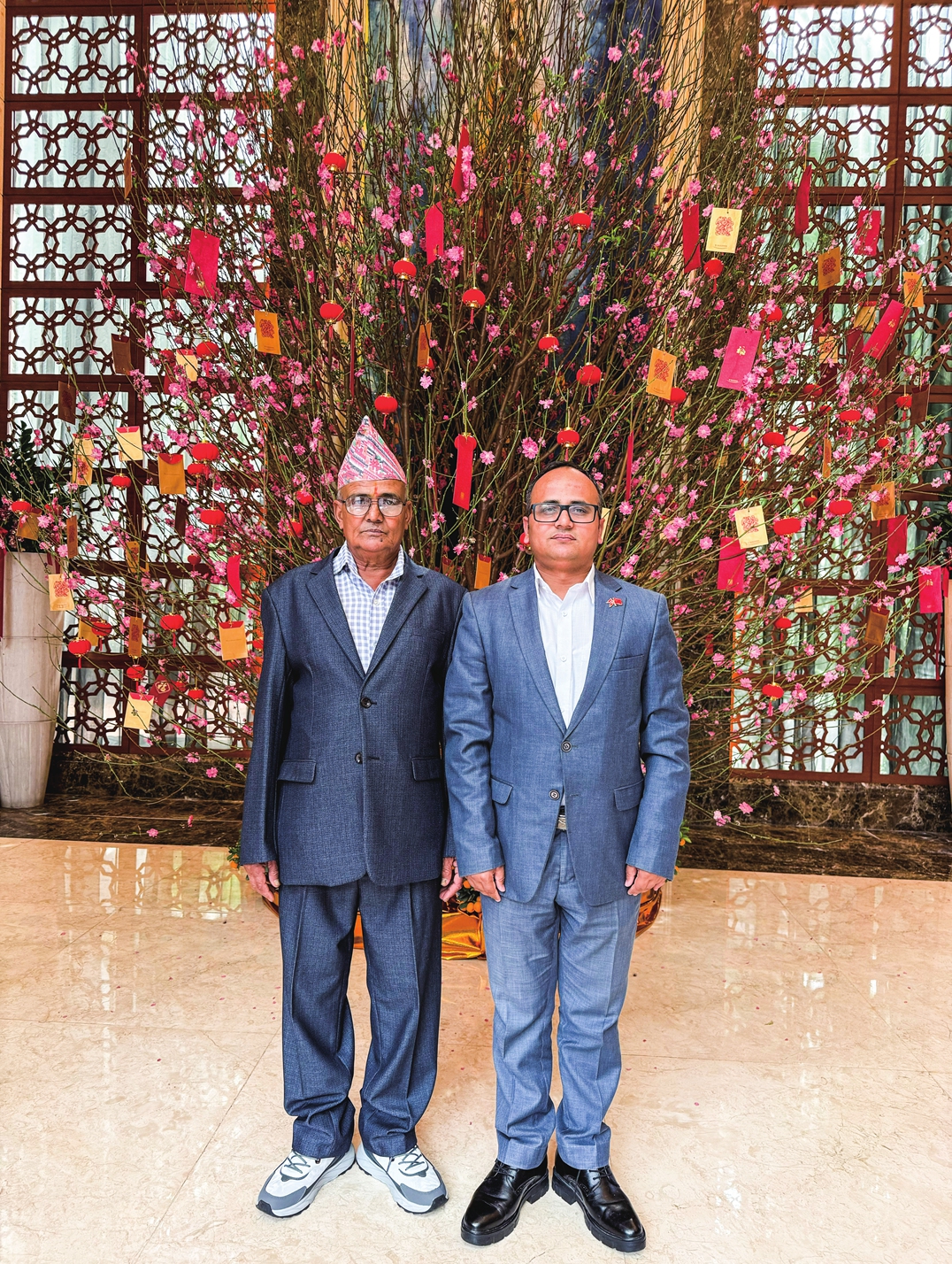
Consul General of the Consulate General of Nepal in Guangzhou Bharat Khanal (right) and his father in Guangzhou, Guangdong Province Photo: Courtesy of Bharat Khanal
Consul General of the Consulate General of Nepal in Guangzhou Bharat Khanal told the Global Times that this Spring Festival is special to him because it is his first time to celebrate the biggest Chinese Festival with his father in China.The area could be the most iconic Chinese New Year tradition in the city of flowers, with a history dating back to the Ming Dynasty.
"In the flower street, we saw magnificent traditional archways decorated with lanterns and flowers and rows of stalls with a sea of flowers and visitors. That's where we can feel the most Chinese New Year atmosphere in Guangzhou. The visitors are celebrating the festival happily and we are feeling the same," Cosul General Khanal added.
Talking about experiencing traditional folk customs, Khanal shared that he tasted jiandui, which are classic fried pastries for the Chinese New Year in Guangdong, or Canton. "Cantonese People always say, 'A rolling Jiandui brings a house full of gold and silver,' meaning wealth and good fortune for the family. It's delicious and similar to some Nepali fried snack. It released my homesickness greatly," said Khanal.
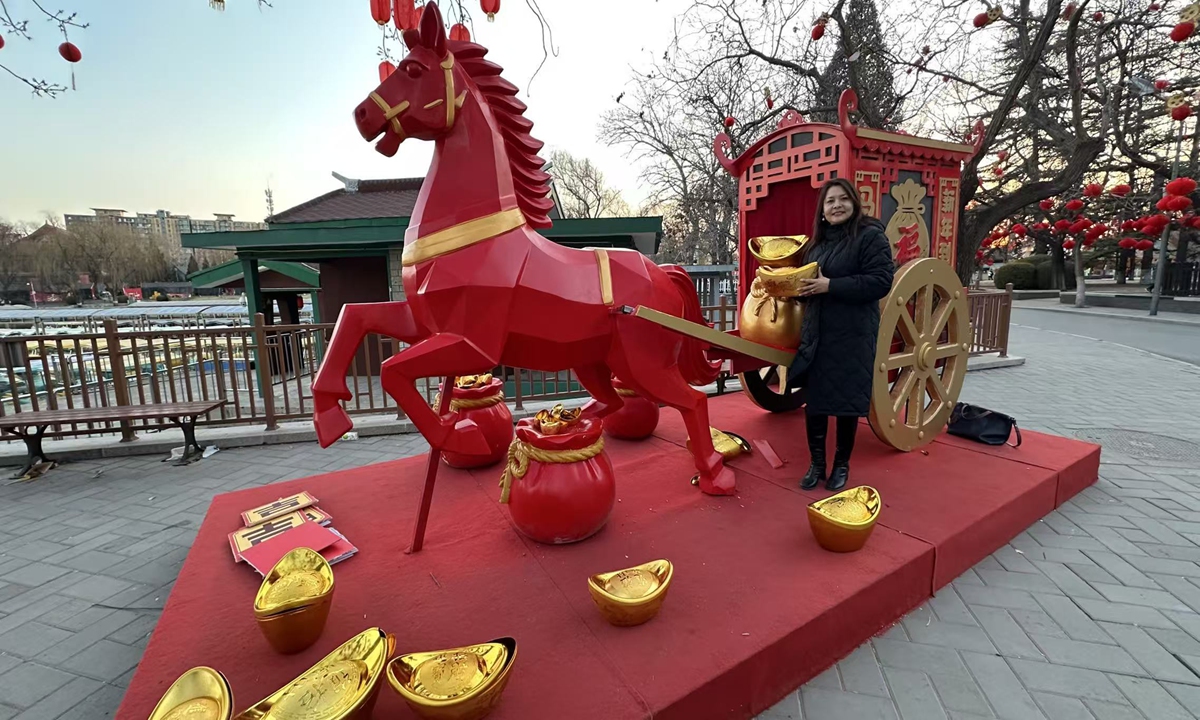
Counselor at the Embassy of Nepal in China Sabita Nakarmi visits LongtanTemple Fair in Beijing on February 17. Photo: Courtesy of Sabita Nakarmi
Counselor Sabita Nakarmi who works at the Embassy of Nepal in China, told the Global Times that she has pasted Spring Festival couplets with auspicious phrases on the door of her apartment as well as on its windows.To Nakarmi, the Spring Festival gives her the festive vibes of Nepali fiesta and her heart dances with joy with every celebration that occurs on the occasion. "I am overjoyed when I see that the streets and temples are decorated with red lamps everywhere."
Counsellor Nakarmi takes time to learn Chinese and practice Chinese calligraphy. She showed the Global Times a group picture, in which she and her classmates wrote Chinese characters 天人合一 (harmony between humanity and nature).
"This year, in two events, I saw Chinese artists drawing horses and writing Chinese characters in front of us. That live performance was amazing. A Chinese artist made a painting of my family with the strokes of a Chinese brush," she said.
Chinese people visit temples such as Ditan Temple Fair and Longtan Temple Fair just like Nepali people who also visit temples during festivities, Nakarmi shared her observation.
Recalling her experience in folk customs, she tried several forms. "We made dumplings of Nepali style at home which is called 'Mo Mo' in Nepali and gave a red envelop to my little daughter," said Nakarmi.
While participating in the Chinese events, she and her family were offered red scarves and small red horse souvenirs. "As a symbol of love and blessing from Chinese people, I warmly accepted them. The mini-horse is so adorable," she added.
Nakarmi also visited the Great Wall. "Since it is a long holiday, Chinese people visit several places with family members. With the company of family members, the cold breeze also turns into warmth with happiness and delight. Chinese culture has given me beautiful memories," Counsellor Nakarmi said.
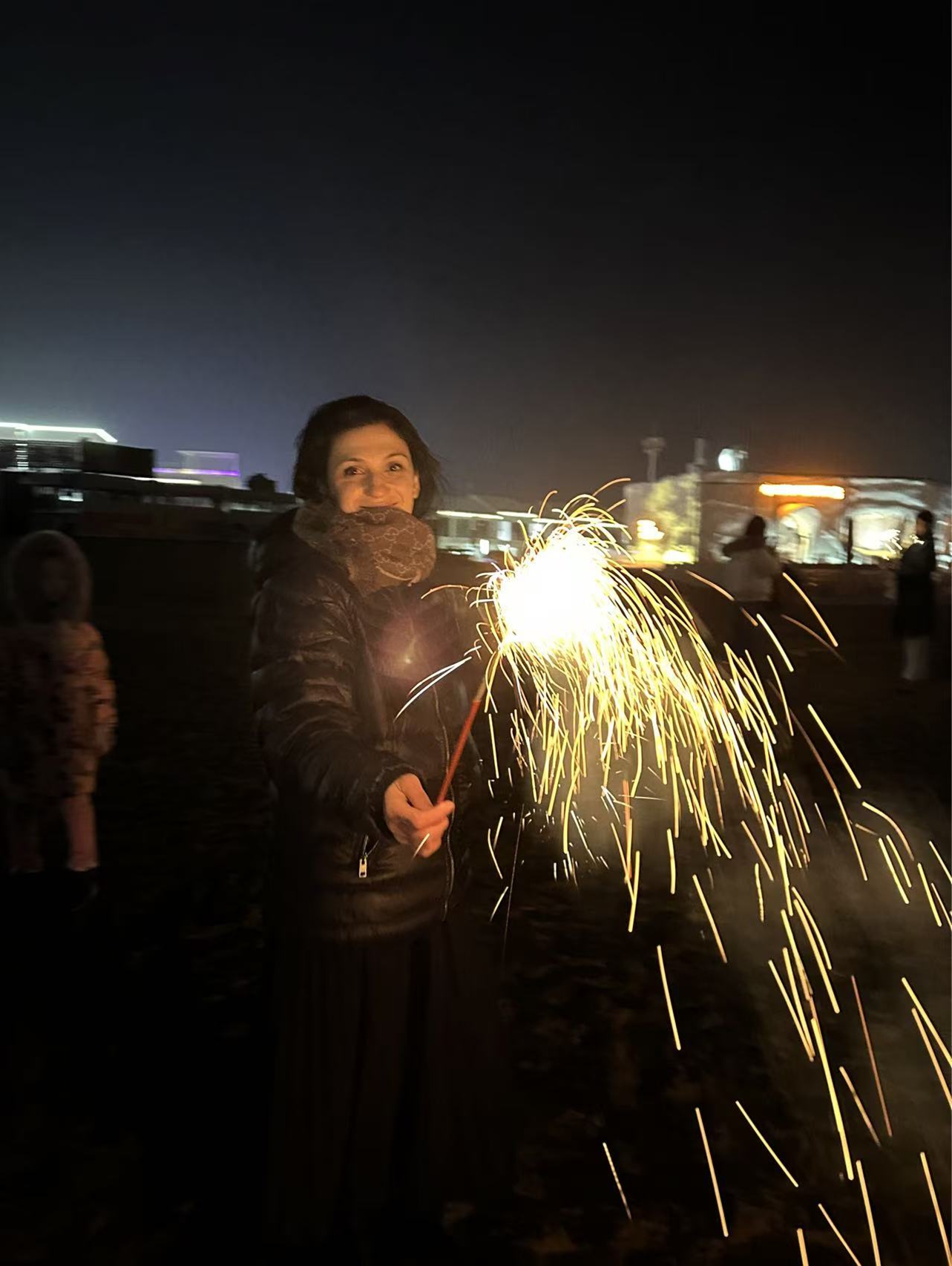
Andreea-Ema Stoian enjoys fireworks by the seashore in Rizhao, East China's Shandong Province, on February 14, 2026.
Cultural expert at the Romanian Cultural Institute Andreea-Ema Stoian told the Global Times that she has enjoyed her time off with her family and friends in Rizhao, East China's Shandong Province, her husband's hometown. To her, this Spring Festival was special because it was dedicated entirely to family time. "What I truly appreciate about the Spring Festival in China is how intentionally families spend time together," said Stoian.This year her celebration "was simple and centered on family traditions."
"We watched the Spring Festival Gala together, which I consider one of the most beautiful elements of the holiday. Knowing that millions of families across China are watching the same program at the same time creates a strong sense of shared celebration," she shared.
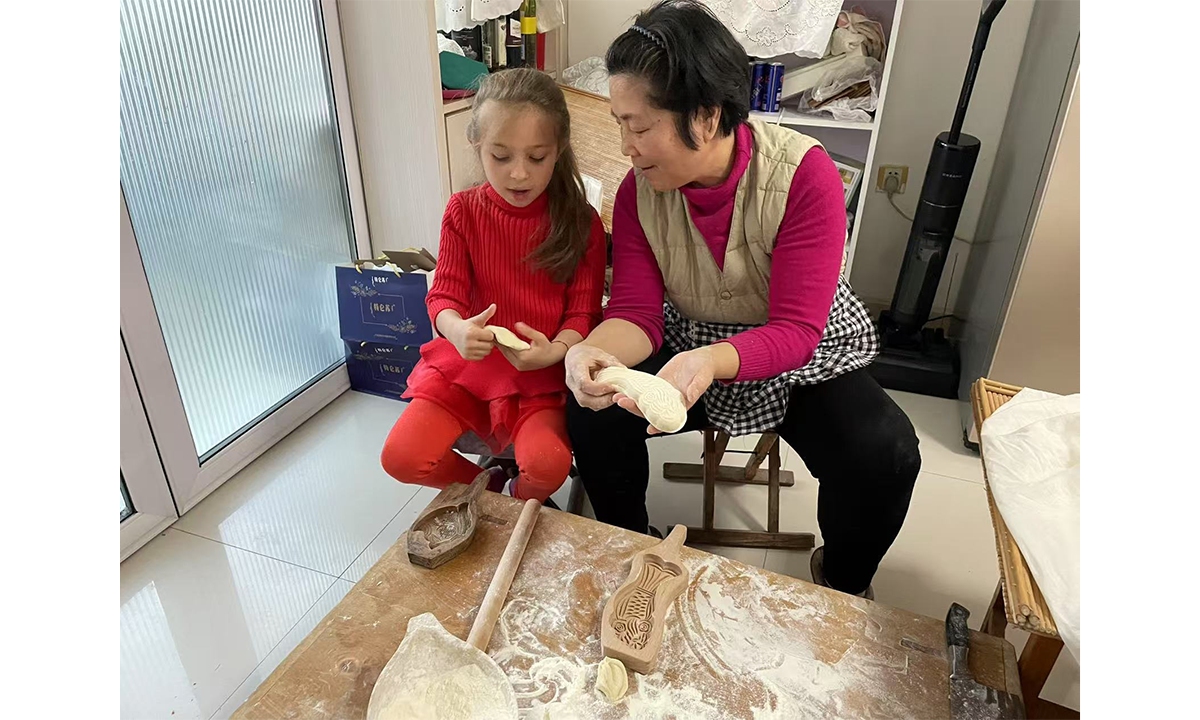
Andreea-Ema Stoian's extended family members (Smaranda, her friend's daughter and Ema Stoian's mother-in-law) prepare mantou, or steamed buns in Rizhao, East China's Shandong Province, on February 15, 2026. Photos: Courtesy of Andreea-Ema Stoian
Food was a highlight. "We exchanged red envelopes within the family, observed the preparation of mantou, or steamed buns, and enjoyed reunion meals together," Stoian recalled."I was treated to freshly fried fish from Rizhao, local bread, and colorful seasonal fruits. The table was generous and joyful. The flavors are different. The decorations are different. The language is different. But the joy is the same," she added.
For Stoian, this similarity is something very positive and uplifting. "It reminds me that although our cultures have unique traditions, the happiness of sitting around a table with family, sharing a meal, and welcoming a new year together is universal."
This Spring Festival was simple, full of warmth and happiness, said Stoian.
RELATED ARTICLES