China's offshore oilfields in southern Beibu Gulf achieve large-scale drone operations
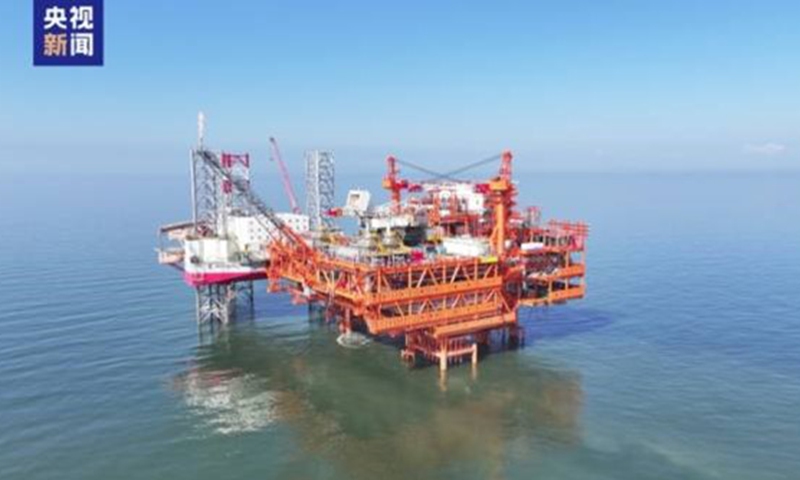
China's Kenli 10-2 oilfield comes online on July 22, 2025. Photo: screenshot of CMG's report
The drone operations system project for oilfields in the Beibu Gulf, South China's Guangxi Zhuang Autonomous Region, was officially launched over the weekend, state broadcaster China Central Television (CCTV) reported on Sunday. The move marks the first time in the country that large-scale drone operations have been implemented in offshore oilfields, providing a practical example of the integration between marine energy development and developing the low-altitude economy.
At the Weizhou 12-1 oilfield platform in the Beibu Gulf, approximately 50 nautical miles from the China's coastline, an industrial-grade drone equipped with a high-definition camera and infrared thermal imager was in full swing on Saturday. The drone is capable of conducting all-weather intelligent inspections in wind conditions up to Beaufort scale 7, and can complete in one hour the inspection workload that previously required an entire day for a tugboat, the report noted.
"Through on-site inspections, this drone can transmit real-time footage directly to our central control room from a remote location. Whether there are fishing vessels illegally anchoring on the sea surface or tiny leaks along the pipelines, we can see everything clearly from afar. This has significantly increased our on-site inspection efficiency by 30 percent while greatly reducing safety risks associated with manual operations in the field," Li Yanchuang, director of the Weizhou 12-1 Oilfield at CNOOC Zhanjiang Co, was quoted as saying in the report.
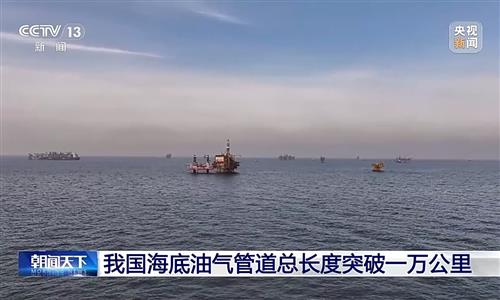
The Weizhou 12-1 oilfield central platform is responsible for crude oil processing and offloading from 13 surrounding production platforms. It is supported by 18 subsea pipelines with a total length of 238 kilometers.
Observers pointed out that the move marks a significant step for China's offshore oil industry in its "digital, intelligent, and low-carbon transformation." The application also holds exemplary significance for safeguarding national energy security, promoting the expansion of the low-altitude economy into deep-sea areas, and enhancing the intrinsic safety of offshore operations.
Lin Boqiang, director of the China Center for Energy Economics Research at Xiamen University, told the Global Times on Sunday that the drone system operations also show that "China is taking the global lead in embracing the intelligent drive" of the offshore oil industry.
"There are a lot of application scenarios for this technology, particularly in environments with harsh conditions or for missions that involve extremely high human safety risks and operational costs," Lin explained.
The low-altitude economy demonstration zone for offshore oilfields in the Beibu Gulf has rolled out drones across 41 offshore platforms and two onshore terminal plants. The drones cover multiple scenarios, including subsea pipeline inspection, logistics delivery and emergency security, according to the CCTV report.
To date, the drones put into operation in the Beibu Gulf area have accumulated more than 3,600 kilometers of pipeline inspection mileage. They are also used for the delivery of small parcels and meals, according to the CCTV report.
By replacing traditional tugboats and helicopters with the "eye in the sky" for inspections and "air express" for logistics, the system's application is expected to save nearly 15 million yuan ($2.18 million) annually in vessel leasing and fuel costs, while reducing carbon emissions by approximately 25,000 tons. This has truly achieved cost reduction, efficiency improvement, and intelligent upgrading in offshore oil operations, analysts said.
Global Times
RELATED ARTICLES