Clean energy, tech and public welfare projects lead investment drive to kick off Five-Year plan
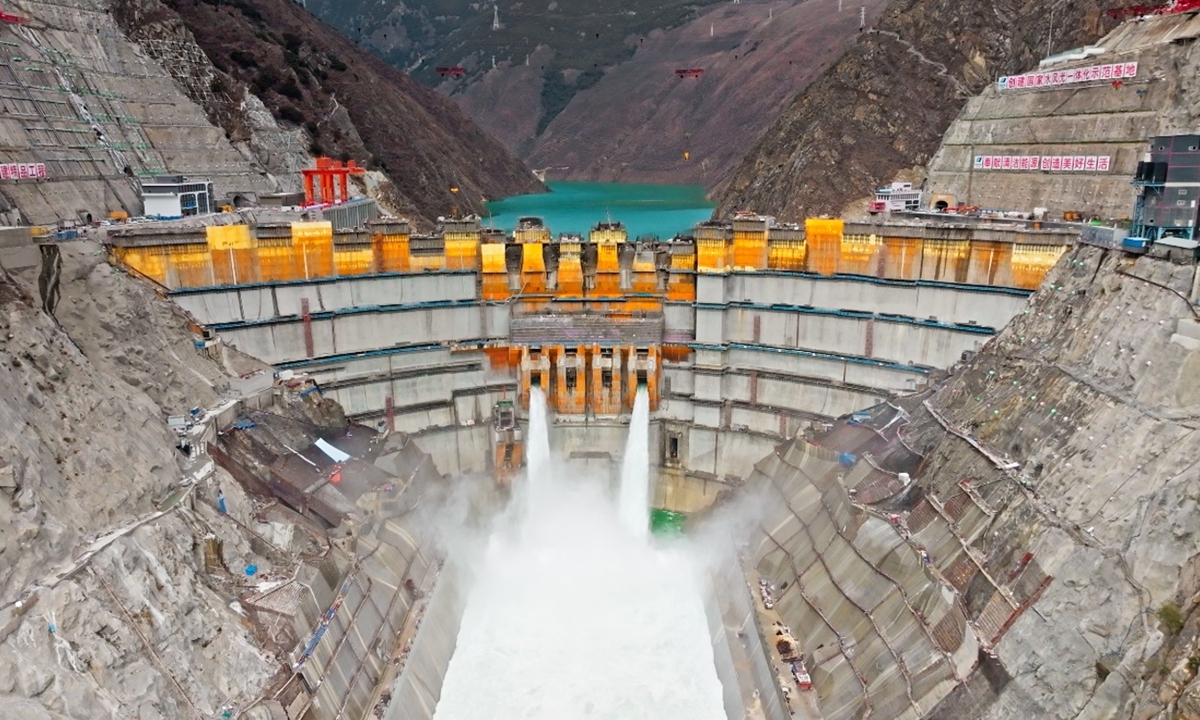
The Yebatan Hydropower Station
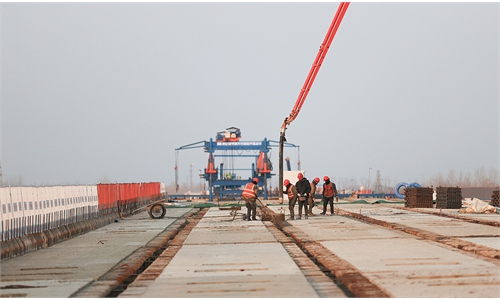
Provinces and cities across China have kick-started a new round of major projects after the Spring Festival holiday, with investments flowing into clean energy, technology and public welfare - a strong start to the 15th Five-Year Plan (2026-30), analysts say.
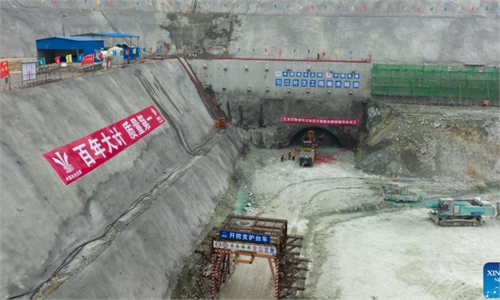
Baiyu county in Southwest China's Sichuan Province on Sunday held a groundbreaking ceremony for major projects scheduled for the first quarter of 2026. The projects cover key areas including clean energy, green mining and integrated power development, public services, ecological protection and infrastructure, the Sichuan Economic Daily reported.
A total of 66 projects, including hydropower stations, hybrid hydro-solar power facilities and modern ranch developments, involve combined investment of 2.6 billion yuan ($360 million). Once completed, they are expected to inject fresh momentum into Baiyu's high-quality development, according to the report.
Among them, the Yebatan hydropower station on the upper reaches of the Jinsha River - a major project under the country's west-to-east power transmission program - is set to become fully operational this year, with annual power generation of 5.119 billion kilowatt-hours. It is expected to provide strong support for improving the efficiency and scale of the clean energy sector in the region.
The wave of project launches comes as local governments across the country roll out pragmatic measures to boost investment, expand domestic demand, stabilize growth and accelerate structural transformation in the opening year of the 15th Five-Year Plan.
Major projects serve as a key engine for stabilizing investment and supporting growth, Li Changan, a professor at the Academy of China Open Economy Studies under the University of International Business and Economics, told the Global Times on Sunday. "The concentrated launch of major projects across regions sends a clear signal that at the start of the 15th Five-Year Plan period, efforts will be stepped up to expand investment demand, stabilize growth and, in turn, support employment," Li said.
The recommendations for the 15th Five-Year Plan call for expanding effective investment, optimizing the structure of government investment in order to allocate a larger portion to public wellbeing initiatives, and ensuring the high-quality development of programs for advancing major national strategies and bolstering security capacity in key areas.
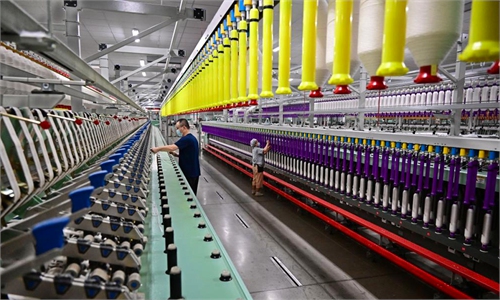
That momentum was on display in eastern China. On Saturday, Shanghai's Fengxian district launched 17 major projects for the first quarter, with total investment exceeding 4.8 billion yuan, the Shangguan News reported. The projects cover electronic chemicals, cosmetics, intelligent equipment and public infrastructure, and are expected to generate more than 8 billion yuan in annual output value once fully operational.
Of the total, 14 industrial projects are aligned with Fengxian's four key industrial clusters: health and wellness, green new energy, advanced materials and digital-intelligent equipment, the report noted.
On Friday, Shanghai's Pudong New Area announced the full commencement of 32 major municipal and district-level projects, covering five categories - urban infrastructure, urban renewal, technology industries, ecological environment and public services, with total investment reaching 57.8 billion yuan, according to the district's official WeChat account.
For the full year of 2026, Pudong plans to implement 380 major projects, with total investment estimated at about 1.52 trillion yuan. So far, projects either under construction or newly started account for about 80 percent of this year's planned total.
In Foshan, South China's Guangdong Province, groundbreaking on 101 major projects is scheduled for the first quarter, with total investment of 87.309 billion yuan and planned annual investment of 15.804 billion yuan, according to the local government.
Of the 71 industrial projects, nearly 60 percent focus on advanced manufacturing and other new quality productive forces. Flagship projects, including an embodied intelligent robotics data training center and an integrated air-ground smart operations hub, are expected to spur growth in emerging sectors such as artificial intelligence and smart logistics.
Across regions, investment is increasingly flowing into clean energy, green industries and public services - sectors that Li said will serve as key growth engines during the 15th Five-Year Plan period. The shift reflects a structural move toward new quality productive forces, generating fresh momentum while reshaping the employment landscape, he said.
Expanding domestic investment is also central to boosting overall domestic demand, Li said. "It strengthens industrial resilience, unlocks business potential, reinforces supply chain stability and underpins efforts to stabilize expectations and enhance the certainty of China's economic outlook," he added.
RELATED ARTICLES