ARTS / CULTURE & LEISURE
UNESCO concerned as airstrike damages Golestan Palace in Tehran; Chinese expert and travelers call for heritage protection
Netizens worried about state of heritage
By Published: Mar 03, 2026 07:58 PM

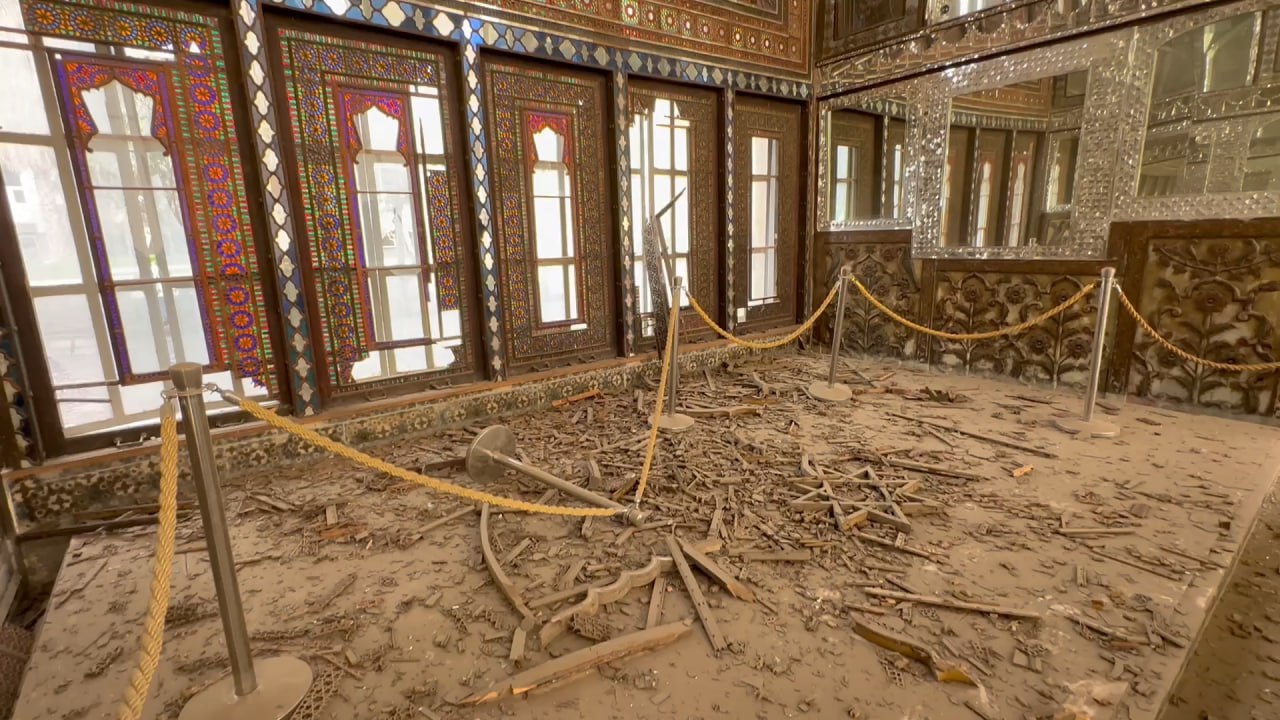
Damage caused to the World Heritage site of Golestan Palace by the US-Israeli airstrike Photo: @Iran_GOV on X
Tehran's historic Golestan Palace, a UNESCO World Heritage site, was reportedly damaged on Monday by debris and the shock wave following an airstrike to the Arag Square, located in the buffer zone of the site in the Iranian capital."The Golestan Palace was among the sites that sustained serious damage and destruction following the attacks carried out by the United States and the Israeli regime on Sunday night," the Government of the Islamic Republic of Iran said in a post on platform X.
UNESCO has expressed "concern" over the protection of heritage sites across the Middle East amid the escalating war. The UN's cultural agency said it had "communicated to all parties concerned the geographical coordinates of sites on the World Heritage List as well as those of national significance, to avoid any potential damage."
It pointed to the protections for cultural property enshrined in international law, notably the 1954 Hague Convention for the Protection of Cultural Property in the Event of Armed Conflict, including its enhanced protection mechanism, as well as the 1972 Convention concerning the Protection of the World Cultural and Natural Heritage.
Huo Zhengxin, a law professor at the China University of Political Science and Law, explained in an interview with the Global Times on Tuesday, under the international law, the international community should "unite and employ diplomatic, political, and public opinion measures to urge the conflicting parties to take strong actions in protecting cultural heritage."
"When necessary, international assistance and intervention should be provided to ensure that cultural heritage in the region is safeguarded from the ravages of war, thereby collectively safeguarding humanity's cultural heritage," Huo said.
The news about the Golestan Palace being damaged also raised concerns from Chinese netizens, many of who had visited it before.
"The first news I read today was about the Golestan Palace being bombed. It feels like just last year that I visited the Palace," says one post on China's social media platform RedNote.
"Nowhere else in the world can you find such large-scale, well-proportioned mirrors with such exquisite aesthetics. Now that it has been bombed, it's truly lamentable. The flames of war should never touch great historical and cultural heritage. This is the wealth of all humanity," the post continues.
From ancient ruins to the lush Hyrcanian Forests, Iran now owns 29 UNESCO World Heritage sites, 26 cultural and 3 natural ones, which reflect a cultural legacy and landscapes. Among the most famous sites are Persepolis, the historic city of Yazd, and the Persian Gardens.
According to the UNESCO official introduction, the lavish Golestan Palace is a masterpiece of the Qajar era, embodying the successful integration of earlier Persian crafts and architecture with Western influences. The walled Palace, one of the oldest groups of buildings in Tehran, became the seat of government of the Qajar family, which came into power in 1779 and made Tehran the capital of the country. Built around a garden featuring pools as well as planted areas, the Palace's most characteristic features and rich ornaments date from the 19th century.
Its exquisite gardens, intricate tile work, and stunning mirror halls have earned it a place on UNESCO's World Heritage List since 2013.
RELATED ARTICLES