ARTS / CULTURE & LEISURE
National Traditional Orchestra to launch concert season blending heritage with innovation
By Published: Mar 03, 2026 11:33 PM

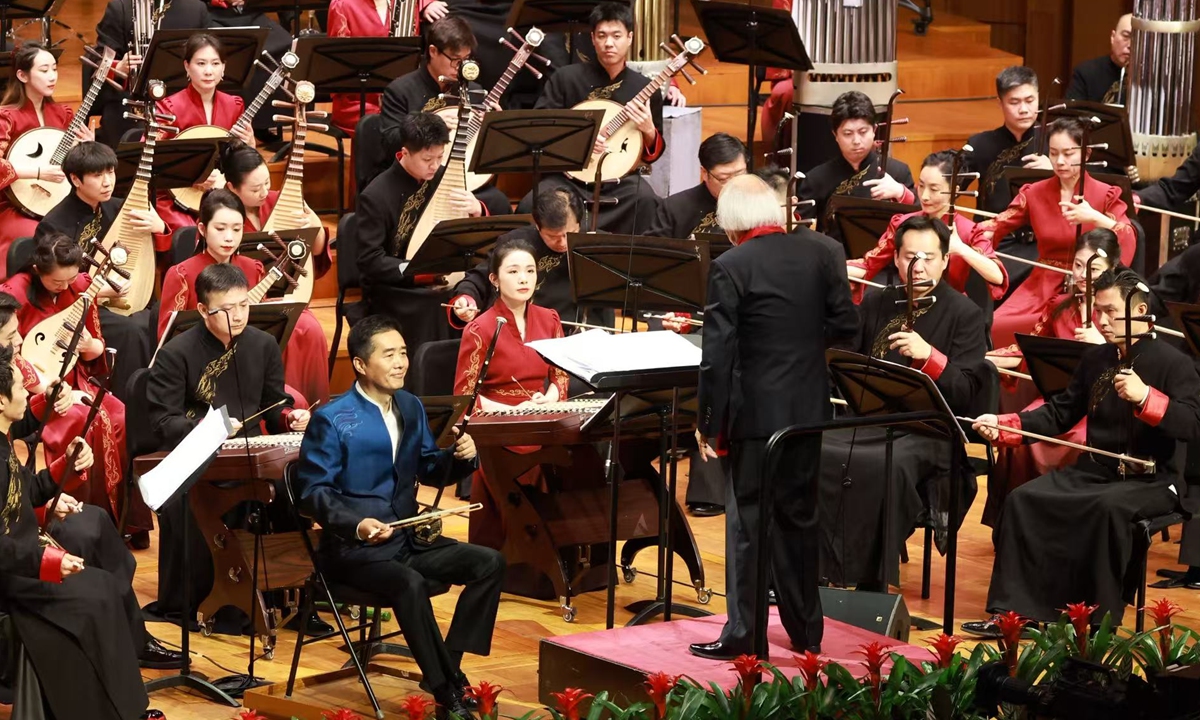
Photo: Courtesy of China National Traditional Orchestra
On Tuesday, the day of the Lantern Festival, the China National Traditional Orchestra (CNTO) announced the launch of a landmark initiative: Its first-ever formal concert season This move fills a long-standing need for a standardized performance calendar at the national level for traditional Chinese music. More significantly, it represents a bold assertion of cultural subjectivity, orchestrated entirely along the rhythms of Chinese calendar. This season signals a milestone in the systemic and professional development of China's traditional music, vividly capturing the dynamic spirit of "national music in its youth."The most striking innovation of this season lies in its conscious departure from the Western symphonic model of a season spanning from fall to summer. Instead, the CNTO has woven its calendar into the fabric of the traditional Chinese calendar. The season commences with the Lantern Festival and will conclude around Minor New Year (xiaonian), with themes and repertoire flowing in sync with the changing seasons, solar terms, and traditional festivals.
This is more than a scheduling tweak; it is a profound act of cultural introspection. It re-embeds the rhythms of traditional music into the cyclical tempo of Chinese cultural and agrarian life, allowing the melodies of silk and bamboo to resonate with the pulse of nature and folk customs. By using Chinese calendar as its metronome, the season provides a tangible, aesthetic vessel for cultural transmission, grounding heritage in a deeply familiar temporal and sensory experience.
The commitment to inheritance is also evident in the systematic revisiting and refinement of the orchestra's six-decade repertoire. Signature productions like Red Attire National Music will be updated and polished. A new concert series, Beams of Light, is planned to systematically revisit classic works. This careful curation aims to build guidance for the traditional Chinese orchestra.
The youthful vitality of the season manifests in its expansive, inclusive artistic vision. Creatively, the CNTO has commissioned new works from composers across the globe, spanning diverse regions, ages, and styles. For performances, it has invited a wide range of conductors from the symphonic world, from veterans to those born in the 1990s, to lead the traditional ensemble, fostering a new change to China's traditional music.
Nowadays, an increasing number of young musicians are incorporating traditional instruments into electronic music, rock, and other genres. This cross-border fusion represents a trend in music development, as it not only brings new forms of expression to traditional instruments but also enriches the diversity of contemporary music. Balancing tradition and modernity, as well as inheritance and development, traditional Chinese music must strike a proper balance.
On the one hand, it is essential to respect and preserve tradition, retaining its unique artistic and historical value. On the other hand, continuous innovation is needed to adapt traditional music to the aesthetic demands and cultural context of modern society. By integrating with contemporary music and engaging in crossover collaborations, traditional Chinese music can breathe new life into itself.
Through trendy, accessible brands like the "National Music in its Youth" chamber series, the top traditional music orchestra seeks to bridge the gap between traditional art and modern urban life, making heritage feel fresh, fashionable, and relevant to a younger generation.
The author is a reporter with the Global Times. life@globaltimes.com.cn
RELATED ARTICLES