IN-DEPTH / IN-DEPTH
Through local CPPCC events and making suggestions, foreign residents in Shanghai experience firsthand practice of China’s democracy
By and Li Xundian in Shanghai Published: Mar 04, 2026 12:21 AM

Editor's Note:
The fourth session of the 14th National People's Congress (NPC) and the fourth session of the 14th National Committee of the Chinese People's Political Consultative Conference (CPPCC) kicked off in Beijing on March 5 and March 4, respectively. As an annual major political event, the national "two sessions" serve as an important platform for national lawmakers and political advisors to build consensus and deliberate on development plans, and a key window for the world to observe whole-process people's democracy in China.
The report to the 20th National Congress of the Communist Party of China clearly states that "primary-level democracy is an important manifestation of whole-process people's democracy." Against this backdrop, the Global Times launched a special series for this year's national two sessions titled "Their Stories with Chinese Democracy," focusing on vivid practices of primary-level democracy. From foreign experts to ethnic minority grassroots officials, from urban communities to rural fields, practitioners of whole-process people's democracy at primary level listen closely to public concerns and carefully sort through and refine suggestions. They translate ordinary people's aspirations and grassroots development demands into proposals and suggestions, which are then brought to the national "two sessions." There, NPC deputies and CPPCC National Committee members conduct in-depth deliberations and promote the formulation and implementation of relevant laws, regulations and policies. This complete cycle of fulfilling duties vividly demonstrates to the world the efficient operation and strong practical capacity of China's whole-process people's democracy.
"Experiencing it this close, I really feel like my horizons have been broadened!"
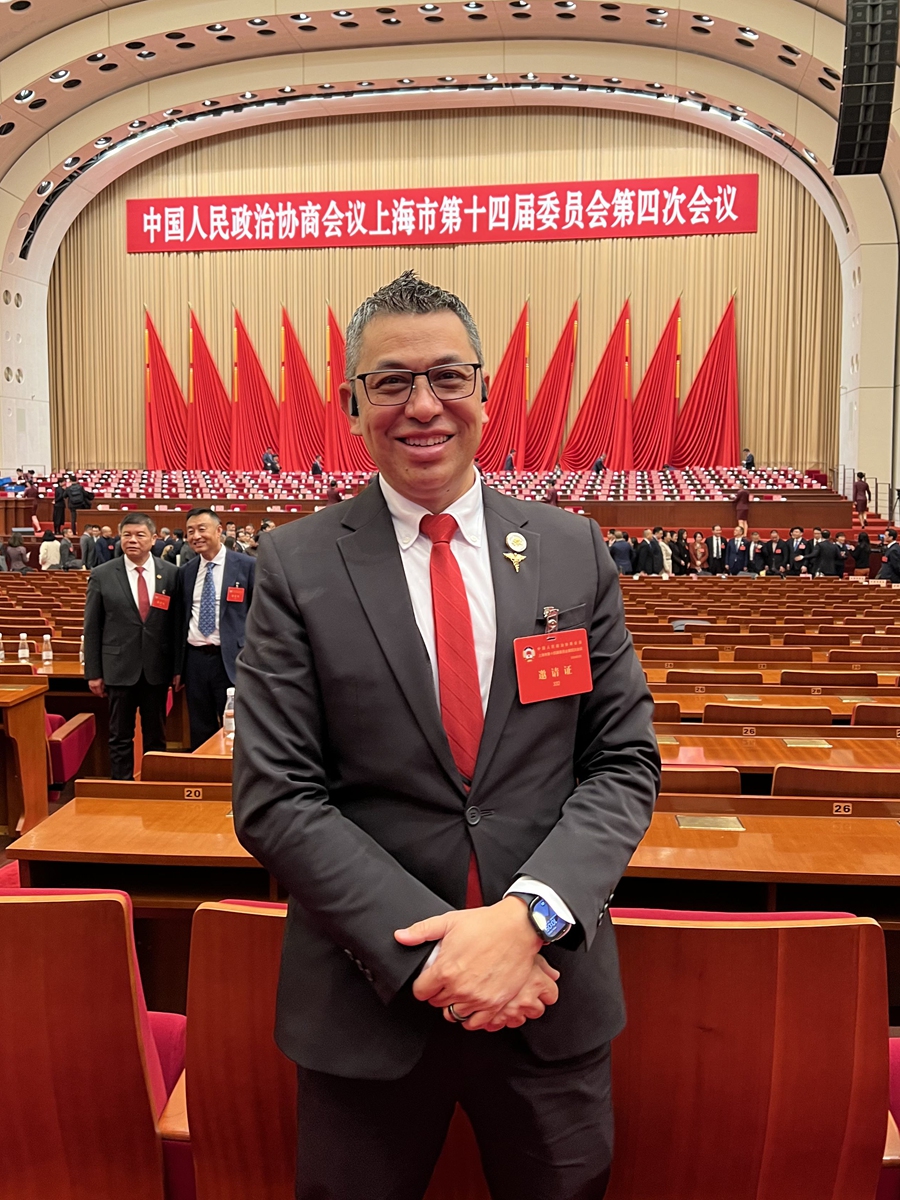
On February 2, at the opening session of the fourth session of the 14th Shanghai Municipal Committee of the CPPCC, the city's political advisory body, Nepalese surgeon Ashish Maskay - wearing the badge that marked him as an invited guest - turned to the camera with an excited smile.
"Professor Hong, your feedback has been approved; leaders in the relevant departments will push to implement several of your suggestions."
One day in August 2024, just two weeks after attending her first local CPPCC-held meeting and offering a few proposals, South Korean expert in traditional Chinese medicine (TCM) Hong Won-sook received that message from a staffer from the CPPCC Changning district committee. At that moment Hong felt a deep sense of gratification.
Whether it was the latest up-close experience for one, or the first, gratifying result two years earlier for the other, these two expatriates - following various paths of involvement - have directly witnessed and taken part in the vivid practice of China's whole-process people's democracy. With China's national "two sessions" about to begin, the Global Times reporters met with Maskay and Hong in Shanghai. They shared decades of life in the city and their firsthand impressions of taking part in various local CPPCC activities, offering a fresh overseas perspective on the most authentic expressions of China's democratic practice.
Being heard, valued
Whole-process people's democracy is the defining feature of socialist democracy; it is democracy in its broadest, most genuine, and most effective form. Its reach and warmth not only benefit Chinese citizens, but also make many foreigners here feel heard and valued.
In the third-floor orthopedic clinic at Shanghai United Family Hospital, Maskay lit up as he recounted a time when he felt his voice was truly listened to and taken seriously.
Maskay, who has lived in Shanghai for 23 years, used to be troubled by problems with foreigners' identity documents. Previously, foreign residents in China were given ID numbers in a different format than the 18-digit IDs used by Chinese citizens, causing frequent problems when opening bank accounts, checking into hotels, or buying tickets to tourist attractions.
Therefore, at several meetings for foreign residents organized by the CPPCC Shanghai municipal committee along with other government units, Maskay spoke up about these inconveniences. "I went in with a 'why not give it a try' attitude, and I didn't expect my voice to actually be taken seriously," he recalled. After he raised his concerns, staff from the committee carefully recorded them on the spot. Over the next two weeks or so, government officials in Shanghai contacted him to verify details, showing no hint of indifference simply because he was a foreigner.
In late 2023, the ID document for foreign residents in China was upgraded to an 18‑digit format consistent with Chinese citizens' identity numbers. Travel and everyday transactions for expats were freed from those previous obstacles.
"In the just-past Spring Festival this year, I traveled to Hainan deliberately without my passport, carrying only the upgraded ID - and everything went smoothly," Maskay told the Global Times with a smile. He said the episode left him with a deep impression that, "In China, there's no such thing as 'it can't be done.'"
Hong has similar experiences and feelings.
On July 19, 2024, Hong was invited to a meeting organized by the CPPCC Shanghai municipal committee themed "promoting better integration of foreign residents into Shanghai." As a TCM expert who has lived in China for 33 years, she wove observations from her daily work and life into concrete proposals at the meeting, which included calls for more humane entry services for foreign visitors with physical disabilities, and improved English-language services for public travel.
To Hong's surprise, in the same afternoon, staff from the CPPCC Changning district committee, the district where she lives, proactively contacted her to help refine the suggestions.
Hong's suggestions were formally submitted to the CPPCC Shanghai municipal committee and were taken up as a priority within just 15 days. Then Shanghai government departments responded fast: a dedicated English line was added to the car-hailing hotline; the city emergency dispatch center staffed multilingual call operators; and Suishenxing, a transport app in Shanghai also known as "SH MaaS," launched an English version covering a range of public transport services. "In just 15 days, the suggestions went from paper to practice," Hong told the Global Times.
For many foreigners in China, the concept of "whole‑process people's democracy" may seem abstract. Hong recalled that she knew nothing about the concept a few years ago, but after attending the meetings, discussions and other activities held by local CPPCC-related organizations, submitting suggestions and seeing them rapidly adopted and implemented, she gradually came to understand what it means in practice.
"I have shared [my case] with my foreign friends, telling them this was my first time personally experiencing China's whole-process people's democracy," said Hong. "In China, reasonable requests are always quickly answered and seriously implemented," she added.
Authenticity and effectiveness
For both Maskay and Hong, the authenticity and effectiveness of China's democracy are reflected not just in the final adoption of their suggestions, but are embedded in the entire process: it permits honest speech, values tangible results, and is rooted at the grassroots level.
Hong remembers hesitating for a moment when she prepared to offer suggestions at that July 2024 meeting. "I'm a foreigner, I wasn't sure if I could speak frankly," she said. It wasn't until a staffer from the local CPPCC committee told her at the meeting, "Professor Hong, we want to hear the truth so we can find the problems," that she felt reassured. "I spoke honestly, and not only did they listen carefully, they followed through," Hong told the Global Times. "It warmed my heart."
It is this mechanism - one that permits frank speech and ensures implementation - that has allowed a growing number of expatriates in China to realize a fundamental difference between Chinese democracy and Western models.
"In many countries democracy is top-down, and the voices of the many are often ignored; China's democracy is bottom-up, rooted in the grassroots," Maskay told the Global Times.
"Whether you are Chinese or not, any ordinary person can speak, those voices are passed up through the layers, and they get responses," he said.
In the eyes of Maskay and Hong, China's whole-process people's democracy has distinct, tangible traits: it is grounded and attentive to everyday life, so even small grievances get attention; it is efficient, without needless procedures or finger-pointing, so reasonable proposals are implemented fast; and it is inclusive - nationality, ethnicity, or occupation does not bar anyone living here from speaking up and taking part.
"China's democracy is not a formality; it is genuinely about serving the people," Hong added.
From bystanders to active participants
After years in China, many foreign residents including Maskay and Hong have gradually shifted from being bystanders to active participants in China's development. They haven't just witnessed China's transformation; they've contributed to it with their ideas and actions, becoming part of China's whole-process people's democracy.
As Maskay puts it, "We're expats, not outsiders."
In 2003, Maskay, then in his 20s, arrived in Shanghai to study medicine. Back then, he spoke almost no Chinese. He shopped by gesturing and, at a wet market, once tried so hard to buy a hen that he could only point at the eggs and tell the vendor, "I want its mother." As he gradually settled into the city and began to put down roots - especially after seeing his suggestions taken seriously by local authorities - that sense of being an outsider gradually faded.
In recent years Maskay has repeatedly taken part in activities organized by the CPPCC Shanghai municipal committee and other government units, offering proposals on food safety, the integration of foreigners, and measures to facilitate inbound tourism.
As China's national two sessions approach, Maskay is full of anticipation. He has already taken part in CPPCC-related activities in Shanghai this year, where he put forward two proposals: to further promote Shanghai's medical-tourism industry and to shorten the waiting period between voluntary blood donations for foreign nationals from six months to three. "I hope to keep offering suggestions for Shanghai and watch this city get better and better," he told the Global Times.
Hong has taken part in several consultative events organized by the CPPCC Shanghai municipal committee and various government bodies. In September 2024, for instance, she suggested that the design of a proposed Shanghai Industrial Museum incorporate elements of China's natural landscapes and cultural heritage. In September 2025, at a "foreign observers" event she put forward ideas for building more pet‑friendly communities. This year, Hong plans to propose enlarging the dimensions of squat toilets in Shanghai's public restrooms. Each suggestion springs from her love for the city, and each participation has deepened her understanding of whole‑process people's democracy.
"These activities made me realize that whole-process people's democracy is not a slogan but concrete practice, and both Chinese and foreigners can take part," Hong told the Global Times.
The stories of Maskay and Hong are a vivid microcosm of the many expatriates in China who engage in the practice of whole-process people's democracy. Their personal experiences reveal its warmth and strength: everyone living here, whether local or foreigner, can be both participants and beneficiaries of China's development and feel at home here.
"After 23 years in Shanghai, I truly feel that democracy here is not formalism," Maskay said. "It is real action: using the people's eyes to identify the people's problems."
The fourth session of the 14th National People's Congress (NPC) and the fourth session of the 14th National Committee of the Chinese People's Political Consultative Conference (CPPCC) kicked off in Beijing on March 5 and March 4, respectively. As an annual major political event, the national "two sessions" serve as an important platform for national lawmakers and political advisors to build consensus and deliberate on development plans, and a key window for the world to observe whole-process people's democracy in China.
The report to the 20th National Congress of the Communist Party of China clearly states that "primary-level democracy is an important manifestation of whole-process people's democracy." Against this backdrop, the Global Times launched a special series for this year's national two sessions titled "Their Stories with Chinese Democracy," focusing on vivid practices of primary-level democracy. From foreign experts to ethnic minority grassroots officials, from urban communities to rural fields, practitioners of whole-process people's democracy at primary level listen closely to public concerns and carefully sort through and refine suggestions. They translate ordinary people's aspirations and grassroots development demands into proposals and suggestions, which are then brought to the national "two sessions." There, NPC deputies and CPPCC National Committee members conduct in-depth deliberations and promote the formulation and implementation of relevant laws, regulations and policies. This complete cycle of fulfilling duties vividly demonstrates to the world the efficient operation and strong practical capacity of China's whole-process people's democracy.
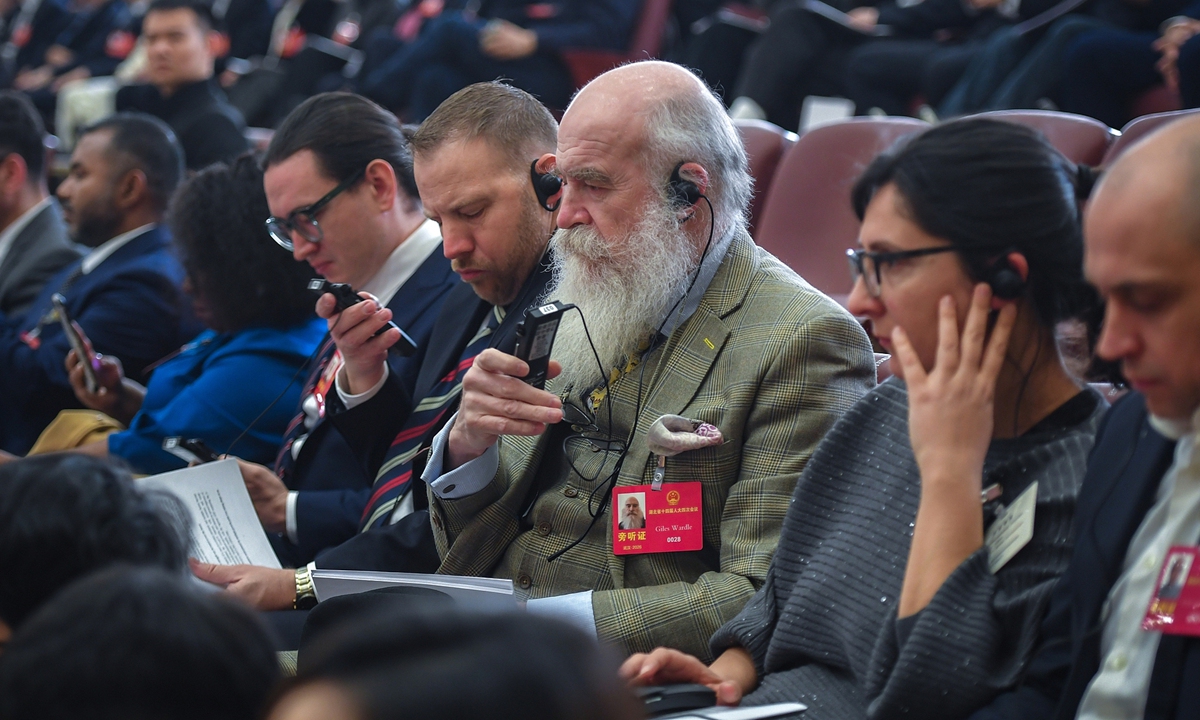
The fourth session of the 14th Hubei Provincial People's Congress opens on January 27, 2026. Officials from foreign consular offices in Hubei and foreign nationals attend the session as non-voting observers. Photo: VCG
"Experiencing it this close, I really feel like my horizons have been broadened!"
On February 2, at the opening session of the fourth session of the 14th Shanghai Municipal Committee of the CPPCC, the city's political advisory body, Nepalese surgeon Ashish Maskay - wearing the badge that marked him as an invited guest - turned to the camera with an excited smile.
"Professor Hong, your feedback has been approved; leaders in the relevant departments will push to implement several of your suggestions."
One day in August 2024, just two weeks after attending her first local CPPCC-held meeting and offering a few proposals, South Korean expert in traditional Chinese medicine (TCM) Hong Won-sook received that message from a staffer from the CPPCC Changning district committee. At that moment Hong felt a deep sense of gratification.
Whether it was the latest up-close experience for one, or the first, gratifying result two years earlier for the other, these two expatriates - following various paths of involvement - have directly witnessed and taken part in the vivid practice of China's whole-process people's democracy. With China's national "two sessions" about to begin, the Global Times reporters met with Maskay and Hong in Shanghai. They shared decades of life in the city and their firsthand impressions of taking part in various local CPPCC activities, offering a fresh overseas perspective on the most authentic expressions of China's democratic practice.
Ashish Maskay attends the opening session of the fourth session of the 14th Shanghai Municipal Committee of the CPPCC on February 2, 2026. Photo: Courtesy of Maskay
Being heard, valued
Whole-process people's democracy is the defining feature of socialist democracy; it is democracy in its broadest, most genuine, and most effective form. Its reach and warmth not only benefit Chinese citizens, but also make many foreigners here feel heard and valued.
In the third-floor orthopedic clinic at Shanghai United Family Hospital, Maskay lit up as he recounted a time when he felt his voice was truly listened to and taken seriously.
Maskay, who has lived in Shanghai for 23 years, used to be troubled by problems with foreigners' identity documents. Previously, foreign residents in China were given ID numbers in a different format than the 18-digit IDs used by Chinese citizens, causing frequent problems when opening bank accounts, checking into hotels, or buying tickets to tourist attractions.
Therefore, at several meetings for foreign residents organized by the CPPCC Shanghai municipal committee along with other government units, Maskay spoke up about these inconveniences. "I went in with a 'why not give it a try' attitude, and I didn't expect my voice to actually be taken seriously," he recalled. After he raised his concerns, staff from the committee carefully recorded them on the spot. Over the next two weeks or so, government officials in Shanghai contacted him to verify details, showing no hint of indifference simply because he was a foreigner.
In late 2023, the ID document for foreign residents in China was upgraded to an 18‑digit format consistent with Chinese citizens' identity numbers. Travel and everyday transactions for expats were freed from those previous obstacles.
"In the just-past Spring Festival this year, I traveled to Hainan deliberately without my passport, carrying only the upgraded ID - and everything went smoothly," Maskay told the Global Times with a smile. He said the episode left him with a deep impression that, "In China, there's no such thing as 'it can't be done.'"
Hong has similar experiences and feelings.
On July 19, 2024, Hong was invited to a meeting organized by the CPPCC Shanghai municipal committee themed "promoting better integration of foreign residents into Shanghai." As a TCM expert who has lived in China for 33 years, she wove observations from her daily work and life into concrete proposals at the meeting, which included calls for more humane entry services for foreign visitors with physical disabilities, and improved English-language services for public travel.
To Hong's surprise, in the same afternoon, staff from the CPPCC Changning district committee, the district where she lives, proactively contacted her to help refine the suggestions.
Hong's suggestions were formally submitted to the CPPCC Shanghai municipal committee and were taken up as a priority within just 15 days. Then Shanghai government departments responded fast: a dedicated English line was added to the car-hailing hotline; the city emergency dispatch center staffed multilingual call operators; and Suishenxing, a transport app in Shanghai also known as "SH MaaS," launched an English version covering a range of public transport services. "In just 15 days, the suggestions went from paper to practice," Hong told the Global Times.
For many foreigners in China, the concept of "whole‑process people's democracy" may seem abstract. Hong recalled that she knew nothing about the concept a few years ago, but after attending the meetings, discussions and other activities held by local CPPCC-related organizations, submitting suggestions and seeing them rapidly adopted and implemented, she gradually came to understand what it means in practice.
"I have shared [my case] with my foreign friends, telling them this was my first time personally experiencing China's whole-process people's democracy," said Hong. "In China, reasonable requests are always quickly answered and seriously implemented," she added.
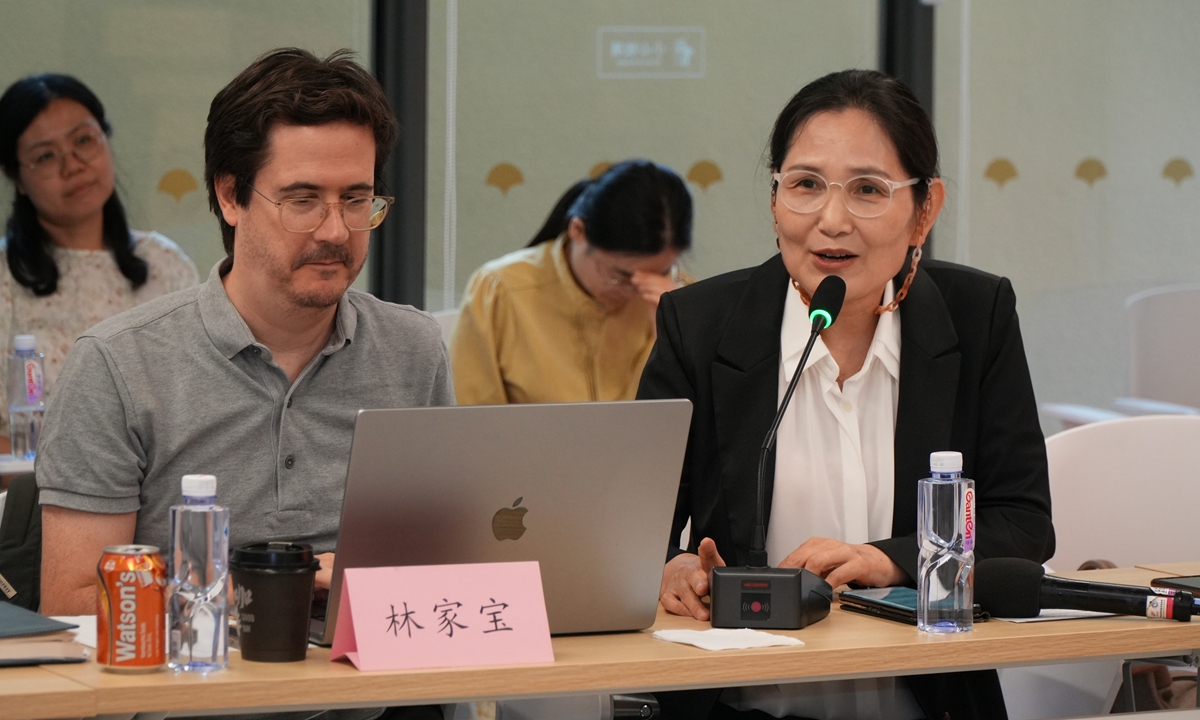
Hong Won-sook (right) speaks at a meeting organized by the CPPCC Shanghai municipal committee on July 19, 2024. Photo: Courtesy of Hong
Authenticity and effectiveness
For both Maskay and Hong, the authenticity and effectiveness of China's democracy are reflected not just in the final adoption of their suggestions, but are embedded in the entire process: it permits honest speech, values tangible results, and is rooted at the grassroots level.
Hong remembers hesitating for a moment when she prepared to offer suggestions at that July 2024 meeting. "I'm a foreigner, I wasn't sure if I could speak frankly," she said. It wasn't until a staffer from the local CPPCC committee told her at the meeting, "Professor Hong, we want to hear the truth so we can find the problems," that she felt reassured. "I spoke honestly, and not only did they listen carefully, they followed through," Hong told the Global Times. "It warmed my heart."
It is this mechanism - one that permits frank speech and ensures implementation - that has allowed a growing number of expatriates in China to realize a fundamental difference between Chinese democracy and Western models.
"In many countries democracy is top-down, and the voices of the many are often ignored; China's democracy is bottom-up, rooted in the grassroots," Maskay told the Global Times.
"Whether you are Chinese or not, any ordinary person can speak, those voices are passed up through the layers, and they get responses," he said.
In the eyes of Maskay and Hong, China's whole-process people's democracy has distinct, tangible traits: it is grounded and attentive to everyday life, so even small grievances get attention; it is efficient, without needless procedures or finger-pointing, so reasonable proposals are implemented fast; and it is inclusive - nationality, ethnicity, or occupation does not bar anyone living here from speaking up and taking part.
"China's democracy is not a formality; it is genuinely about serving the people," Hong added.
From bystanders to active participants
After years in China, many foreign residents including Maskay and Hong have gradually shifted from being bystanders to active participants in China's development. They haven't just witnessed China's transformation; they've contributed to it with their ideas and actions, becoming part of China's whole-process people's democracy.
As Maskay puts it, "We're expats, not outsiders."
In 2003, Maskay, then in his 20s, arrived in Shanghai to study medicine. Back then, he spoke almost no Chinese. He shopped by gesturing and, at a wet market, once tried so hard to buy a hen that he could only point at the eggs and tell the vendor, "I want its mother." As he gradually settled into the city and began to put down roots - especially after seeing his suggestions taken seriously by local authorities - that sense of being an outsider gradually faded.
In recent years Maskay has repeatedly taken part in activities organized by the CPPCC Shanghai municipal committee and other government units, offering proposals on food safety, the integration of foreigners, and measures to facilitate inbound tourism.
As China's national two sessions approach, Maskay is full of anticipation. He has already taken part in CPPCC-related activities in Shanghai this year, where he put forward two proposals: to further promote Shanghai's medical-tourism industry and to shorten the waiting period between voluntary blood donations for foreign nationals from six months to three. "I hope to keep offering suggestions for Shanghai and watch this city get better and better," he told the Global Times.
Hong has taken part in several consultative events organized by the CPPCC Shanghai municipal committee and various government bodies. In September 2024, for instance, she suggested that the design of a proposed Shanghai Industrial Museum incorporate elements of China's natural landscapes and cultural heritage. In September 2025, at a "foreign observers" event she put forward ideas for building more pet‑friendly communities. This year, Hong plans to propose enlarging the dimensions of squat toilets in Shanghai's public restrooms. Each suggestion springs from her love for the city, and each participation has deepened her understanding of whole‑process people's democracy.
"These activities made me realize that whole-process people's democracy is not a slogan but concrete practice, and both Chinese and foreigners can take part," Hong told the Global Times.
The stories of Maskay and Hong are a vivid microcosm of the many expatriates in China who engage in the practice of whole-process people's democracy. Their personal experiences reveal its warmth and strength: everyone living here, whether local or foreigner, can be both participants and beneficiaries of China's development and feel at home here.
"After 23 years in Shanghai, I truly feel that democracy here is not formalism," Maskay said. "It is real action: using the people's eyes to identify the people's problems."
RELATED ARTICLES