China’s services, manufacturing activity surge in Feb: surveys
Readings reflect steady industrial recovery momentum
Services sector Photo: VCG
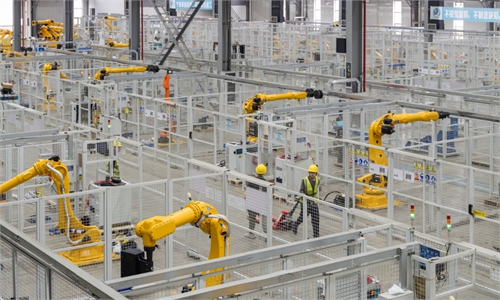
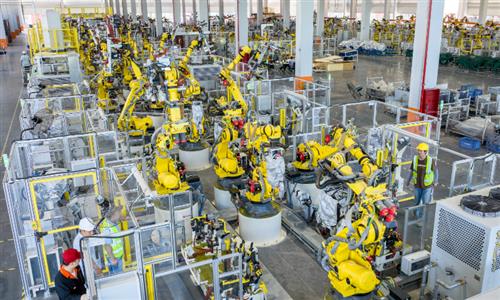
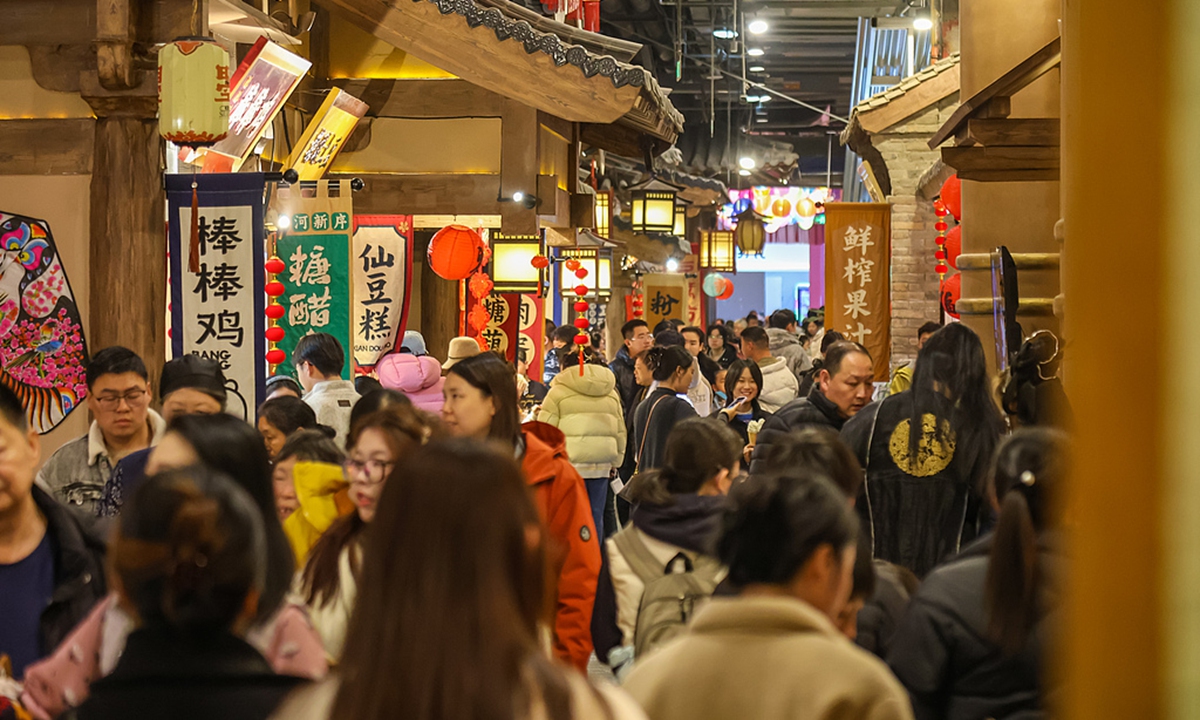
China's services and manufacturing activity both accelerated in February, with the services purchasing managers' index (PMI) hitting 56.7, while the manufacturing PMI rose to 52.1, the highest reading in more than five years, according to a private survey released on Wednesday.
China's industrial economy is maintaining steady recovery momentum, according to a survey published by RatingDog, a Chinese consultant firm, on its official WeChat account.
The PMI rise was driven by improved business vitality among small and medium-sized enterprises (SMEs), which account for more than 90 percent of China's enterprises and, to some extent, an uptick in SME performance as well as overall macroeconomic activity, Li Changan, a professor at the Academy of China Open Economy Studies under the University of International Business and Economics, told the Global Times on Wednesday.
According to Ratingdog's analysis, the survey found that market demand momentum in the services sector improved markedly, with faster business growth mainly driven by domestic promotional strategies and stronger client interest. Meanwhile, new export orders expanded at their fastest pace in a year. Expectations for future business activity across the sector remained firmly optimistic.
On the manufacturing front, both supply and demand expanded robustly in February. Total new orders expanded for a ninth consecutive month, with the growth rate accelerating sharply to the highest level since December 2020, according to the survey.
The survey also showed that external demand has made a notable contribution, as new export orders ended the previously moderate trend and registered the highest reading since September 2020, indicating robust momentum in overseas markets.
Driven by synchronized output growth in both manufacturing and services, the composite PMI output index climbed to 55.4 in February, the fastest expansion in 33 months, according to the survey.
Also on Wednesday, the official non-manufacturing PMI released by China's National Bureau of Statistics (NBS) stood at 49.5 in February, up 0.1 from the previous month. The manufacturing PMI came in at 49, down 0.3 month-on-month, according to the NBS.
Huo Lihui, chief statistician at the Service Survey Center of the NBS, said that historical data shows that PMIs often fluctuate in the month of the Spring Festival. The extended Spring Festival holiday period in 2026, which was entirely concentrated in the second half of February, had a notable impact on enterprise production and operations, leading to a general decline in manufacturing activity, said Huo.
Still, business expectations improved, with the production and operation activity expectation index reaching 53.2, up 0.6 from the previous month, indicating that manufacturing enterprises have strengthened their confidence in market development after the Spring Festival, the official said.
Meanwhile, the services sector's business activity level rebounded, with the index coming in at 49.7, up 0.2 from the previous month. By sector, driven by the Spring Festival holiday effect, business volume in industries related to travel and consumption grew rapidly. Among them, the business activity indices of accommodation, catering, and culture, sports, and entertainment were all above 60, according to Huo.
The RatingDog survey sometimes diverges from the NBS' PMI due to differences in survey coverage and sampling. The RatingDog survey is a gauge of smaller, export-oriented services providers along China's east coast, while the official PMI mainly tracks large and medium-sized firms, according to Reuters.
Li noted that the official PMI being below the expansion-contraction threshold indicates continued pressure on large-scale industrial enterprises, adding that efforts should be made to boost domestic demand and stabilize exports to better cope with challenges arising from the complex external environment.
RELATED ARTICLES