BUSINESS / PRESS RELEASE
Reinterpreting tradition, Chinese designer brand steps onto the global stage
Songmont’s ‘song’ under world ‘mont’
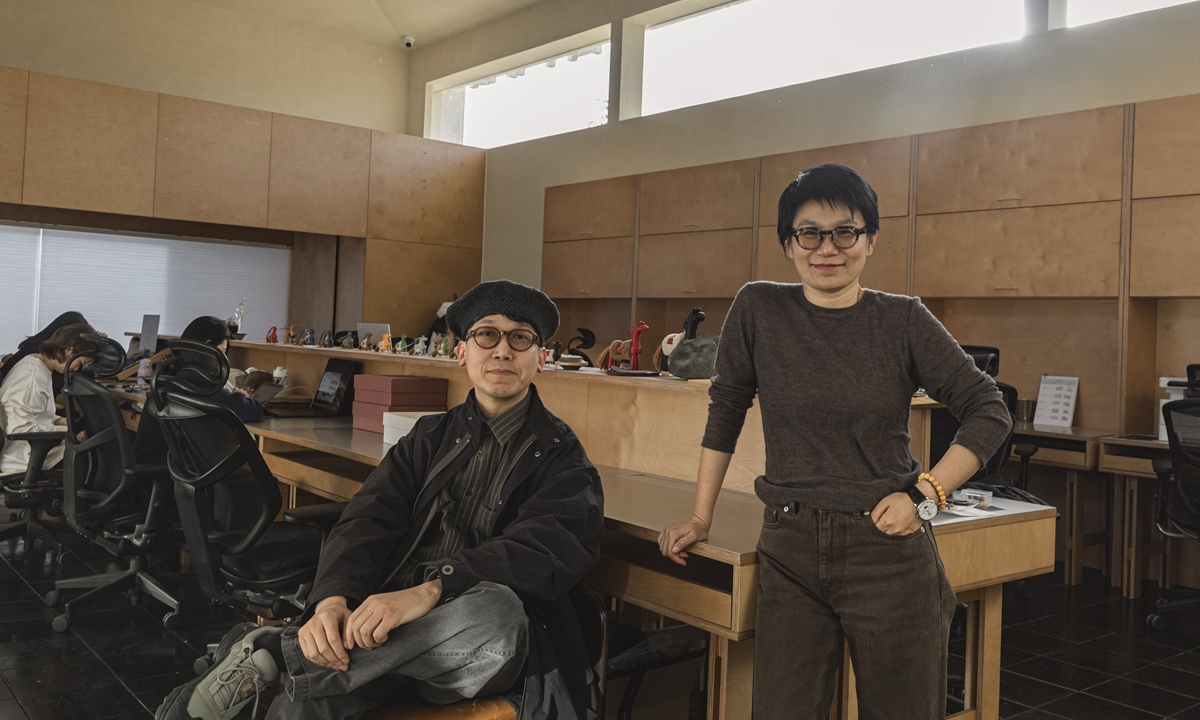
Songmont's founder Fu Song and co-founder Wang Jie Photo: Li Hao/GT
Founded in the Chinese mainland in 2013, the handbag brand Songmont has grown to operate stores in more than ten cities nationwide. From its roots in North China's Shanxi Province to its spotlight at Paris Fashion Week, the brand has consistently remained committed to Eastern aesthetics and the human touch of artisanal craftsmanship.
Loved by fans worldwide, Songmont takes its name and spirit from the Eastern concept of "High mountains, sheltering pines." The name itself of "Song" (lit: pine) + "Mountain" embodies this philosophy. Since 2013, its signature collections - "Drippy," "Luna," and beyond - have reimagined classic Chinese aesthetics for the modern era. As the brand expands globally, it carries one clear message: Chinese bags are no longer just "manufactured," but "designed."
Craft details inspired by daily life embody the principles of restraint and symbiosis. They invite global audiences to contemplate the Chinese wisdom of "reverence for nature and timelessness." "We always look inward for inspirations," says Wang Jie, co-founder of the brand.
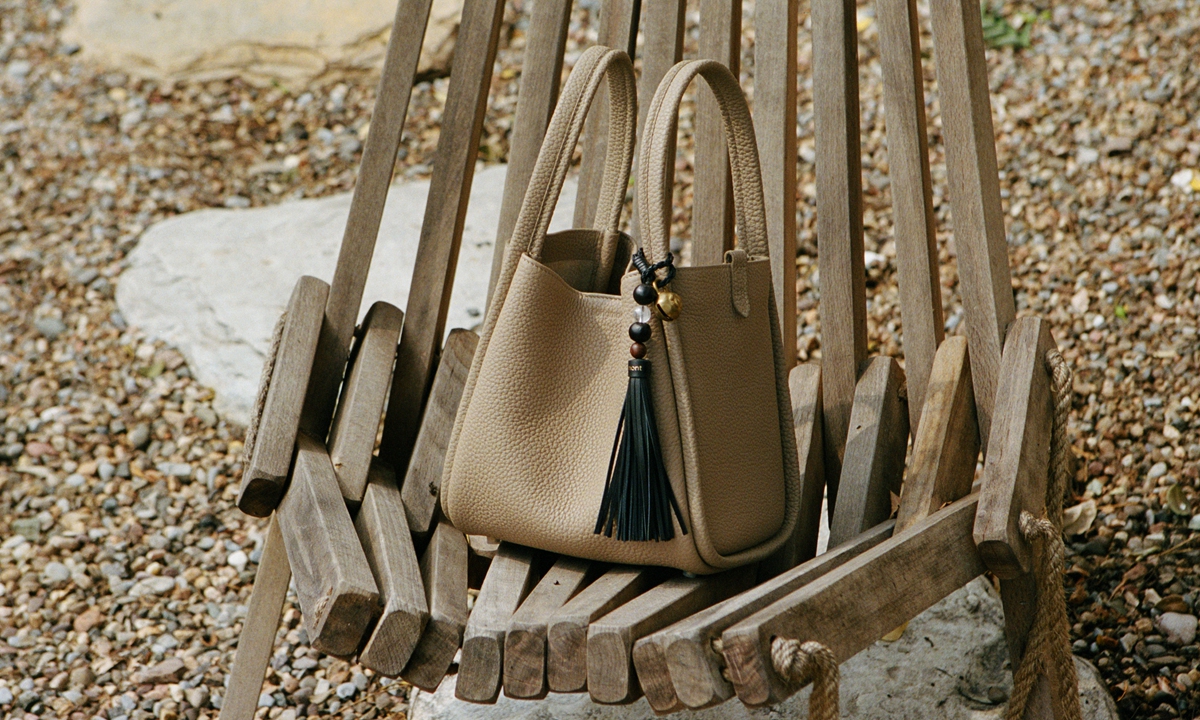
A bag belongs to Songmont's "Song" collection. Photo: Courtesy of Songmont
Translating culture into design
"To be timeless and reflective means resisting trends while rediscovering cultural traditions," says cultural scholar Gao Xin, a longtime observer of Songmont. Gao notes that since its founding, the brand has been dedicated to weaving Eastern aesthetics into daily life. But what does "Eastern aesthetics" truly mean for Songmont? Perhaps the answer is hidden in Shanxi - the hometown of its two founders: Fu Song and Wang Jie.
Growing up in a village in Shanxi's Wanrong county, Song's grandmother never learned to read, but through a lifetime of making the local tiger-head hats, an intangible cultural heritage (ICH), she wrote a story her hands alone could tell. Like many local women, Song's mother learned to stitch from her own mother. This tradition, passed down through memory, was sewn into Songmont's early designs. Later, Song's mother became the brand's first employee, leading a team of rural women with an average age of 65 to craft bags for the brand.
As market demand grew, Songmont infused this artisanal spirit with fresh, young energy - bringing tradition into contemporary life. In Beijing and Shanghai, a young, international team now drives the brand's design and operations.
Meanwhile, leveraging the strengths of the Guangdong-Hong Kong-Macao Greater Bay Area in global connectivity and manufacturing, the brand has established its supply chain team there.
"The brand's birthplace, Shanxi, is shaped by its dialogue with the Loess Plateau - a region rich in the multi-dimensional cultural heritage of the Yellow River civilization, from ancient architecture to traditional folk crafts," says Li Dongping, a researcher of Chinese folklore.
It is this homeland, the wellspring of the brand's inspiration, that has inspired its two founders to translate the local humanistic narratives of their roots through design.
Drawing inspiration from the curved eaves of Shanxi's Nanchan Temple, Songmont launched the "Drippy" collection. Yet its vision extends far beyond its homeland. With the "Yore" collection, Songmont incorporates Tibetan tiger motifs into minimalist bag designs and transforms the ICH "Wudo" legacy, a braiding technique, into its bag charm.
Local roots, global reach
Today, Songmont has now reached more than 150 countries across North America, Africa, Europe, and beyond, primarily through online sales. Offline, Songmont's flagship store in Shanghai is bustling. Over half of its customers are from overseas, sparking a reverse buying trend. In 2025, Bernard Arnault, head of global luxury giant LVMH, personally visited a Songmont store and walked out with two bags - a quiet nod to the Chinese brand's global potential.
"Songmont's global expansion is not just about taking a brand overseas - it's about cultural export. Through its products, it enables Chinese bags to engage in equal dialogue with international brands in the global fashion arena," says Professor Xu Xiaoliang, a scholar specializing in Chinese enterprises' strategies to go global.
Meanwhile, Songmont's experiential retail spaces have landed in key commercial districts across multiple cities, in Beijing, Chengdu, Shenzhen, Taiyuan, and beyond. Each store is conceived around a distinct cultural concept - blending traditional Chinese aesthetics with the city's local landscape and sustainable craftsmanship. For instance, Beijing's flagship store conveys the ancient Chinese philosophy of "gazing at the heavens within."
The Shenzhen, Shanghai, and Guangzhou stores, meanwhile, take their design cues from "waves polishing rocks," "pine pavilion," and "clouds rising from the sea." These aesthetic concepts seamlessly merge poetic imagery with Songmont's brand DNA of natural self-awareness.
The Eastern aesthetics conveyed by Songmont have become a footnote in the spread of Chinese culture overseas. Indeed, Western media - from French economic daily Les Échos, The Independent and Monocle to Bloomberg - have begun turning their attention toward Chinese brands that pay homage to the country's cultural heritage. Songmont stands as a prime example of this trend.
The brand's rise offers a new narrative: Its interpretation of Chinese aesthetics is becoming a highly recognizable cultural niche in the international luxury market, differentiating itself from traditional Western brands.
It is this cultural depth that gives Songmont's bags a distinct human touch. As one reviewer on Chinese lifestyle platform Xiaohongshu put it: "Once, the biggest selling point of a designer bag was the aura of the designer themselves. Today, Songmont proves that what truly moves people is the quality of the design."
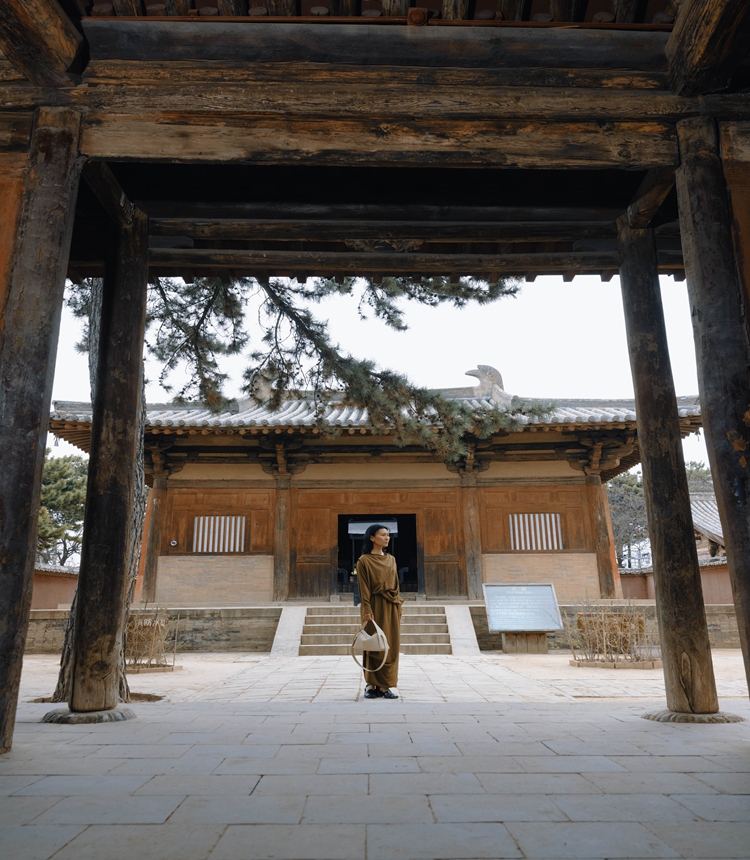
A promotional photo of Songmont Photo: Courtesy of Songmont
RELATED ARTICLES