A target of seeking progress while maintaining stability, being proactive and pragmatic: People’s Daily 'Jin Sheping' commentary
Economic growth targets have long attracted close attention. Over the past three years, China set its GDP growth target at around 5 percent, and the actual growth rate met the goal each year. Against this backdrop, this year's target has drawn particular interest.
On Thursday, while taking part in a deliberation with his fellow deputies from the delegation of Jiangsu Province at the fourth session of the 14th National People's Congress (NPC), Chinese President Xi Jinping said that to fulfill the development goals of the 15th Five-Year Plan period (2026-2030), China must navigate a more complex environment and resolve more deep-seated contradictions.
Xi, also general secretary of the Communist Party of China Central Committee and chairman of the Central Military Commission, urged major provincial economies to redouble efforts to gain experience in analyzing new situations and solving new problems.
For the first year of the 15th Five-Year Plan (2026-30) period, why the growth target was set at "4.5 percent to 5 percent"? What such a target implies for effective economic work? Thinking these questions through clearly and thoroughly will help us to fully, deeply, and accurately understand and grasp the strategic arrangements for economic and social development during the 15th Five-Year Plan period, as outlined at the Fourth Plenary Session of the 20th Communist Party of China (CPC) Central Committee, and to unite our efforts and work diligently to achieve a good start to the 15th Five-Year Plan.
The growth target of 4.5 percent to 5 percent is a proactive and pragmatic goal that grasps the underlying principles, taking into account both domestic economic operations and changes in the external environment, and balancing needs and possibilities.
For the target itself, "4.5 percent to 5 percent" is a range-based target. This leaves room to respond to various uncertainties while allowing different regions to set their own growth targets in light of local conditions. It also helps guide all sectors to focus their efforts on achieving high-quality development.
Indeed, this is not the first time China has set a range-based target in recent years. In 2016, China set its growth target at 6.5 percent to 7 percent, and in 2019 at 6 percent to 6.5 percent. Actual growth reached 6.8 percent and 6.1 percent in those two years, respectively. The decision to again adopt a target range this year reflects a coordinated consideration of both international and domestic situations, balancing development needs with possibilities, and embodying a pragmatic, fact-based approach.
Meanwhile, the sentence in the growth target - "striving for better results in practice" - underscores a proactive and enterprising goal-oriented approach and policy orientation. As long as favorable conditions are fully utilized, achieving better results remains entirely possible.
In terms of the general laws of economic development, it is common for growth to stabilize as an economy expands in size. After surpassing 140 trillion yuan in 2025, China's annual economic increment alone is now comparable to the total output of a medium-sized economy. At the same time, the conditions underpinning China's growth such as factor endowments and allocation efficiency are evolving, while continued development faces increasing constraints from resources and the environment. Today, achieving each additional percentage point of GDP growth requires greater efforts and the ability to confront larger challenges.
The growth target of 4.5 percent to 5 percent fully takes into account changes in both domestic and international situations and the evolving development environment.
At present, China's development environment is undergoing profound and complex changes. Domestically, the population aging is deepening, resource and environmental constraints are intensifying, and the transition from old to new growth drivers remains a demanding task. Externally, economic globalization is facing headwinds, geopolitical risks are intensifying, and global economic growth remains sluggish. The IMF forecasts global economic growth of 3.3 percent in 2026.
The growth target of 4.5 percent to 5 percent reflects a careful consideration of various domestic and international factors, as well as our advantages and potential risks and challenges. It is a realistic goal that fully acknowledges potential difficulties while remaining achievable with sustained effort.
The growth target of 4.5 percent to 5 percent balances the needs of both current and long-term development.
An important indicator of basically realizing socialist modernization is the "per capita GDP reaching the level of a moderately developed country." Working backward from the long-term development goals through 2035 and taking into account the projected population by that time, China's GDP would need to grow at an average annual rate of 4.17 percent during the 15th and 16th Five-Year Plan (2031-35) periods. Considering factors such as resource supply, technological progress, and institutional innovation, China's potential growth rate over the next decade is fully capable of supporting an average annual expansion of about 4.17 percent.
Viewed within the broader framework of Chinese modernization, the growth target of 4.5 percent to 5 percent aligns with medium- and long-term development goals and will help ensure the basic realization of socialist modernization. It represents a proactive yet pragmatic goal - one that aims high while maintaining steady progress - consistent with China's current development stage and the general laws of economic development.
For the first year of the 15th Five-Year Plan period, the growth target of 4.5 percent to 5 percent also takes into full account the need to leave policy space for structural adjustment, risk prevention, and reform. It will help stabilize employment, businesses, markets, and expectations, promote both qualitative improvements and reasonable quantitative growth in the economy, maintain social harmony and stability, and secure a solid start to the 15th Five-Year Plan period.
The growth target of 4.5 percent to 5 percent reflects an approach that seeks progress while maintaining stability and emphasizes improvement in quality and efficiency, helping drive high-quality and sustainable development.
While presiding over a group study session of the Political Bureau of the CPC Central Committee on January 30, General Secretary Xi noted that the extent of scientific and technological breakthroughs largely determines the speed, breadth and depth of the development of future industries.
"Developing new quality productive forces is crucial to driving high-quality development and enhancing economic competitiveness." Achieving high-quality development requires continuous improvements in labor, capital, land, resource and environmental efficiency, as well as a greater contribution from technological progress and higher total factor productivity.
Estimates show that in order to basically realize socialist modernization by 2035, China needs to maintain an average annual growth of around 2 percent in total factor productivity. Raising total factor productivity hinges on guiding advanced production factors to cluster around the development of new quality productive forces.
Adhering to the overall principle of pursuing progress while ensuring stability and focusing on high-quality development, the growth target of 4.5 percent to 5 percent carries richer meaning. It provides scientific guidance for growth in scale while setting higher requirements for improvements in quality and efficiency, reflecting deeper changes in development philosophy, growth models and sources of momentum.
In the first week after the Spring Festival holidays, China achieved a series of breakthroughs in key technologies: original advances in core lithium battery technologies, new progress in space-based biological experiments, and the first large-scale use of drones at offshore oilfields. Some foreign media commented that China, now entering an "innovation boom," is reshaping the global technological landscape.
At the ongoing "two sessions," lawmakers and political advisers have also brought a number of encouraging new developments.
Huang Sanwen, president of the Chinese Academy of Agricultural Sciences and an academician of the of the Chinese Academy of Sciences, said proudly that "China's grain, vegetables and meat are now mainly produced using Chinese-developed seeds."
Pan Jianwei, executive vice president of the University of Science and Technology of China, noted that China continues to lead globally in quantum communication while remaining among the world's top tier in quantum computing.
Zhong Baoshen, chairman and general manager of Longi Green Energy Technology, said with confidence that China's photovoltaic industry has demonstrated strong growth potential and resilience, achieving a shift from catching up to taking the lead.
Economic development is a dynamic process. Today's growth cannot be measured with yesterday's yardsticks, nor can today's development be viewed through the lens of the past.
Today, the growth target of 4.5 percent to 5 percent is not merely a speed indicator, nor a simple linear expansion in scale. Achieving it requires fully and faithfully implementing the new development philosophy, balancing improvements in quality with expansion in scale, and continuously generating stronger momentum for Chinese modernization.
The growth target of 4.5 percent to 5 percent can be fully achieved with sustained effort, and even better results can be pursued. The key lies in seeking truth from facts and working diligently to deliver concrete results.
The 15th Five-Year Plan period is a critical stage. Viewed from the historical timeline, only ten years remain until China aims to basically realize socialist modernization by 2035. It is therefore necessary to consolidate the foundation and advance on all fronts - achieving visible accomplishments while also undertaking long-term, foundational work.
The tighter the timeframe and the more complex the situation becomes, the more important it is to maintain strategic resolve, strengthen confidence in development, and carry forward a spirit of hard work, using the certainty of high-quality development to cope with the uncertainties of the international environment.
South China's Guangdong Province, a pioneer, trailblazer and testing ground of reform and opening-up, has ranked first in China in terms of regional GDP for 37 consecutive years. How can it continue to stay at the forefront?
Comparing oneself to others makes it hard to escape anxiety over growth rates. Comparing to its own past, however, allows Guangdong to better clarify its goals and find the right direction. For instance, in addressing the "largest shortcoming" of unbalanced urban-rural and regional development, Guangdong has launched the "Hundreds, Thousands and Tens of Thousands Project" tailored to its conditions, promoting stronger counties, invigorated towns, and revitalized villages.
Baiyun District, the largest central urban district in Guangzhou by both area and population, has long faced constraints from its urban-rural dual structure in pursuing high-quality development. In Qinghe Village of Renhe Town, 1,800 mu (120 hectares) of scattered farmland have been transformed into Renheyuan, a national 3A-level tourist attraction. In Helong Subdistrict, a low-end village-level industrial park has been upgraded into the design capital of Guangzhou, generating annual revenues of over 90 billion yuan. Since the implementation of the "Hundreds, Thousands and Tens of Thousands Project," all four towns in Baiyun District have entered the list of China's top 250 towns in terms of economic strength, while total collective village income across the district has surpassed 10 billion yuan, ranking first in Guangzhou.
The principle of "comparing with oneself" provides an important methodological approach for regions across China to carry out economic work in line with their own conditions.
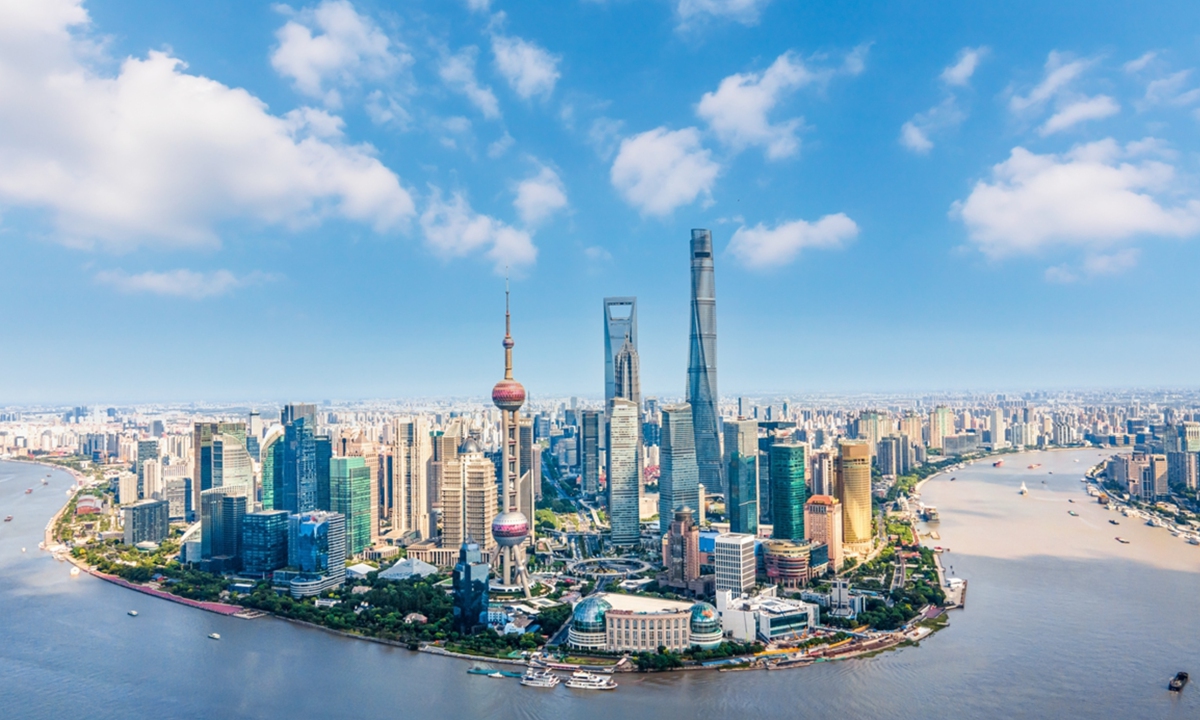
Southwest China's Yunnan Province has remained committed to an eco-priority and green development path, building a strong ecological security barrier in Southwest China. Shanghai is working to accelerate the building of a sci-tech innovation hub with global influence. North China's Shanxi Province is striving to make new strides in transforming its resource-based economy.
"Comparing with oneself" means focusing on doing one's own work well and addressing the challenges encountered in one's own development process.
During the 15th Five-Year Plan period, China's development environment will undergo profound and complex changes, and economic and social development will face many new issues. "We must seize this window of opportunity to consolidate and expand our advantages, remove bottlenecks and constraints, and shore up weaknesses. In the face of intense international competition, we must gain strategic initiative, advance major tasks that bear on the overall progress of Chinese modernization, and ensure decisive progress toward the basic realization of socialist modernization."
Chinese modernization is achieved step by step through hard work. By making our utmost efforts and striving for the best possible results - forging ahead step by step, advancing stage by stage, and accumulating small victories into greater ones - our target will definitely be achieved.
This was compiled from an article originally published by the People's Daily on March 6, 2026.
RELATED ARTICLES