China’s diplomacy brings stability and direction to the world: Global Times editorial
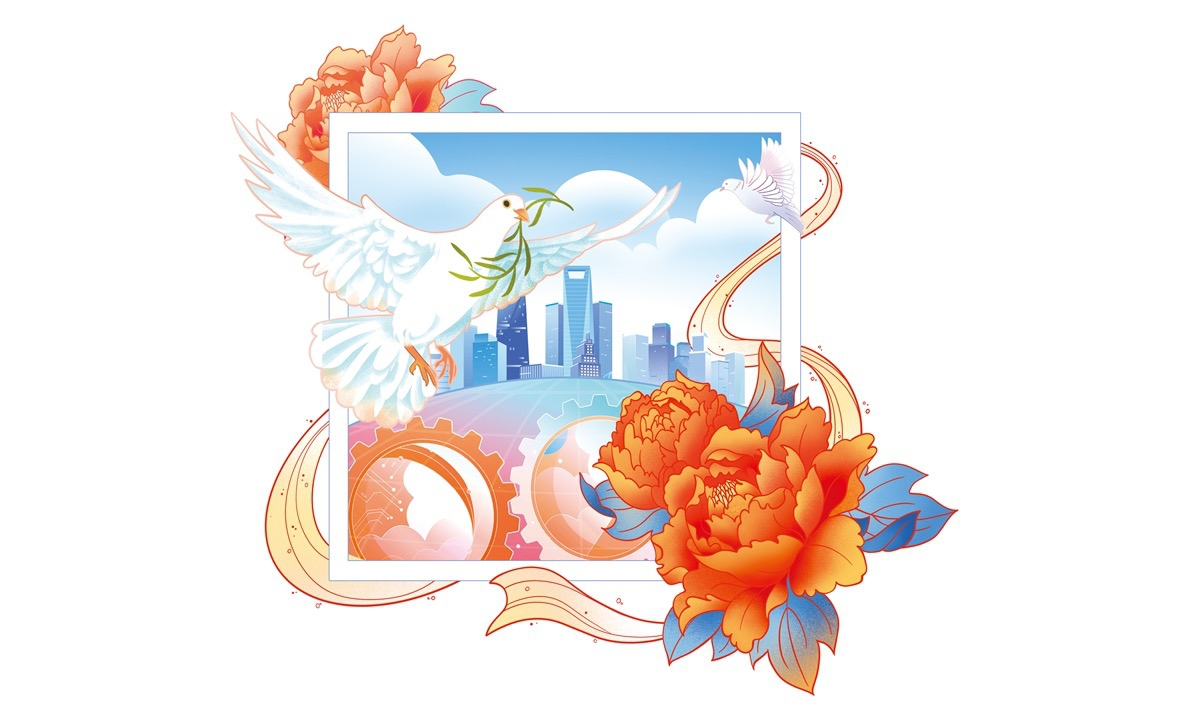
Illustration: Liu Rui/GT
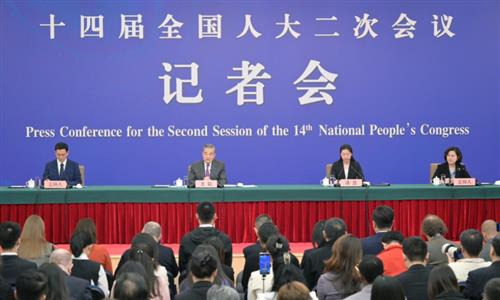
On Sunday, a press conference was held on the margins of the Fourth Session of the 14th National People's Congress, during which Member of the Political Bureau of the CPC Central Committee and Foreign Minister Wang Yi answered questions from Chinese and foreign media about China's foreign policy and external relations. This offered a panoramic presentation of China's concept and policies of major-country diplomacy with Chinese characteristics. In the inaugural year of the 15th Five-Year Plan (2026-30), China has clearly signaled its determination to be a stabilizer and driving force for world peace and development, promoting the building of a community with a shared future for humanity.
2025 was extraordinary in China's diplomacy. At the Shanghai Cooperation Organization (SCO) Summit in Tianjin, President Xi Jinping formally proposed the Global Governance Initiative, which received responses from more than 150 countries and international organizations. In today's international context, this initiative is particularly timely, offering Chinese wisdom and solutions for building a fairer and more equitable global governance system. From Southeast Asia to Russia, from presiding over the SCO Tianjin Summit to attending the commemoration of the 80th anniversary of the victory of the Chinese People's War of Resistance Against Japanese Aggression and the World Anti-Fascist War, head-of-state diplomacy has served as an anchor in China's diplomacy.
It was notable that more foreign journalists attended this year's press conference than in previous years. Héribert-Label Élisée Adjovi, a journalist from Benin, said that everyone was eager to hear China's voice and China's proposals amid a turbulent international landscape. According to Modern Diplomacy on Saturday, China is building a "Force-Free" world order and promoting a Chinese model of development based on peaceful development and mutual benefit. When talking about China's role in today's world, foreign journalists covering the two sessions frequently mentioned terms such as "peace-loving," "cooperative" and "stable." The world has witnessed China's strategic composure and sense of responsibility as a major power in a period of international turbulence and transformation.
Through Wang's answers, we have seen a responsible major power that upholds fairness and justice, and uses its continuous stability and opening-up to mitigate uncertainties in the international landscape. His remarks included a loud call for peace and a clear rejection of the law of the jungle: "Old scripts from the 19th century shouldn't be acted out on the international stage of the 21st." They also included a firm defense of the post-war international order and stern warnings against the resurgence of militarism: "A strong China with 1.4 billion people will never allow anyone to justify colonialism or reverse history's verdict on aggression." From advocating that China and the US should lengthen the list of cooperation, and shorten the list of problems, to inviting Europe to step out of the "small attic" of protectionism and walk into the "fitness club" of the Chinese market, the world saw China's diplomacy adopting a more open, composed and confident posture.
As Wang noted in the opening of the press conference, today's China is forging ahead at full speed in building a great country, and our national rejuvenation is unstoppable. This reveals a profound logic: China's diplomacy is more capable and effective because it rests on the rise in comprehensive national strength brought by sustained development. During the 14th Five-Year Plan (2021-25) period, Chinese modernization became a global model of development. Over the past five years, China's economy has accounted for around 30 percent of global growth, greater than the contribution of the G7 Western countries combined. China has the world's largest potential consumer market and the most complete industrial system, which gives confidence to China's diplomacy.
The changes are reflected not only in growing hard power but also in rising soft power. International social media discussions such as "Becoming Chinese" or "China Maxxing" reflect global admiration for China's development model and lifestyle. The shift from being the "imitator" to being "imitated" provides a solid social and public opinion foundation for more effective Chinese diplomacy.
It is precisely these densely occurring "China moments" that make the world deeply aware that when certain major powers fall into a vicious cycle of policy disorder and withdrawing from agreements, China's diplomacy maintains a high degree of principled consistency, always standing on the right side of historical progress and becoming a pillar of stability amid global turbulences. Since the beginning of 2026, foreign leaders have visited China one after another, casting a "vote of confidence" in the country. In the coming period, China's diplomacy will become even more proactive. The APEC China Year will host over 300 events, leading the Asia-Pacific region in accelerating digital, intelligent, and green transformation toward the goal of an Asia-Pacific community. This year also marks a "landmark year" for China-US relations, as China and the US will actively explore ways to engage in the new era. Of course, the premise is that China doesn't subscribe to the logic that the world can be run by major countries and will never accept any provocations regarding core interests such as the Taiwan question.
At the beginning of the 15th Five-Year Plan, the "spirit and vigor" displayed by China's diplomacy aims to better serve domestic construction and development, as well as to build fair and orderly global multipolarity. As China steps onto the center stage of the world, it brings with it the olive branch of peace and the fast track of development. With a more responsible and proactive Chinese diplomacy, the country will undoubtedly inject more stable power and development momentum into the world in 2026.
RELATED ARTICLES