Illustration: Xia Qing/GT
At a time when the EU is grappling with multiple challenges, voices within the bloc seeking to step up trade pressure on China have become increasingly prominent. In reality, this approach of politicizing economic ties merely deflects attention from the need for domestic reform, threatening to inflict grave damage on the EU's own economy.A prime example of this troubling trend is a report published on Monday by the European Union Institute for Security Studies (EUISS), a think tank in the EU. Titled "China - A fragile power? How Europe can use its economic leverage over Beijing," the report distorts the challenges China faces in its industrial upgrading process into so-called "economic vulnerabilities" that are said to "create opportunities for the EU."
Consequently, it urges the EU to pursue "leverage-based diplomacy," which it defines as "conditioning access to the market or investment in high-technology sectors."
The report, rife with unfounded assumptions about China's economic trajectory and a narrow misinterpretation of China-EU relations, represents a dangerous attempt to weaponize and politicize economic issues. It not only underestimates the inherent resilience of the Chinese economy but also misrepresents the complex, interdependent China-EU bilateral relationship into a zero-sum game.
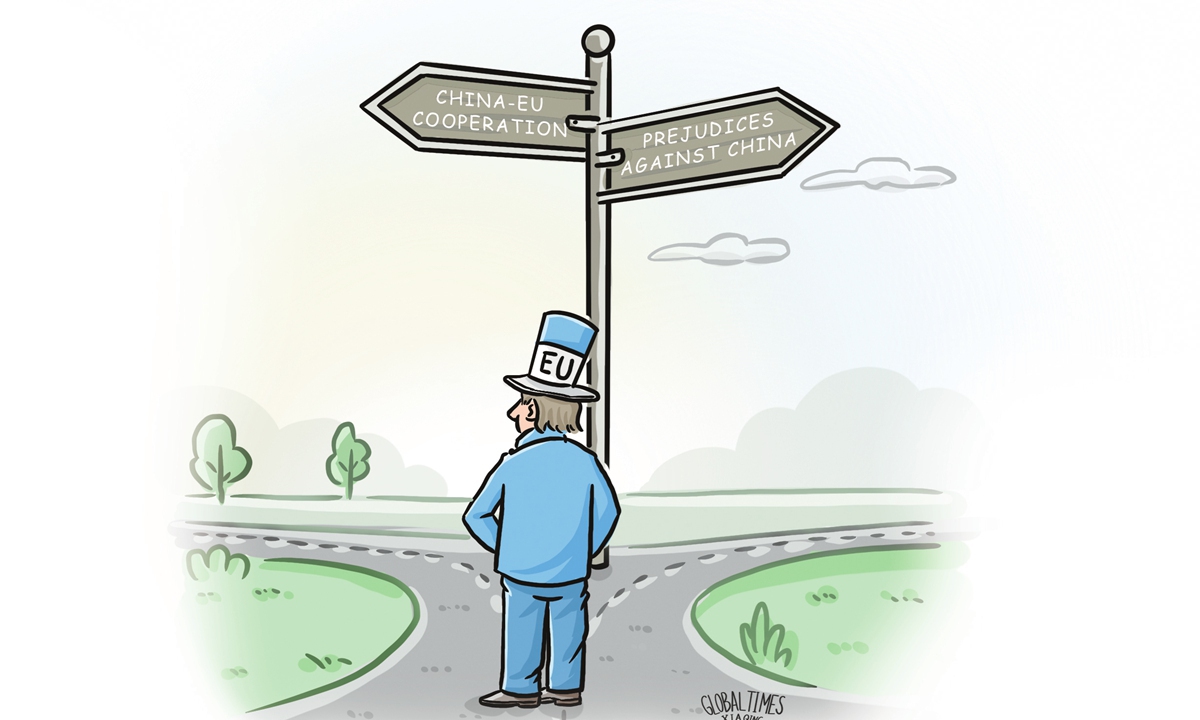
This flawed perception of China, rooted in misjudgment and bias, will do nothing to solve Europe's real challenges. While seemingly aimed at securing strategic advantages for Europe, the approach actually undermines the EU's long-term economic vitality and development potential.
First and foremost, the report's assessment of the Chinese economy is filled with subjective assumptions and contradictory logic. On one hand, it hypes China's so-called "economic vulnerability." On the other hand, it warns that China's "manufacturing dominance" and "innovation lock-in" may threaten the EU.
This contradictory argument has completely exposed the flawed logic and prejudice of its analysis: if the Chinese economy is truly as "fragile" as the report claims, how could it possibly possess the industrial strength and technological advantages needed to exert so-called "coercive power"?
Apparently, the report deliberately exaggerates China's challenges while portraying its industrial advantages as "offensive threats." This selective amplification and deliberate distortion are fundamentally intended to stoke panic about China and fabricate a pretext for its hardline policies.
What is even more dangerous is the report's embrace of a zero-sum mindset in its understanding of international economic and trade relations. The text is replete with terms like "leverage," "coercion," and "chokepoints," simplifying the complex web of interdependent state-to-state relations into a raw power game.
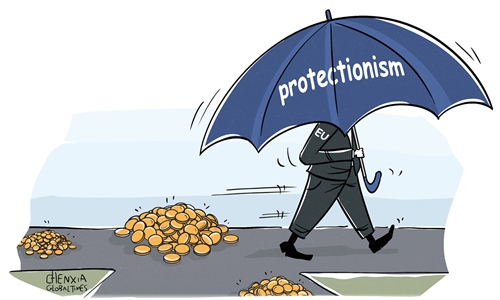
This idea of weaponizing market relations essentially encourages the EU to abandon multilateral rules in favor of unilateral measures. However, the essence of international trade is mutual benefit and win-win results, and using trade as a tool for pressure will ultimately lead to a lose-lose situation. If the EU were to adopt such recommendations and restrict access to Chinese products and technologies, in the long run, it would inevitably raise the costs of Europe's own green transition, exacerbate inflationary pressures, and ultimately harm European consumers and businesses.
From a practical standpoint, the report's policy prescriptions are completely at odds with the real needs of European industry. The core challenges facing the EU today are endogenous structural issues: high energy costs, rigid labor markets, and insufficient efficiency in innovation. These problems are rooted at home and cannot be solved by erecting external trade barriers or imposing technological blockades.
From a broader perspective, this report also reflects the anxiety among some in the EU toward geopolitical and industrial pressure. They can neither face up to the legitimate development rights of emerging market countries nor promote in-depth reforms within the EU, so they pin their hopes on maintaining their existing advantages through external pressure.
However, in an era of accelerating global industrial chain restructuring, adopting a closed-off and confrontational posture will only hasten one's own marginalization in the global competitive landscape. True strategic wisdom lies in finding a balance between cooperation and competition in a deeply interconnected world. Focusing on creating confrontation and misallocating resources to building barriers - that's the real risk confronting the EU.
RELATED ARTICLES