GT Voice: Critical minerals rhetoric of some US officials misses industrial reality
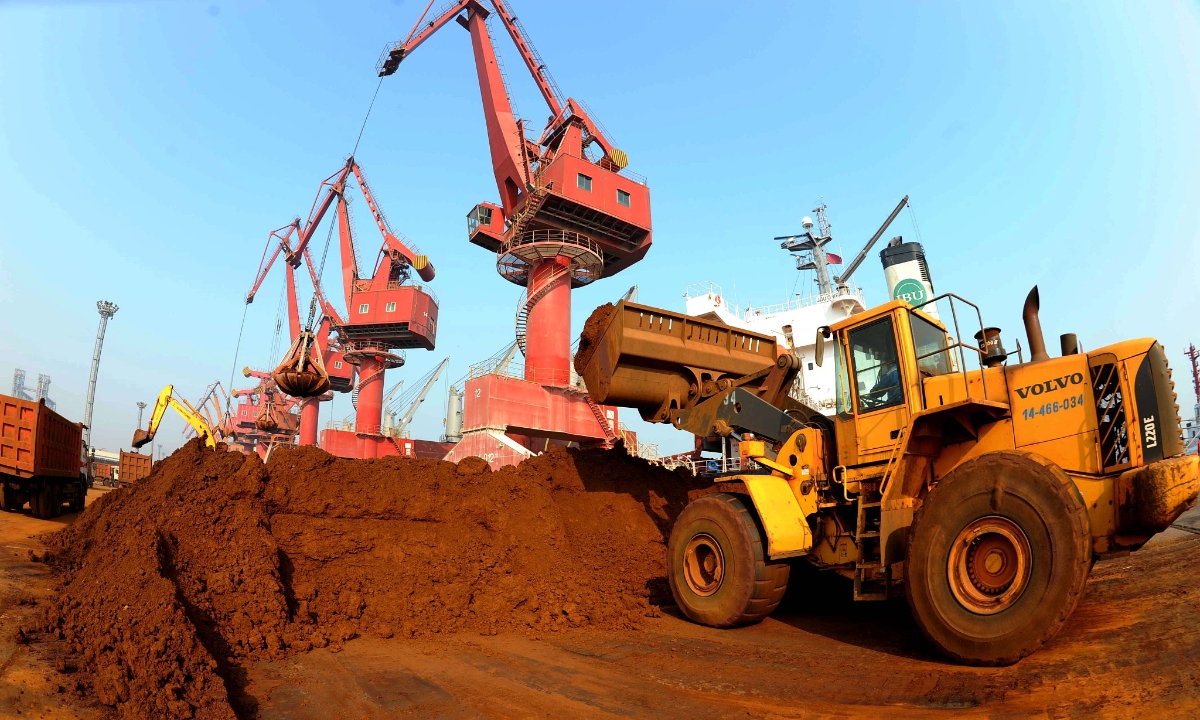
Rare earths Photo: VCG
Some officials in Washington seem to have the ambition to "leapfrog" in critical minerals through so-called innovation. Whether this represents a true advance in innovation or yet another instance of arrogance that overlooks the development laws of global industrial chains, however, remains a question.Recycling metals, materials and magnets within the US is one of the fastest ways that the country can impact the critical minerals supply chain, Assistant Secretary of Energy Audrey Robertson said at an event hosted by US think tank the Council on Foreign Relations (CFR), according to a video posted on the CFR's website on Monday.
"New technology in this space will be a game changer… I think there's a lot of opportunity for significant technology advances in refining and processing to shorten the timeline… If you can shave off power, water, and months of processing, we will leapfrog them absolutely," Robertson said.
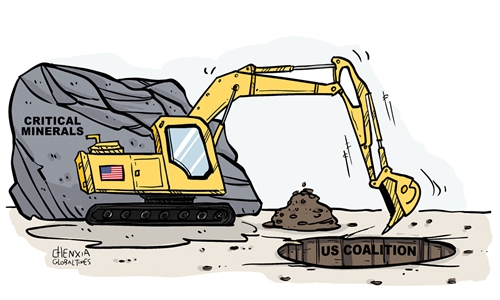
These remarks, coming as the US ramps up efforts to "reduce reliance on China" on critical minerals, sound confident, but this rhetoric actually reflects a strategic illusion, divorced from industrial reality and blind to the sector's fundamental development rules of development.
The development of critical mineral resources and supply chain construction follows a fixed timeline. Traditional mining, from exploration to production at scale, typically requires years or even decades of work, which cannot be leapfrogged simply by chanting "technological breakthroughs."
As to innovative technology in recycling, it still takes a long time to build something meaningful for the supply chain. The large-scale implementation of innovative technologies such as e-waste recycling and new refining processes demands enormous investment, long-term technical accumulation, and coordinated efforts across the entire recycling industrial chain.
When some in the US tout recycling as a shortcut to "reduce reliance on China," they fail to recognize this as essentially a medium- to long-term strategy requiring top-level design and sustained commitment, not a quick fix.
What's more, while recycling certainly has a role to play in a diversified supply system, that role is complementary rather than substitutive. Current global rates of e-waste collection, sorting efficiency, and refining capacity fall far short of what would be needed to meet a major country's demand for any raw materials. In this sense, recycling alone is unlikely to effectively fill the gap in the US' critical mineral demand in the short term.
It is not uncommon to see Western countries trying to secure critical minerals and reduce dependence on China through various initiatives and alliances. The US and several partners announced the launch of the Minerals Security Partnership in 2022, an initiative focused on mineral and metal supply chains critical to clean energy technologies. But actual progress has been elusive.
This lackluster performance stems from a persistent underestimation of the inherent difficulties in mining projects, which typically require years of development and massive investment, not to mention the unpredictable pace of technological breakthroughs that are essential for processing and recycling innovation.
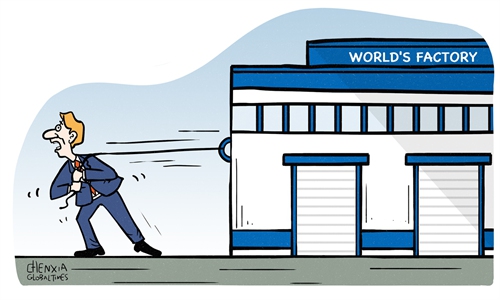
From the perspective of the global industrial pattern, China's position in the critical minerals sector is no accident - it is the result of decades of continuous investment and technological advancement. China has complete industrial chain support facilities, mature process technology accumulation and a large team of engineers. This systematic advantage is unlikely to be overturned by technological breakthroughs alone. Even if certain breakthroughs are made in recycling technology, there are still a lot of obstacles to cross from laboratory results to large-scale industrial application. In this process, the lack of support capabilities such as raw material supply, equipment manufacturing, and talent reserves will all present formidable problems.
The global industrial chain of critical minerals is essentially a highly interconnected ecosystem. All sides have the responsibility to play a constructive role in maintaining the stability and security of global critical mineral industrial and supply chains, a Chinese Foreign Ministry spokesperson said in February.
Simplifying such a complex system into a "zero-sum game" and resorting to "reducing reliance on China" may meet the demand for certain geopolitical purposes, but it will inevitably bring soaring costs, reduced efficiency and slowed innovation.
The so-called leapfrogging strategy proposed by some US officials essentially means trying to bypass the necessary accumulation stage of industrial development and use technological "miracles" to close the time gap. However, in a field requiring profound accumulation such as critical minerals, shortcuts are often the longest way.
RELATED ARTICLES