SPORT / MISCELLANY
China’s F1 dream gains speed, even though Zhou remains a reserve driver
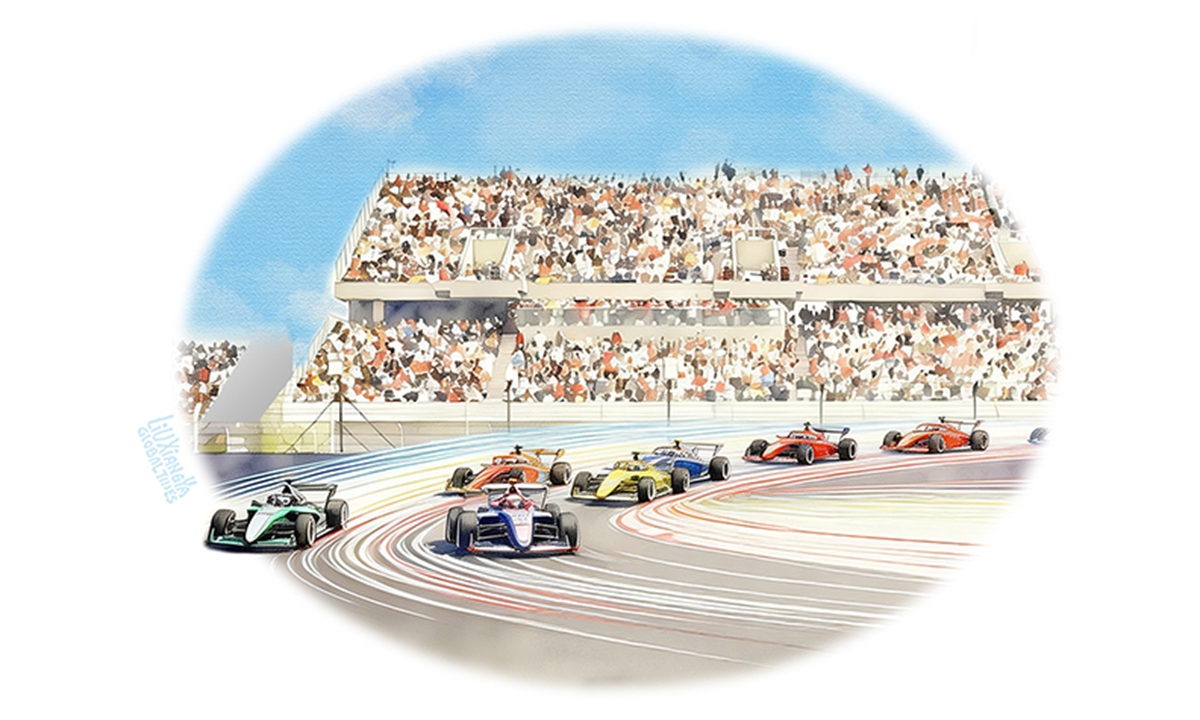
Illustration: Liu Xiangya/GT
The 2026 Formula 1 Chinese Grand Prix is set to kick off this weekend at the Shanghai International Circuit. All ticket categories from Friday's practice sessions to Sunday's race have been sold out, according to the organizers, who are expecting crowds exceeding 230,000 spectators over the three-day event.Hotels within three kilometers of the circuit have seen bookings surge compared to normal weekends, according to a major domestic tourism site on Thursday. This is not just fan enthusiasm but also concrete proof of a market that F1 cannot ignore.
The commercial momentum has been building for years. The Brad Pitt film F1, released in 2025, pushed motorsport into mainstream conversation in China, delivering strong box-office results that helped elevate it beyond niche status. Cultural crossovers like the Spring Festival hit Pegasus 3, which included scenes featuring Chinese motor racing driver Zhou Guanyu and the Shanghai circuit, further embedded F1 into a broader racing consciousness.
With an estimated base of more than 200 million Chinese motorsport enthusiasts, F1 wisely extended its contract with Shanghai through 2030. The decision was announced in late 2024, locking in the Chinese Grand Prix as a calendar staple.
Yet here is where perspective matters. Packed grandstands and sold-out hotels demonstrate China's market power. However, the real measure of progress for Chinese motorsport lies deeper in the paddock, among the helmets, engineering notebooks, and simulator sessions where actual racing capability is forged.
The absence of a full-time Chinese driver on the 2026 grid, as Zhou remains a reserve driver for a racing team for a second consecutive year, does not signal retreat. It, however, highlights a patient acceleration of the national racing dream, which no one embodies better than Zhou himself.
Having raced full-time for Alfa Romeo and Sauber from 2022 to 2024, becoming China's first-ever F1 driver and scoring points during his debut, Zhou spent 2025 as Ferrari's reserve before moving to the new Cadillac F1 team for 2026 in the same capacity, reuniting with former teammate Valtteri Bottas and longtime manager Graeme Lowdon, now Cadillac's
team principal.
Critics may label two consecutive years away from race seats as a setback. That view misses the bigger picture. F1 in 2026 introduces sweeping technical regulation changes, new power units, chassis concepts and aerodynamics that demand intensive development. As the sole reserve for a brand-new team, he is immersed in simulator sessions, practice runs and real-time feedback. This is not bench-warming but high-stakes engineering immersion that positions him to capitalize on any opportunity while simultaneously helping his team navigate its debut season.
Zhou's presence also shatters barriers for the next generation of Chinese racing drivers. He has already proven Chinese drivers can compete at the pinnacle of motorsport, scoring points and earning respect across the paddock. His visibility normalizes the idea that a Chinese racer can compete in F1. That cultural and psychological breakthrough matters as much as any lap time.
Equally significant, though less visible, is the quiet army of Chinese talent now embedded across F1 teams. Years of hosting the Chinese Grand Prix have acted as a portal for transferring technology. Chinese automotive engineers, aerodynamicists, data analysts, and performance specialists have gained direct exposure to the world's most advanced motorsport ecosystem.
F1 has never been pure entertainment. It functions as the global automobile industry's ultimate "technology wind tunnel." Shanghai's long-term role on the F1 calendar has accelerated that knowledge exchange, creating a foundation far more durable than any single driver's seat.
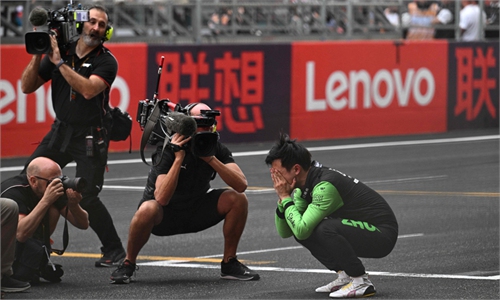
But it could not diminish the emotional weight of a home race without a Chinese driver on the grid. The Chinese F1 fans will still roar, but they will do so knowing their pioneer is inside the garage, preparing for his return and mentoring indirectly. The standing ovations Zhou received in 2024 during his emotional home debut remain fresh.
Skeptics might argue that true success requires a full-time seat and podium contention. Yet racing history is full of examples of drivers who rebuilt careers through reserve or development roles, such as 38-year-old German driver Nico Hulkenberg having his first podium finish in 2025 after mediocre seasons, learning organizational discipline and resilience before seizing the next opportunity. Zhou's trajectory mirrors that disciplined path.
The sold-out weekend ahead will showcase China's commercial clout. But the deeper story, the one that truly matters for China's motorsport, unfolds away from the race circuit. This is not an absence but a story of acceleration. The Chinese racing dream is not stalled but it is methodically building speed through technical expertise and the pioneer who refuses to let go of the wheel.
The author is a reporter with the Global Times. life@globaltimes.com.cn
RELATED ARTICLES