IN-DEPTH / IN-DEPTH
The New Era of the Pharmaceutical Industry in China
Integration of research, experimentation and production vital to sector’s future
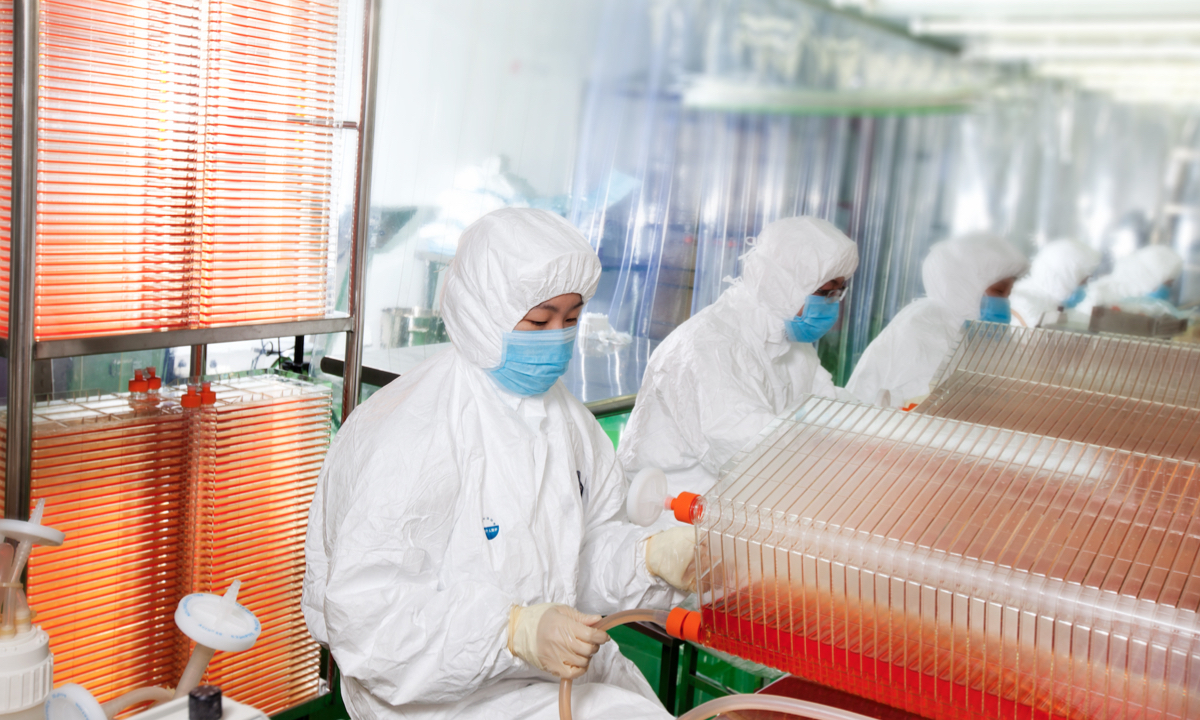
Workers work in a biological products workshop in China. Photo: Courtesy of Milano Finanza
At the end of January 2026, AstraZeneca, a Swedish-British pharmaceutical and biotechnology company, announced its re-entry into China's pharmaceutical market with a $15 billion investment over the next five years, allocated to production and part of its R&D efforts.
This announcement can be regarded as a starting point for the overall China strategy of both local producers and large multinational pharmaceutical companies.
As a global powerhouse in technological innovation, robotics, and AI, China cannot afford to fall behind in the pharmaceutical industry where the integration of research, experimentation and production has become indispensable to the sector's future.
Innovation has driven strong growth in China's medical device sector. In a report published on its website on February 24, the National Medical Products Administration (NMPA) said that 76 innovative medical devices were approved in 2025, representing a year-on-year increase of 17 percent; meanwhile 25 medical devices received approval through the priority review process, up 212.5 percent year-on-year. The approved products cover multiple cutting-edge fields, including artificial intelligence, tumor radiotherapy and biomedical materials, said the report.
According to the data the China Medical and Health Care Products Import and Export Chamber of Commerce released on January 28, China's medical device exports reached $50.47 billion in 2025, up 3.54 percent year-on-year.

Researchers discuss in a biological products laboratory in China. Photo: Courtesy of Milano Finanza
These figures indicate a shift toward a high-impact technological manufacturing system, which not only enables Chinese companies to compete with healthy profit margins, but also opens up export opportunities.
A case in point is the development of anti-cancer and immunotherapeutic products. Henlius Biotech, a subsidiary of Fosun Group, has signed an out-licensing agreement with Japan's Eisai Co Ltd to market serplulimab, a monoclonal antibody derived from a single lymphocyte clone, for the treatment of lung cancer in Japan.
However, it is the biotechnology industry that has demonstrated the greatest dynamism. By the end of 2025, the total transaction value of China's innovative drug out-licensing deals reached $135.7 billion, with upfront payments amounting to $7 billion, and the total number of transactions hitting 157. All statistical indicators hit record highs, according to NextPharma, a database focusing on innovative drugs in the Chinese market.
Several factors contribute to these impressive figures: the rationalization of development costs, shorter time-to-market, and high operational efficiency. Above all, multinationals can access cost-effective and advantageous clinical trial pipelines in China via local partners.
Clinical trials conducted by Chinese biopharmaceutical companies, multinationals and Contract Research Organizations (CROs) are increasingly recognized as key to the successful launch of new drugs. According to ChinaDrugsTrials.org, the official clinical trial registration platform of the Center for Drug Evaluation under NMPA, the number of clinical trials in China reached 5,167, more than double the figure in 2020.
The advancement of Phase II (involving several hundred patients to evaluate a drug's efficacy, dosage, and safety) and Phase III trials (involving thousands of patients, including those overseas, to confirm efficacy, monitor adverse reactions, and compare the new drug with existing treatments) will establish China as a hub for pharmaceutical experimentation, driving investments from both Chinese biopharmaceutical firms and multinationals.
A notable example of this strategy is the recent partnership agreement between US-based Eli Lilly and China's Innovent Biologics to develop new treatments for cancer and immune system diseases. Innovent will lead the development of new drugs in China, from conception through Phase II clinical trials, while Eli Lilly will hold exclusive global rights to develop and market these treatments outside Greater China (a concept encompassing the Chinese mainland, Hong Kong, Macao and Taiwan). In return, Innovent will receive an upfront payment of $350 million, plus approximately $8.5 billion in R&D, regulation and milestone payments, and tiered royalties on sales of each product marketed by Eli Lilly.
As Chinese pharmaceutical companies accelerate their pace of internationalization, multiregional clinical trials (MRCTs) in China have shown a rapid growth trend. According to a report on China clinical trial trends and international multinational clinical outlook released by BPCM, a Chengdu-based medical industrial database, the number of MRCTs in China reached 336 in 2024, accounting for about 13.4 percent of the total clinical trials in the country, with a significantly increased participation rate by local firms.
AI will also play a pivotal role in both the R&D cycle and clinical trials, particularly in data management and analysis. Indeed, the large number of participants in clinical trials - required before relevant authorities grant drug validation certifications - makes AI-driven analysis essential: It streamlines the process, reduces timelines, and enhances the accuracy of results.
RELATED ARTICLES