IN-DEPTH / IN-DEPTH
Xi’s reply letter to Zimbabwean war veterans highlights historic China-Africa comradeship, inspires deeper partnership in new era
By , Xie Wenting and Huang Peizhao Published: Mar 15, 2026 10:25 PM

Editor's Note:
Chinese people believe that letters are as valuable as gold. For thousands of years, letters, across mountains and oceans, have been delivering the writers' sentiments and conveying friendship and expectations.
Chinese President Xi Jinping, also general secretary of the Communist Party of China (CPC) Central Committee and chairman of the Central Military Commission, has managed to find time to reply to some letters from different sectors of society and different parts of the world despite his busy work schedule.
Through these letters, he has corresponded with people from all walks of life on numerous occasions, part of a series of excellent stories of China in the new era.
Therefore, the Global Times traced and contacted some of the recipients of these letters to hear the inspiring stories behind the letters and their understanding of modern China.
In this installment, we turn our attention to veterans of Zimbabwe's national liberation war. Some of these veterans were trained in China or with Chinese instructors decades ago, forging lasting bonds with the Chinese people. The message in the reply letter has strengthened their resolve to carry forward the traditional friendship between China and Zimbabwe and contribute to deeper China-Africa cooperation in the new era.
Decades ago, young Zimbabwean fighters journeyed far from home to receive training in China or from Chinese instructors during their country's struggle for national liberation, forging bonds of friendship that have endured for generations.
Today, those memories are being recalled with renewed warmth, especially as China and African countries mark the 70th anniversary of diplomatic relations and the China-Africa Year of People-to-People Exchanges in 2026 - a reminder of the deep historical roots of China-Africa solidarity.
Recently, that chapter of shared history has returned to the spotlight.
Chinese President Xi Jinping on January 28 replied to veterans of Zimbabwe's national liberation war. In the letter, he noted that in their youth, the veterans devoted themselves to the great cause of national liberation, left their homelands, and forged with China a profound friendship and comradeship in the struggle, the Xinhua News Agency reported.
To this day, they remain deeply committed to China-Zimbabwe and China-Africa friendship, which is deeply moving, Xi said in the letter.
The heartfelt message in the letter has greatly inspired these veteran witnesses of history and also sparked enthusiastic responses across the African continent.
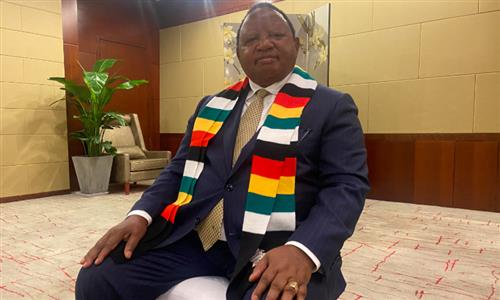
Zimbabwean Ambassador to China Abigail Shoniwa told the Global Times that Xi's message reflects his recognition of the historical role played by the veterans and China's enduring commitment to the values of freedom and justice they fought for.
"His message was deeply touching to me as well as to the liberation veterans themselves and the Zimbabwean nation at large. It was a gesture that was well appreciated," said the ambassador.
From the comradeship forged in joint struggles in the past to today's mutually beneficial cooperation on the path of development, China-Africa friendship is being endowed with new meaning for the new era.
Forged in struggle
"China has always been a good comrade and partner in Africa's quest for national liberation, development and rejuvenation," Xi wrote in the reply letter.
China's friendship with Zimbabwe dates back to the years of the African country's national liberation struggle, when the two peoples stood side by side against colonial rule.
According to Xinhua, China has firmly supported Africa's struggle against imperialism and colonialism and the continent's cause of national liberation. During Zimbabwe's national liberation struggle in the 1960s and 1970s, many fighters received training in China or from Chinese instructors in Africa, creating enduring stories in the history of the two countries' relations.
Ahead of his state visit to Zimbabwe in 2015, Xi published a signed article in Zimbabwean media, recalling the profound and time-tested friendship between the two countries.
"During the national liberation struggle in Zimbabwe, the Chinese people steadfastly stood behind the Zimbabwean people as comrades in arms. I was touched to learn that many Zimbabwean freedom fighters who received training from the Chinese side, both in China and at Nachingwea camp in Tanzania can still sing songs such as the 'Three Rules of Discipline and the Eight Points for Attention,'" he wrote, Xinhua reported.
William Murumbuzi, a Zimbabwean veteran, said that he was deeply impressed by the signed article in 2015 and felt excited to participate in writing the letter to the Chinese president and receive a reply from him, according to Xinhua.
"His reply makes us feel deeply honored and moved," he said.
In November 2025, at the Chinese Embassy in Zimbabwe, these veterans recalled the unforgettable days when they trained alongside Chinese instructors, saying that China's military training and military strategy helped shape a generation of passionate Zimbabwean youths and injected strong momentum into the country's national liberation struggle, according to an article released by the Chinese Embassy in Zimbabwe.
"We wanted to write to President Xi to tell him that we will never forget this experience, nor will we ever forget the friendship between Zimbabwe and China," Humphrey Makuyana, another veteran, told Xinhua in an interview.
According to Makuyana, the training he received from Chinese instructors deepened his understanding of the bond between the army and the people. "We were the fish, and the people were the water in which we should live."
"Though separated by thousands of miles, our hearts have always been connected, and justice and dignity remain the umbilical bond between our two peoples," the veterans said in the letter.
China 'never forgets old friends'
The reply letter to Zimbabwe's national liberation war veterans has struck a deep chord across the African continent and the letter is widely seen as a heartfelt reaffirmation of China's commitment to historical friendships and its moral stance of "never forgetting old friends."
Shoniwa told the Global Times that the message conveyed in the letter is profoundly meaningful. "He is keenly aware of China's principled position in taking up the cause of oppressed people across the world and supporting the fight against colonialism."
According to the ambassador, the reply letter has moved the veterans and the entire Zimbabwean nation, underscoring "China's enduring respect for the sacrifices made during the shared anti-colonial struggles and its consistent support for global justice."
As a scholar who has long studied China-Africa relations, Professor Al-Hassan from Cairo University told the Global Times that the reply letter is not only a warm reflection on that heroic period of history, but also a spiritual call to the new generation of China-Africa relations.

According to the African expert, Chinese modernization is viewed by many as particularly instructive for the continent as it offers an alternative model to Western paths and reinforces respect for sovereignty and independent choice. He highlighted China's willingness to share developmental achievements and contribute to global progress as a reflection of its generous spirit, serving as an important reference for Africa.
China announced in February that it will fully implement zero-tariff treatment for 53 African countries with diplomatic relations with China, starting from May 1, a move viewed as providing great incentives for African exports.
Shoniwa noted that China's example in modernization is a powerful inspiration to Zimbabwe and the developing world. "China's readiness to share its developmental achievements and to play its part in fostering global development speaks to the generosity of spirit of the Chinese nation."
Path of 'forging ever greater cooperation'
China-Africa friendship is not confined to historical memory; it thrives through vibrant, multifaceted contemporary connections and is actively passed to the youth. The veterans' heartfelt sentiments are now becoming a torch for the new era.
Shoniwa vividly illustrated these real-world links to the Global Times. "I am convinced that the very special bond between China and Zimbabwe is solid."
The two countries have agreed to upgrade relations to an all-weather community with a shared future in September 2025. Cooperation between China and Zimbabwe is comprehensive and spans virtually every area.
The Zimbabwean diplomat noted that one important aspect is people-to-people exchanges. She specially highlighted the expanding Chinese business community in Zimbabwe, active in sectors from agriculture to infrastructure and trade, alongside hundreds of Zimbabwean students pursuing higher education in China.
"There is a growing Chinese community in Zimbabwe doing business in many sectors spread all over the country. Here in China, there are hundreds of Zimbabweans studying in universities in China, while others are professionals or doing business. Ties between peoples of both countries are growing ever closer."
Al-Hassan pointed out that the reply letter also carries profound civilizational significance beyond politics, especially as 2026 marks the China-Africa Year of People-to-People Exchanges.
This year, China and Africa will jointly host nearly 600 cultural and people-to-people exchange activities to enhance exchanges and mutual learning between the two civilizations, and promote mutual understanding and connection between the peoples, Chinese Foreign Ministry spokesperson Mao Ning told a press conference in January.
Shoniwa viewed this year as an important opportunity to further enhance bilateral cooperation.
"The occasion of the 70th anniversary of the establishment of diplomatic relations between China and Africa serves as a moment not just to take stock of achievements of the past but to march on the path of forging ever greater cooperation, particularly in a global world in which protectionism and unilateral coercive measures are coming to the fore," she stressed.
Chinese people believe that letters are as valuable as gold. For thousands of years, letters, across mountains and oceans, have been delivering the writers' sentiments and conveying friendship and expectations.
Chinese President Xi Jinping, also general secretary of the Communist Party of China (CPC) Central Committee and chairman of the Central Military Commission, has managed to find time to reply to some letters from different sectors of society and different parts of the world despite his busy work schedule.
Through these letters, he has corresponded with people from all walks of life on numerous occasions, part of a series of excellent stories of China in the new era.
Therefore, the Global Times traced and contacted some of the recipients of these letters to hear the inspiring stories behind the letters and their understanding of modern China.
In this installment, we turn our attention to veterans of Zimbabwe's national liberation war. Some of these veterans were trained in China or with Chinese instructors decades ago, forging lasting bonds with the Chinese people. The message in the reply letter has strengthened their resolve to carry forward the traditional friendship between China and Zimbabwe and contribute to deeper China-Africa cooperation in the new era.
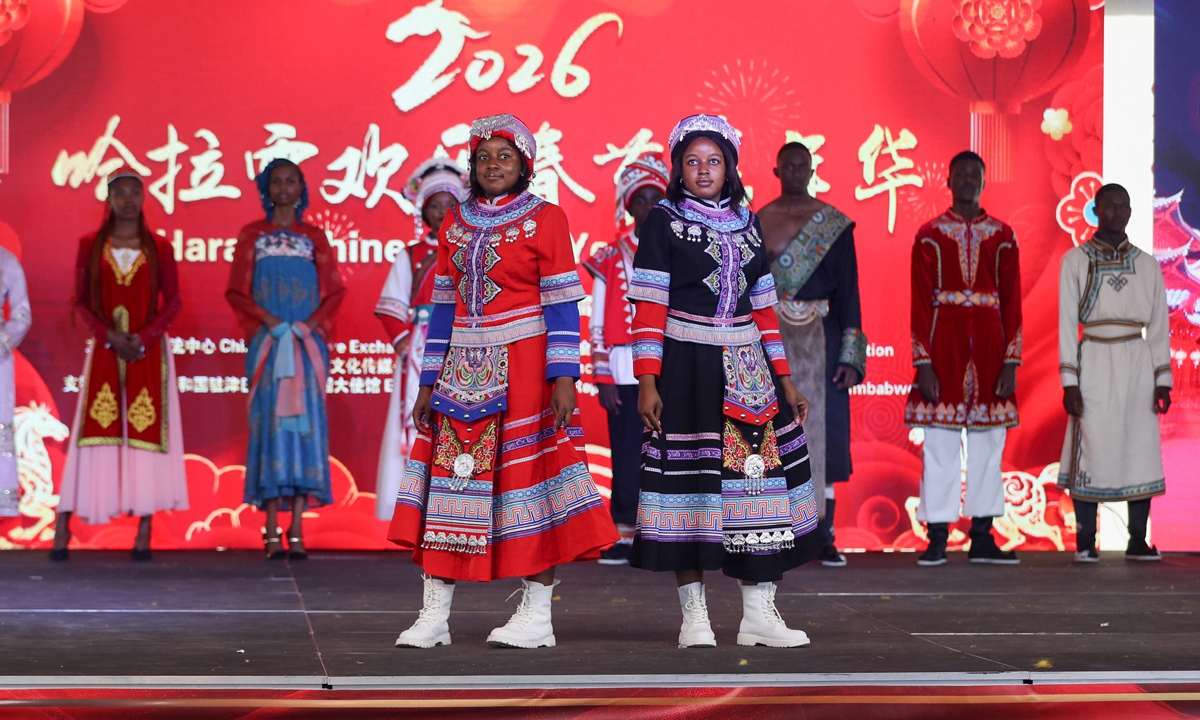
Models display Chinese-style clothing during a Chinese New Year cultural festival in Harare, Zimbabwe, on February 7, 2026. Photo: IC
Decades ago, young Zimbabwean fighters journeyed far from home to receive training in China or from Chinese instructors during their country's struggle for national liberation, forging bonds of friendship that have endured for generations.
Today, those memories are being recalled with renewed warmth, especially as China and African countries mark the 70th anniversary of diplomatic relations and the China-Africa Year of People-to-People Exchanges in 2026 - a reminder of the deep historical roots of China-Africa solidarity.
Recently, that chapter of shared history has returned to the spotlight.
Chinese President Xi Jinping on January 28 replied to veterans of Zimbabwe's national liberation war. In the letter, he noted that in their youth, the veterans devoted themselves to the great cause of national liberation, left their homelands, and forged with China a profound friendship and comradeship in the struggle, the Xinhua News Agency reported.
To this day, they remain deeply committed to China-Zimbabwe and China-Africa friendship, which is deeply moving, Xi said in the letter.
The heartfelt message in the letter has greatly inspired these veteran witnesses of history and also sparked enthusiastic responses across the African continent.
Zimbabwean Ambassador to China Abigail Shoniwa told the Global Times that Xi's message reflects his recognition of the historical role played by the veterans and China's enduring commitment to the values of freedom and justice they fought for.
"His message was deeply touching to me as well as to the liberation veterans themselves and the Zimbabwean nation at large. It was a gesture that was well appreciated," said the ambassador.
From the comradeship forged in joint struggles in the past to today's mutually beneficial cooperation on the path of development, China-Africa friendship is being endowed with new meaning for the new era.
Forged in struggle
"China has always been a good comrade and partner in Africa's quest for national liberation, development and rejuvenation," Xi wrote in the reply letter.
China's friendship with Zimbabwe dates back to the years of the African country's national liberation struggle, when the two peoples stood side by side against colonial rule.
According to Xinhua, China has firmly supported Africa's struggle against imperialism and colonialism and the continent's cause of national liberation. During Zimbabwe's national liberation struggle in the 1960s and 1970s, many fighters received training in China or from Chinese instructors in Africa, creating enduring stories in the history of the two countries' relations.
Ahead of his state visit to Zimbabwe in 2015, Xi published a signed article in Zimbabwean media, recalling the profound and time-tested friendship between the two countries.
"During the national liberation struggle in Zimbabwe, the Chinese people steadfastly stood behind the Zimbabwean people as comrades in arms. I was touched to learn that many Zimbabwean freedom fighters who received training from the Chinese side, both in China and at Nachingwea camp in Tanzania can still sing songs such as the 'Three Rules of Discipline and the Eight Points for Attention,'" he wrote, Xinhua reported.
William Murumbuzi, a Zimbabwean veteran, said that he was deeply impressed by the signed article in 2015 and felt excited to participate in writing the letter to the Chinese president and receive a reply from him, according to Xinhua.
"His reply makes us feel deeply honored and moved," he said.
In November 2025, at the Chinese Embassy in Zimbabwe, these veterans recalled the unforgettable days when they trained alongside Chinese instructors, saying that China's military training and military strategy helped shape a generation of passionate Zimbabwean youths and injected strong momentum into the country's national liberation struggle, according to an article released by the Chinese Embassy in Zimbabwe.
"We wanted to write to President Xi to tell him that we will never forget this experience, nor will we ever forget the friendship between Zimbabwe and China," Humphrey Makuyana, another veteran, told Xinhua in an interview.
According to Makuyana, the training he received from Chinese instructors deepened his understanding of the bond between the army and the people. "We were the fish, and the people were the water in which we should live."
"Though separated by thousands of miles, our hearts have always been connected, and justice and dignity remain the umbilical bond between our two peoples," the veterans said in the letter.
China 'never forgets old friends'
The reply letter to Zimbabwe's national liberation war veterans has struck a deep chord across the African continent and the letter is widely seen as a heartfelt reaffirmation of China's commitment to historical friendships and its moral stance of "never forgetting old friends."
Shoniwa told the Global Times that the message conveyed in the letter is profoundly meaningful. "He is keenly aware of China's principled position in taking up the cause of oppressed people across the world and supporting the fight against colonialism."
According to the ambassador, the reply letter has moved the veterans and the entire Zimbabwean nation, underscoring "China's enduring respect for the sacrifices made during the shared anti-colonial struggles and its consistent support for global justice."
As a scholar who has long studied China-Africa relations, Professor Al-Hassan from Cairo University told the Global Times that the reply letter is not only a warm reflection on that heroic period of history, but also a spiritual call to the new generation of China-Africa relations.
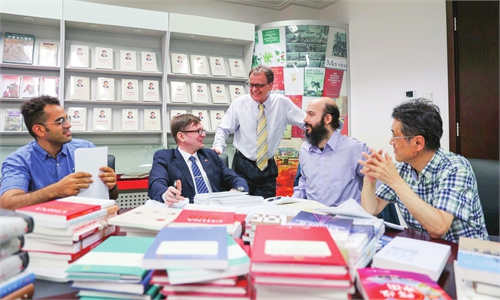
Participants pose for a group photo at the news center of the 2024 Summit of the Forum on China-Africa Cooperation in Beijing, on September 6, 2024. Photo: IC
Al-Hassan stressed that the "comradeship" in struggle mentioned in the letter is far from empty rhetoric. "In my academic research, that shared history of anti-imperialism and anti-colonialism forms the foundation of China-Africa relations. Today, as these veterans in their later years still hold dear the China-Zimbabwe friendship, and China offers such a sincere and solemn response, the reply letter vividly demonstrates China's moral character as a responsible major country that 'never forgets old friends.'"According to the African expert, Chinese modernization is viewed by many as particularly instructive for the continent as it offers an alternative model to Western paths and reinforces respect for sovereignty and independent choice. He highlighted China's willingness to share developmental achievements and contribute to global progress as a reflection of its generous spirit, serving as an important reference for Africa.
China announced in February that it will fully implement zero-tariff treatment for 53 African countries with diplomatic relations with China, starting from May 1, a move viewed as providing great incentives for African exports.
Shoniwa noted that China's example in modernization is a powerful inspiration to Zimbabwe and the developing world. "China's readiness to share its developmental achievements and to play its part in fostering global development speaks to the generosity of spirit of the Chinese nation."
Path of 'forging ever greater cooperation'
China-Africa friendship is not confined to historical memory; it thrives through vibrant, multifaceted contemporary connections and is actively passed to the youth. The veterans' heartfelt sentiments are now becoming a torch for the new era.
Shoniwa vividly illustrated these real-world links to the Global Times. "I am convinced that the very special bond between China and Zimbabwe is solid."
The two countries have agreed to upgrade relations to an all-weather community with a shared future in September 2025. Cooperation between China and Zimbabwe is comprehensive and spans virtually every area.
The Zimbabwean diplomat noted that one important aspect is people-to-people exchanges. She specially highlighted the expanding Chinese business community in Zimbabwe, active in sectors from agriculture to infrastructure and trade, alongside hundreds of Zimbabwean students pursuing higher education in China.
"There is a growing Chinese community in Zimbabwe doing business in many sectors spread all over the country. Here in China, there are hundreds of Zimbabweans studying in universities in China, while others are professionals or doing business. Ties between peoples of both countries are growing ever closer."
Al-Hassan pointed out that the reply letter also carries profound civilizational significance beyond politics, especially as 2026 marks the China-Africa Year of People-to-People Exchanges.
This year, China and Africa will jointly host nearly 600 cultural and people-to-people exchange activities to enhance exchanges and mutual learning between the two civilizations, and promote mutual understanding and connection between the peoples, Chinese Foreign Ministry spokesperson Mao Ning told a press conference in January.
Shoniwa viewed this year as an important opportunity to further enhance bilateral cooperation.
"The occasion of the 70th anniversary of the establishment of diplomatic relations between China and Africa serves as a moment not just to take stock of achievements of the past but to march on the path of forging ever greater cooperation, particularly in a global world in which protectionism and unilateral coercive measures are coming to the fore," she stressed.
RELATED ARTICLES