ARTS / CULTURE & LEISURE
More essential than ever: Scholar Meng Man stresses humanities as guide for technology in AI age
More essential than ever
Editor's Note:
Cultural thoughts and spiritual pursuits are vital for a society's progress. The Global Times has launched the "Voices from the Study" series dedicated to in-depth intellectual dialogues with distinguished scholars from the humanities and social sciences to explore cultural topics with fresh perspectives and contemporary relevance.
In this edition, Meng Man, a well-known history and culture professor, argues that AI makes liberal arts more essential, not obsolete. Humanities cultivate emotion, mortality and aesthetics - these are uniquely human traits that machines cannot replicate.
For Meng Man, a professor at the School of History and Culture, Minzu University of China, the answer is clear. Far from rendering the humanities obsolete, the AI age has only made them more essential than ever.
Meng, a prominent Chinese scholar and historian, is widely recognized in China for her frequent appearances on television, where she dedicated her career to making ancient Chinese culture accessible to modern audiences. Meng has long been dedicated to the study of the history and culture of the Sui and Tang dynasties in ancient China.
"As some dismiss the liberal arts as useless," she said. "I hold the opposite view. The deeper we venture into the AI age, the more valuable the liberal arts grow." At the heart of the argument lies a simple yet profound question: What truly distinguishes humans from machines? "Humanity means we can appreciate beauty, we have morality, and we can actively transform the world," Meng said. "These are all expressions of humanism."
As AI systems become more capable, profound questions emerge about the relationship between humans and machines. Are intelligent tools merely instruments? Could they become companions? Or might they one day pose a threat? Meng, 51, offered her perspective.
Inimitable human soul
As AI writing tools advance at breakneck speed, a provocative question lingers: Can machines produce literature that stands alongside the great literary minds of human history? Meng noted that AI has reached a point where many readers often cannot easily distinguish between human and machine-generated writing.
"Ordinary readers may already be unable to tell which poems and articles are written by AI," she said.
There are two reasons for this, she explained.
"First, AI technology is developing rapidly with a powerful capacity for imitation," Meng said. "Second, there is still room for improvement in the literary literacy of some readers."
As a result, readers may sometimes mistake AI-generated verse for authentic classical poetry.
"When people feel that the tonal patterns and rhymes resemble ancient poetry, they may already have been fooled by AI," she said.
For all its advances, however, Meng believes AI cannot surpass the greatest poets in history, such as Tang Dynasty masters Li Bai and Du Fu.
In her view, it is precisely because they infused their poetry with their own character, genius and life experience that their verses have endured for centuries.
"Du Fu's poetry is known for its deep concern for country and people. If we instruct AI to compose poems in that vein, it will churn out verses centered on patriotism and compassion for the common folk," she said. "But Du's poetry also reveals many other genuine emotions. That is precisely what AI cannot replicate."
No matter how smart or knowledgeable AI becomes, capable of mimicking a poet's lines, its limitation is not weak or strong emotions - it simply lacks emotions at all. She urged people to stay in, to hold on real emotion, personal values and their own sense of aesthetics.
"The moment AI possesses real emotions, it becomes 'human,'" Meng warned. "That would be the most frightening thing of all."
Guiding technology
Meng emphasized that education in the AI era should focus on abilities that machines cannot easily replicate. "Students must learn to ask questions, collaborate with machines and integrate knowledge across disciplines. But the most important thing is emotional capacity," she said.
Even as technology advances, she added, humanity must defend what makes people human. "Even if machines gain emotions in the future, we must struggle to defend the right to be human," she said.
Reflecting on history, Meng noted that humanity's encounter with technological progress is nothing new. She explained that from the rise of Confucian, Greek and Buddhist thought to the European Renaissance, every major intellectual shift in history has been closely linked to advances in technology.
"Each time technology advances, we ask the same question: 'What makes a human being human?'" she said. "These are moments for reflection, and they are the responsibility of those working in the humanities and of students."
In an age of rapid technological change, she argued, we need the ability to guide technology, rather than simply to be swept along by its current. That spiritual strength, the capability to harness innovation, requires the collective efforts of those working in the humanities and must be passed down from generation to generation.
"Only then can we truly live in a world of humans, not a world of machines. I have never believed liberal arts will be replaced. Quite the opposite, the deeper technology advances, the more we need the humanities to enrich the human spirit."
Cultural thoughts and spiritual pursuits are vital for a society's progress. The Global Times has launched the "Voices from the Study" series dedicated to in-depth intellectual dialogues with distinguished scholars from the humanities and social sciences to explore cultural topics with fresh perspectives and contemporary relevance.
In this edition, Meng Man, a well-known history and culture professor, argues that AI makes liberal arts more essential, not obsolete. Humanities cultivate emotion, mortality and aesthetics - these are uniquely human traits that machines cannot replicate.
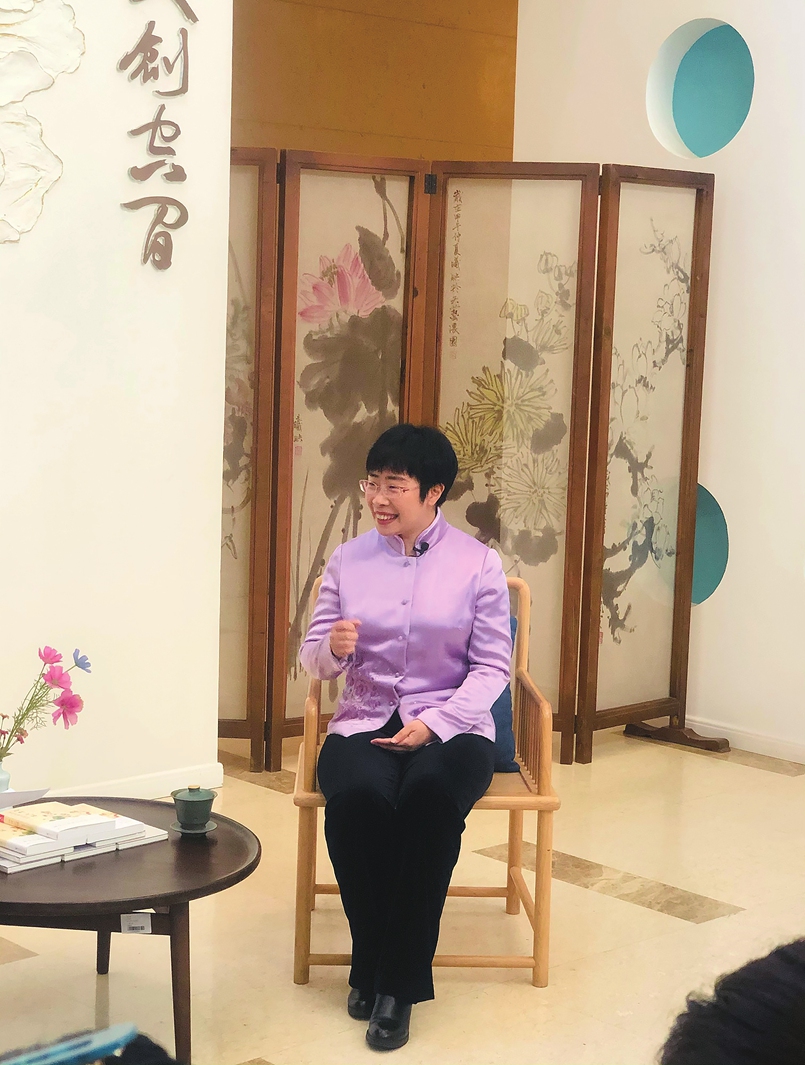
Professor Meng Man speaks at a book sharing session in Chengdu, Southwest China's Sichuan Province. Photo: VCG
As artificial intelligence (AI) continues to advance at a breathtaking pace, questions about its role in people's lives are becoming more urgent. From composing poems and essays to generating images and videos, new AI tools are rapidly reshaping the way people create and communicate. The rise of such technologies has reignited a long-standing debate: Do the liberal arts still matter in a world increasingly defined by science and technology?For Meng Man, a professor at the School of History and Culture, Minzu University of China, the answer is clear. Far from rendering the humanities obsolete, the AI age has only made them more essential than ever.
Meng, a prominent Chinese scholar and historian, is widely recognized in China for her frequent appearances on television, where she dedicated her career to making ancient Chinese culture accessible to modern audiences. Meng has long been dedicated to the study of the history and culture of the Sui and Tang dynasties in ancient China.
"As some dismiss the liberal arts as useless," she said. "I hold the opposite view. The deeper we venture into the AI age, the more valuable the liberal arts grow." At the heart of the argument lies a simple yet profound question: What truly distinguishes humans from machines? "Humanity means we can appreciate beauty, we have morality, and we can actively transform the world," Meng said. "These are all expressions of humanism."
As AI systems become more capable, profound questions emerge about the relationship between humans and machines. Are intelligent tools merely instruments? Could they become companions? Or might they one day pose a threat? Meng, 51, offered her perspective.
Inimitable human soul
As AI writing tools advance at breakneck speed, a provocative question lingers: Can machines produce literature that stands alongside the great literary minds of human history? Meng noted that AI has reached a point where many readers often cannot easily distinguish between human and machine-generated writing.
"Ordinary readers may already be unable to tell which poems and articles are written by AI," she said.
There are two reasons for this, she explained.
"First, AI technology is developing rapidly with a powerful capacity for imitation," Meng said. "Second, there is still room for improvement in the literary literacy of some readers."
As a result, readers may sometimes mistake AI-generated verse for authentic classical poetry.
"When people feel that the tonal patterns and rhymes resemble ancient poetry, they may already have been fooled by AI," she said.
For all its advances, however, Meng believes AI cannot surpass the greatest poets in history, such as Tang Dynasty masters Li Bai and Du Fu.
In her view, it is precisely because they infused their poetry with their own character, genius and life experience that their verses have endured for centuries.
"Du Fu's poetry is known for its deep concern for country and people. If we instruct AI to compose poems in that vein, it will churn out verses centered on patriotism and compassion for the common folk," she said. "But Du's poetry also reveals many other genuine emotions. That is precisely what AI cannot replicate."
No matter how smart or knowledgeable AI becomes, capable of mimicking a poet's lines, its limitation is not weak or strong emotions - it simply lacks emotions at all. She urged people to stay in, to hold on real emotion, personal values and their own sense of aesthetics.
"The moment AI possesses real emotions, it becomes 'human,'" Meng warned. "That would be the most frightening thing of all."
Guiding technology
Meng emphasized that education in the AI era should focus on abilities that machines cannot easily replicate. "Students must learn to ask questions, collaborate with machines and integrate knowledge across disciplines. But the most important thing is emotional capacity," she said.
Even as technology advances, she added, humanity must defend what makes people human. "Even if machines gain emotions in the future, we must struggle to defend the right to be human," she said.
Reflecting on history, Meng noted that humanity's encounter with technological progress is nothing new. She explained that from the rise of Confucian, Greek and Buddhist thought to the European Renaissance, every major intellectual shift in history has been closely linked to advances in technology.
"Each time technology advances, we ask the same question: 'What makes a human being human?'" she said. "These are moments for reflection, and they are the responsibility of those working in the humanities and of students."
In an age of rapid technological change, she argued, we need the ability to guide technology, rather than simply to be swept along by its current. That spiritual strength, the capability to harness innovation, requires the collective efforts of those working in the humanities and must be passed down from generation to generation.
"Only then can we truly live in a world of humans, not a world of machines. I have never believed liberal arts will be replaced. Quite the opposite, the deeper technology advances, the more we need the humanities to enrich the human spirit."
RELATED ARTICLES