ARTS / CULTURE & LEISURE
Safe, diverse practices called for to memorialize the deceased
By Published: Mar 22, 2026 11:38 PM

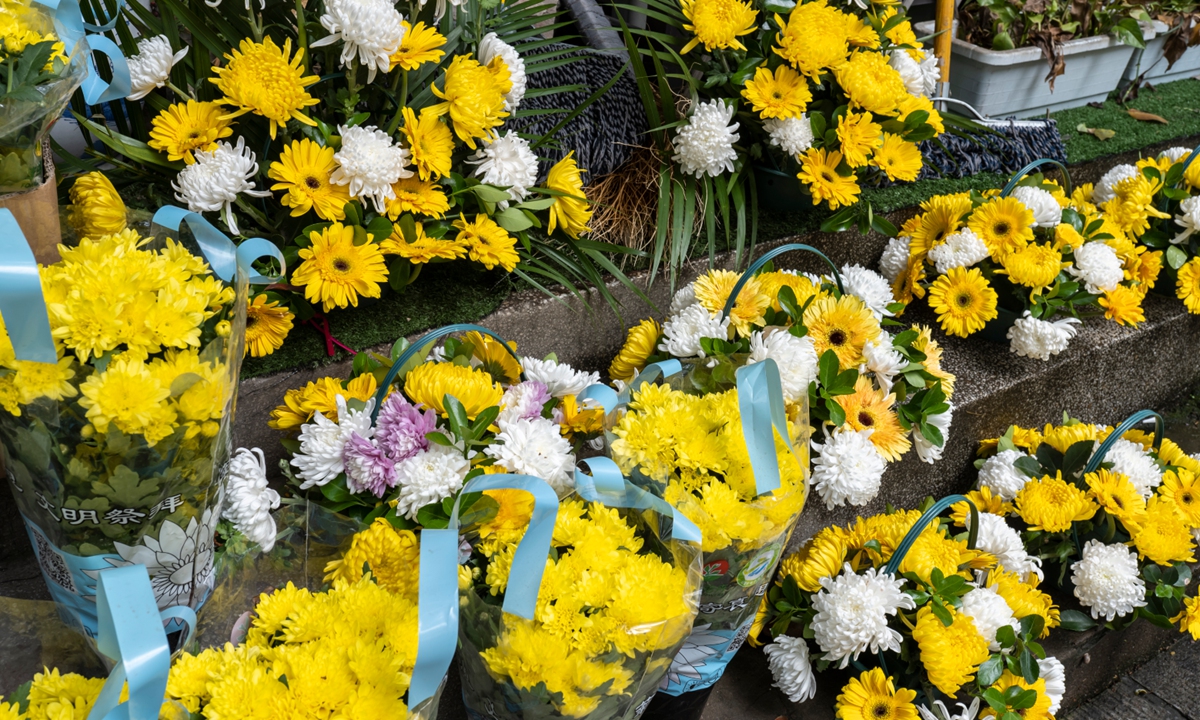
Photo: VCG
As the Qingming Festival draws near, China enters a peak season of remembering and honoring the deceased. Cities around the country, including Beijing and Lanzhou in Northwest China's Gansu Province, have issued calls for safe and civilized memorial practices, encouraging more environmentally friendly ways for people to pay their respects, such as tree planting and online commemorations. Meanwhile, ecological forms of burial, like sea burials and tree burials, are becoming new trends in response to traditional demand. In Shanghai, the second sea burial culture weeks began on Saturday. Lasting 17 days, it will cover the entire Qingming remembrance period.Proposals for "civilized Qingming commemorations" in places like Beijing emphasize the festival's deeper meaning: remembering those who came before, continuing family traditions, and cherishing the past. These documents highlight that remembrance comes from the heart, rather than being limited to fixed rituals. They encourage simplified, low-carbon ways to honor the departed, such as bringing flowers, planting trees, writing memorial messages, or even holding "online memorials."
Online platforms for conducting memorial ceremonies have been introduced across China as part of Qingming services. Through these services, users can create a virtual memorial space, where they can offer flowers, bow, and write messages to their loved ones. For example, the official "online memorial" platform in Shenzhen, South China's Guangdong Province, offers a service in which rituals are carried out on behalf of people who cannot attend in person.
"This kind of commemoration does not deny the spiritual value of 'in-person memorials.' Instead, it opens up a new emotional channel for people who cannot return home, making choices for commemorating loved ones more diverse," Ding Daoshi, a veteran analyst in the internet sector, told the Global Times on Sunday.
Ding said that these forms do not diminish the solemnity of traditional Qingming rituals. He added that by using online platforms or other new ways to honor one's ancestors, the spirit of remembrance has not disappeared. On the contrary, digital means now enable this core meaning to spread more widely.
Elsewhere, calls have been made to actively choose sea burials, tree burials, and flowerbed burials so that "life returns to nature."
During Shanghai's sea burial culture weeks, the organizers have set up themed exhibits such as a "time tunnel for 35 years of sea burials," a "life stories wall" for individuals who have been buried at sea, a sea burial work history display, and an outdoor "lighthouse of remembrance" art installation. These, together with memorial parks and monuments, let citizens reflect on the journey of sea burials through immersive experiences, according to The Paper.
The report noted that since Shanghai launched its sea burial services in 1991, nearly 100,000 people have chosen to have their ashes spread at sea, with more than 340,000 family members taking part. In 2025 alone, sea burials in Shanghai surpassed 10,000 cases for the first time, setting a new record.
Across the country, new forms of ecological burials - from sea and tree burials to flowerbed and lawn burials - are being explored and developed. To date, more than 20 provincial-level regions nationwide have adopted eco-burial policies with financial incentives and infrastructure investments. Multiple regions now offer higher sea burial subsidies, streamlined procedures services, driving growing public adoption, the Xinhua News Agency reported.
According to the People's Daily, in 2023, the Greater Khingan Range in Northeast China's Heilongjiang Province made ecological tree burials a central priority. Authorities designated special areas in state-owned forest land and used the space among the trees for "land-saving" burials, successfully combining forest conservation with the need for funeral rituals.
Beijing has conducted nearly 40,000 sea burials since 1994, now representing 4 percent of the city's annual cremations. In the neighboring Hebei Province, 30 pilot eco-burial sites were green-lighted, aiming to set the stage for gradual province-wide adoption, according to Xinhua.
Traditional burial practices have become unsustainable in their land consumption, according to Wang Yi, an associate professor at Tianjin University, adding that the shift in Qingming rituals reflects the public's growing ecological awareness. Wang also noted that sea and tree burials, with their land-free designs, offer sustainable alternatives that help reduce pressure on limited land resources.
RELATED ARTICLES