Xi urges efforts to build Xiong'an New Area into innovation hub, model of high-quality development
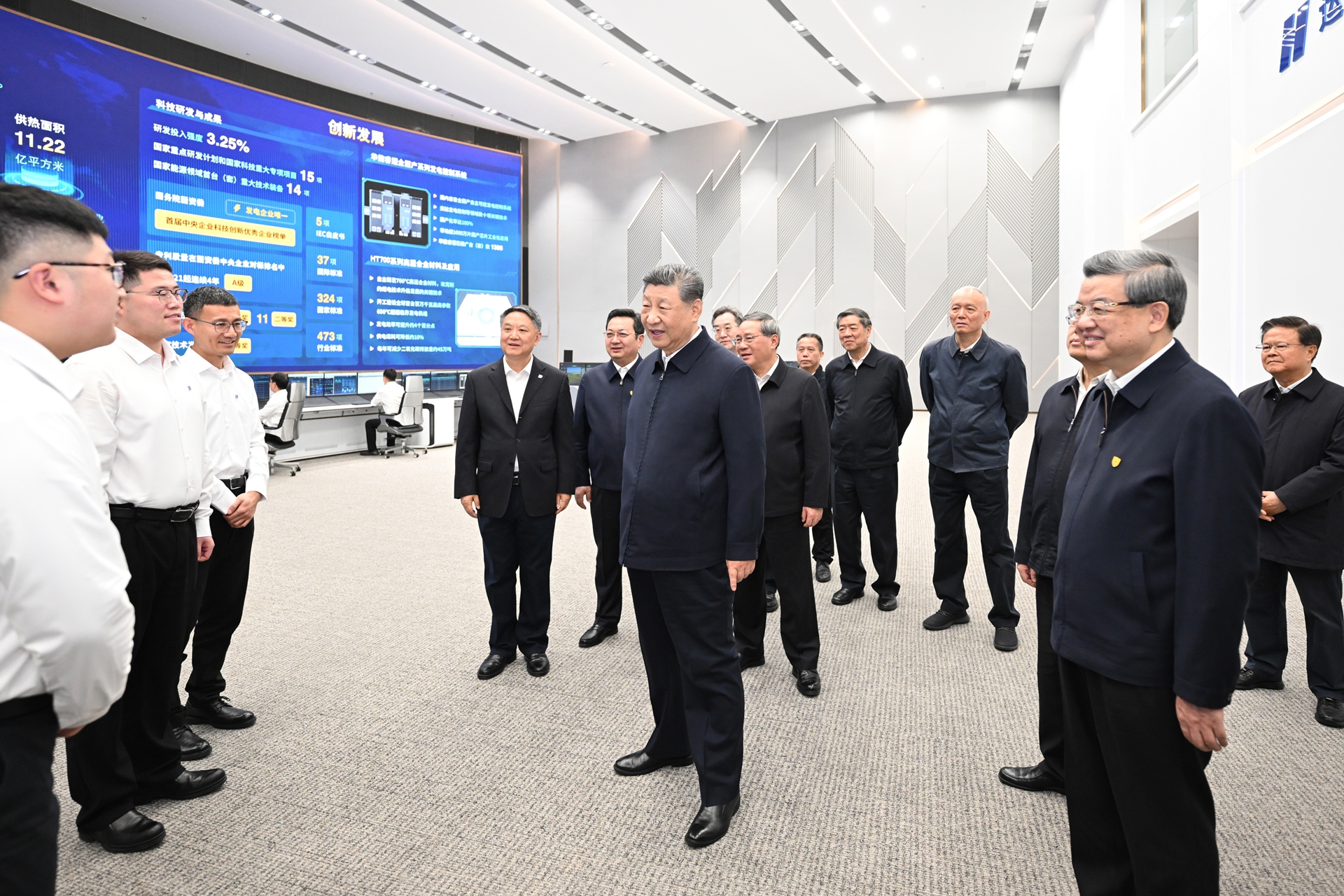
Chinese President Xi Jinping, also general secretary of the Communist Party of China Central Committee and chairman of the Central Military Commission, visits China Huaneng Group Co., Ltd. in the Xiong'an New Area, North China's Hebei Province, on March 23, 2026. Photo: Xinhua
Xi Jinping, general secretary of the Communist Party of China Central Committee, on Monday urged efforts to build the Xiong'an New Area in North China's Hebei Province into an innovation hub in the new era and a model of promoting high-quality development, the Xinhua News Agency reported.
Xi, also Chinese president and chairman of the Central Military Commission, inspected the Xiong'an New Area on Monday, when he also chaired a symposium on further advancing the high-quality construction and development of the area.
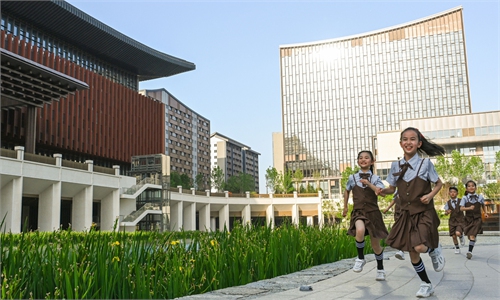
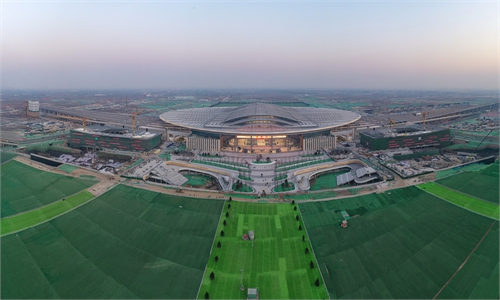
During the inspection, Xi viewed construction progress in the start-up zone and visited China Huaneng Group Co., Ltd. and the Xiong'an campus of Beijing No. 4 High School to learn about the development of the Xiong'an New Area.
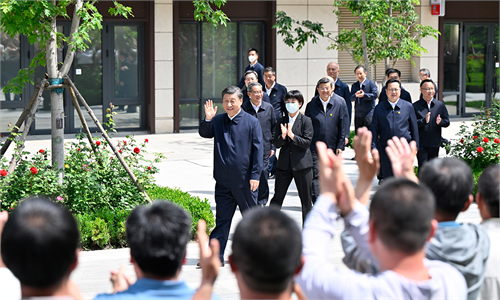
He also greeted representatives of officials and staff from organizations relocated as part of the projects to relieve Beijing of functions non-essential to its role as China's capital, which have moved in or are under construction.
A pilot area
The Monday inspection is Xi's fourth inspection visit to Xiong'an since 2017, according to Xinhua.
The previous visits were made in February 2017 before the establishment of the New Area, in 2019 where he listened to the introduction of the general plan, policy system and construction of the Xiong'an New Area, and in 2023 where he urged new progress for the "city of future" and noted that Xiong'an has entered a phase of advancing large-scale construction and at the same time taking on functions nonessential to Beijing's role as China's capital, per previous Xinhua reports.
Cheered by President Xi's continuous attention to Xiong'an and the latest inspection remarks, Qin Jianing, general manager of a Xiong'an-based tech company, told the Global Times that they now have a clearer direction and greater confidence in developing business.
The Xiong'an subsidiary of Memblaze, an enterprise-class SSD products and solutions provider, will celebrate its first anniversary this March.
According to Qin, technology and innovation enterprises look at two key aspects: one is the business environment, and the other - the most important one - is the regional innovation atmosphere, modern industrial planning, and the development direction of new quality productive forces.
As China embarks on the 15th Five‑Year Plan period (2026-30), the company plans to further expand our presence in aerospace storage, AI storage, and other industrial sectors, contributing its part to the inaugural year of the Xiong'an Science and Innovation Center - Xiongzhou Industrial Park, Qin said.
Qin is among many people who pursue a career and a life in the Xiong'an New Area, which, since establishment in April 2017, has been transformed: From a stretch of raw land to a mapped plan, and then to a city - a modern new town springing up from the earth.
As of 2026, more than 4,000 Beijing-origin companies have been relocated to Xiong'an, and more than 400 centrally administrated state-owned enterprises have set branches in the city, Hebei Daily reported on March 16.
To nurture an innovative environment, Xiong'an unveiled 16 measures to lower the administrative barriers and facilitate talent to stay and start up businesses in the city. Lower rental costs and supportive policies have attracted many young people, the overseas edition of the People's Daily reported Monday.
In 2026, Xiong'an continues to advance 20 livelihood projects which cover areas such as living environments, transportation and logistics, education and healthcare, elderly and child care, as well as employment support, Hebei Daily reported.
Meanwhile, Xiong'an is becoming greener and more biodiverse. Since 2017, a total of 483,000 mu (32,200 hectares) of new afforested land has been added in Xiong'an, bringing the total green area to 743,000 mu. The forest coverage rate has risen from 11 percent to 35.1 percent, China Central Television reported Saturday.
In the Baiyangdian wetland area of Xiong'an, the number of wild bird species has reached 296, an increase of 90 species since the establishment of the Xiong'an New Area; fish species have recovered to 50, per Hebei Daily. The involvement of AI-monitoring has improved the protection of birds and wildlife, allowing the harmony of human and nature.
The blueprint for Xiong'an pledged to build it into an innovative, green, smart, and world-class city with blue skies, fresh air, and clean water, in line with the country's high-quality development path, according to Xinhua.
As the blueprint is coming real, analysts said this "city of future" is a vivid demonstration of Chinese modernization.
Integrated development
On Sunday, a consignment of ceramic decorations, arrived at Beijing Daxing International Airport on Capital Airlines flight JD488 from Colombo, Sri Lanka, and was transported to and cleared at the Xiong'an Comprehensive Bonded Zone.
With this, the Xiong'an New Area officially activated its international air cargo terminal on Sunday with the launch of the NXA airline code, integrating the area into global aviation networks, the People's Daily reported Monday.
The new terminal of Xiong'an is China's first that is "not located at an airport but operates under a comprehensive bonded zone." Its three-letter airline code enables direct air freight handling and customs clearance, and such practice is made possible through close coordination between Xiong'an authorities and Daxing Airport customs.
Cong Yi, a professor at the Tianjin School of Administration, told the Global Times on Monday that the activation of the international air cargo terminal is establishing Xiong'an as an international air hub and the practice showcased regional industry, logistics, and policy coordination.
This practice is an epitome of how Xiong'an New Area is integrated into the bigger picture of China's development with a global vision, according to analysts.
Cong said that the Xiong'an New Area is developing into a high-standard, forward-looking future city. It is playing an increasingly crucial role in building world class urban and industrial clusters within the Beijing-Tianjin-Hebei region and propelling coordinated development.
In the process of relieving Beijing of functions non-essential to its role as China's capital, renowned universities and research institutes, major state-owned companies as well as start-ups are relocated to this vibrant area, according to media reports.
Hu Qimu, a deputy secretary-general of the Forum 50 for Digital-Real Economies Integration, told the Global Times on Monday that the integration of the region helps deepen the coordination of industrial, supply, and innovation chains.
Through unified market mechanisms, cross-regional research and development cooperation, and the establishment of innovation-to-industry conversion mechanisms, technological innovation can be accelerated into industrial application, enhancing overall competitiveness, Hu said.
Such integration also breaks down administrative barriers, allowing talent, technology, and capital to flow more freely within the area, which is particularly important for building a robust innovation ecosystem, Hu added.
In the long term, integration is expected to make the Beijing, Tianjin, and Hebei region a model of high-quality development, setting the pace for coordinated urban cluster growth, green and low-carbon transformation, and the advancement of high-end manufacturing.
From the gradual concentration of national level scientific resources and policies facilitating entrepreneurship, to efforts to provide better living conditions and environment for residents, Cong believes that looking ahead, the integrated area, with Xiong'an as a key knot, will become a model for high-quality development and provide replicable experience for Chinese modernization.
Xi, also Chinese president and chairman of the Central Military Commission, inspected the Xiong'an New Area on Monday, when he also chaired a symposium on further advancing the high-quality construction and development of the area.
During the inspection, Xi viewed construction progress in the start-up zone and visited China Huaneng Group Co., Ltd. and the Xiong'an campus of Beijing No. 4 High School to learn about the development of the Xiong'an New Area.
He also greeted representatives of officials and staff from organizations relocated as part of the projects to relieve Beijing of functions non-essential to its role as China's capital, which have moved in or are under construction.
A pilot area
The Monday inspection is Xi's fourth inspection visit to Xiong'an since 2017, according to Xinhua.
The previous visits were made in February 2017 before the establishment of the New Area, in 2019 where he listened to the introduction of the general plan, policy system and construction of the Xiong'an New Area, and in 2023 where he urged new progress for the "city of future" and noted that Xiong'an has entered a phase of advancing large-scale construction and at the same time taking on functions nonessential to Beijing's role as China's capital, per previous Xinhua reports.
Cheered by President Xi's continuous attention to Xiong'an and the latest inspection remarks, Qin Jianing, general manager of a Xiong'an-based tech company, told the Global Times that they now have a clearer direction and greater confidence in developing business.
The Xiong'an subsidiary of Memblaze, an enterprise-class SSD products and solutions provider, will celebrate its first anniversary this March.
According to Qin, technology and innovation enterprises look at two key aspects: one is the business environment, and the other - the most important one - is the regional innovation atmosphere, modern industrial planning, and the development direction of new quality productive forces.
As China embarks on the 15th Five‑Year Plan period (2026-30), the company plans to further expand our presence in aerospace storage, AI storage, and other industrial sectors, contributing its part to the inaugural year of the Xiong'an Science and Innovation Center - Xiongzhou Industrial Park, Qin said.
Qin is among many people who pursue a career and a life in the Xiong'an New Area, which, since establishment in April 2017, has been transformed: From a stretch of raw land to a mapped plan, and then to a city - a modern new town springing up from the earth.
As of 2026, more than 4,000 Beijing-origin companies have been relocated to Xiong'an, and more than 400 centrally administrated state-owned enterprises have set branches in the city, Hebei Daily reported on March 16.
To nurture an innovative environment, Xiong'an unveiled 16 measures to lower the administrative barriers and facilitate talent to stay and start up businesses in the city. Lower rental costs and supportive policies have attracted many young people, the overseas edition of the People's Daily reported Monday.
In 2026, Xiong'an continues to advance 20 livelihood projects which cover areas such as living environments, transportation and logistics, education and healthcare, elderly and child care, as well as employment support, Hebei Daily reported.
Meanwhile, Xiong'an is becoming greener and more biodiverse. Since 2017, a total of 483,000 mu (32,200 hectares) of new afforested land has been added in Xiong'an, bringing the total green area to 743,000 mu. The forest coverage rate has risen from 11 percent to 35.1 percent, China Central Television reported Saturday.
In the Baiyangdian wetland area of Xiong'an, the number of wild bird species has reached 296, an increase of 90 species since the establishment of the Xiong'an New Area; fish species have recovered to 50, per Hebei Daily. The involvement of AI-monitoring has improved the protection of birds and wildlife, allowing the harmony of human and nature.
The blueprint for Xiong'an pledged to build it into an innovative, green, smart, and world-class city with blue skies, fresh air, and clean water, in line with the country's high-quality development path, according to Xinhua.
As the blueprint is coming real, analysts said this "city of future" is a vivid demonstration of Chinese modernization.
Integrated development
On Sunday, a consignment of ceramic decorations, arrived at Beijing Daxing International Airport on Capital Airlines flight JD488 from Colombo, Sri Lanka, and was transported to and cleared at the Xiong'an Comprehensive Bonded Zone.
With this, the Xiong'an New Area officially activated its international air cargo terminal on Sunday with the launch of the NXA airline code, integrating the area into global aviation networks, the People's Daily reported Monday.
The new terminal of Xiong'an is China's first that is "not located at an airport but operates under a comprehensive bonded zone." Its three-letter airline code enables direct air freight handling and customs clearance, and such practice is made possible through close coordination between Xiong'an authorities and Daxing Airport customs.
Cong Yi, a professor at the Tianjin School of Administration, told the Global Times on Monday that the activation of the international air cargo terminal is establishing Xiong'an as an international air hub and the practice showcased regional industry, logistics, and policy coordination.
This practice is an epitome of how Xiong'an New Area is integrated into the bigger picture of China's development with a global vision, according to analysts.
Cong said that the Xiong'an New Area is developing into a high-standard, forward-looking future city. It is playing an increasingly crucial role in building world class urban and industrial clusters within the Beijing-Tianjin-Hebei region and propelling coordinated development.
In the process of relieving Beijing of functions non-essential to its role as China's capital, renowned universities and research institutes, major state-owned companies as well as start-ups are relocated to this vibrant area, according to media reports.
Hu Qimu, a deputy secretary-general of the Forum 50 for Digital-Real Economies Integration, told the Global Times on Monday that the integration of the region helps deepen the coordination of industrial, supply, and innovation chains.
Through unified market mechanisms, cross-regional research and development cooperation, and the establishment of innovation-to-industry conversion mechanisms, technological innovation can be accelerated into industrial application, enhancing overall competitiveness, Hu said.
Such integration also breaks down administrative barriers, allowing talent, technology, and capital to flow more freely within the area, which is particularly important for building a robust innovation ecosystem, Hu added.
In the long term, integration is expected to make the Beijing, Tianjin, and Hebei region a model of high-quality development, setting the pace for coordinated urban cluster growth, green and low-carbon transformation, and the advancement of high-end manufacturing.
From the gradual concentration of national level scientific resources and policies facilitating entrepreneurship, to efforts to provide better living conditions and environment for residents, Cong believes that looking ahead, the integrated area, with Xiong'an as a key knot, will become a model for high-quality development and provide replicable experience for Chinese modernization.
RELATED ARTICLES