'Fight a trade war with China'? The EU can neither win nor afford it: Global Times editorial
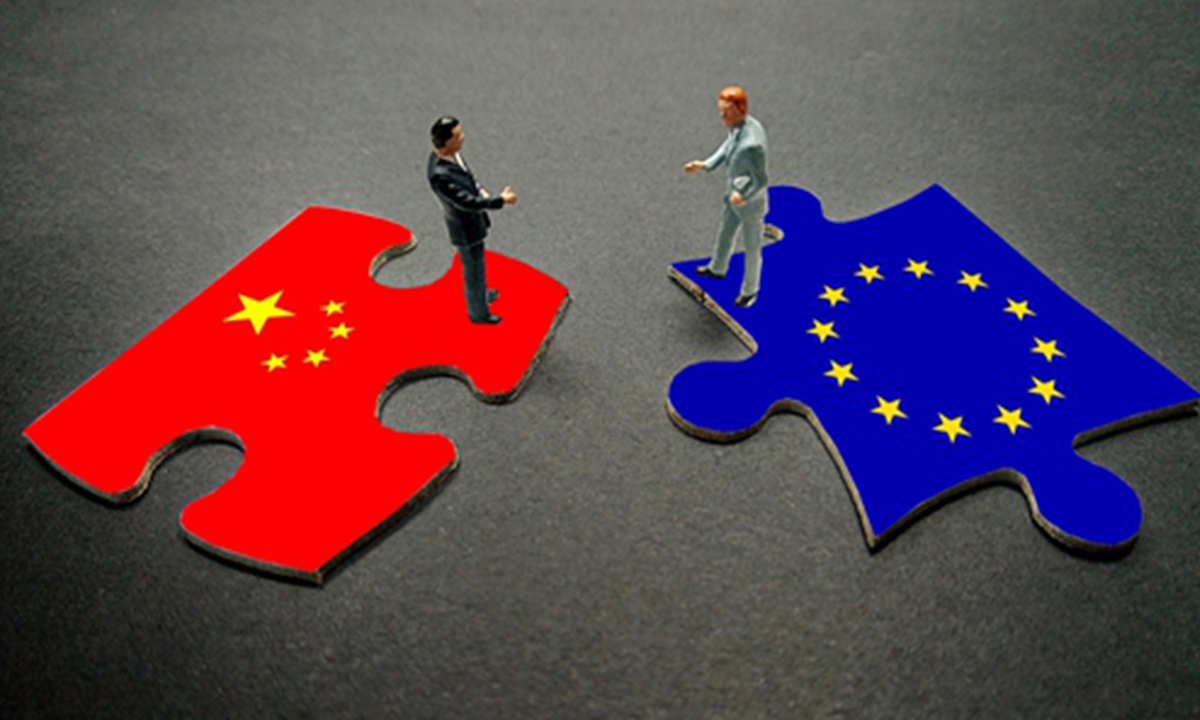
Photo: VCG
Recently, the European Union Institute for Security Studies (EUISS) published a report advocating the use of "leverage-based diplomacy" against China, suggesting that the EU should exploit China's "dependence" on Europe in areas such as technology and markets to exert targeted pressure. The report even encourages the EU to initiate a trade war, claiming that proactive action would cost less than inaction. Such arguments come across as aggressive and "full of confidence," steeped in zero-sum thinking and political bias, and appear intent on steering China-EU relations toward confrontation.The EUISS report claims that China has long failed to address European concerns. The facts, however, tell a different story. China has continued to expand high-level opening-up. All market access restrictions for foreign investors in the manufacturing sector have been lifted, the negative list for services has been steadily shortened, and unilateral and autonomous opening-up measures have been strengthened. Platforms such as the China International Import Expo have been used to expand imports, and visa-free access has been unilaterally extended to more European countries. In contrast, the EU has largely ignored China's concerns while escalating protectionist measures, launching repeated investigations into leading Chinese companies and competitive industries. For the authors of the report, is China's unilateral and comprehensive accommodation of the European side's demands the only solution? Such a condescending stance raises the question: Where does the EU's "confidence" come from? A closer reading shows it stems from a serious misjudgment of the situation by some in Europe.
The report also severely misjudges China's economic outlook. It claims that China's economy suffers from the so-called structural challenges and that its "assertive" external posture stems from economic "fragility." Such assertions blatantly disregard facts and lack any credibility. During the 14th Five-Year Plan period (2021-25), China's GDP surpassed 140 trillion yuan ($20.22 trillion), achieving four consecutive leaps and maintaining an average annual growth rate of 5.4 percent, leading major global economies. China has contributed around 30 percent to global economic growth each year. In stark contrast, the EU's GDP growth has been sluggish over the past decade, often below the global average, with Germany - the bloc's engine - having even experienced two consecutive years of economic contraction, dragging on global growth. With weak momentum and underwhelming progress in green and digital transitions, the EU would risk severe self-inflicted damage if it were to confront China head-on.
The report further underestimates the depth of China-EU economic interdependence. The two sides are each other's second-largest trading partners. China is a key destination for European high-end manufacturing, automobiles, precision equipment, pharmaceuticals, and chemicals. It is also a major trading partner for countries such as Germany, France, Italy, and Spain. According to the logic of the EUISS report, the EU's imports from China are roughly twice China's imports from the EU, and this trade deficit is the best illustration of the EU's "dependence" on China. In such a deeply intertwined relationship, a forced trade war would only end up harming the EU itself. Take the EU's recent proposal for a revised Cybersecurity Act as an example: industry estimates suggest that excluding Chinese companies and equipment across 18 sectors could cost EU countries at least 840 billion euros ($974 billion). Who will bear the cost of this loss? How will the EU's goals for green and digital transformation be affected? How much more will European taxpayers have to pay out of their own pockets?
The report also overestimates the EU's bargaining power. On one hand, the EU remains entangled in the Ukraine crisis, with high energy costs already weighing heavily on businesses and consumers. Recent military operations by the US and Israel against Iran have further tightened global energy supplies. Since the onset of this conflict, natural gas prices in the EU have surged by 50 percent, leading to an extra expenditure of 3 billion euros. As a result, the industries and livelihoods within the EU face increasing threats, and the "Sword of Damocles" hovering over the union is now in a precarious position. On the other hand, frictions between the US and Europe persist, with the threat of renewed tariff war always looming. If the current agreement were to be scrapped and renegotiated, it is likely that the commitments of a 15 percent tariff, $600 billion in investment, and $750 billion in US energy purchases would no longer satisfy US demands. It is truly baffling that, while aiding Ukraine in its fight against Russia and clashing with the US, the EU's official think tank is still attempting to pressure China and even provoke a trade war with it.
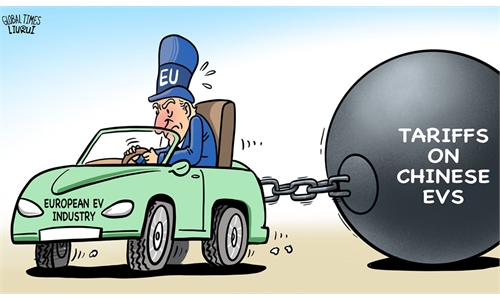
In recent years, the EU has accelerated the introduction of unilateral and protectionist trade legislation, restricting or excluding Chinese companies and products, and even attempting to impose conditions such as forced joint ventures and technology transfers. These actions violate WTO rules and contradict the EU's own claims of fair competition and market principles. Protectionism does not enhance competitiveness, and "decoupling" from China means decoupling from opportunities. Hopefully, the EU will step out of the dark room of protectionism and avoid moving further down the wrong path. Tariff and trade wars have no winner; China does not want to fight these wars but is not scared of them. It is time for certain EU think tanks and experts to wake up and refrain from offering misguided advice that could harm broader interests.
RELATED ARTICLES