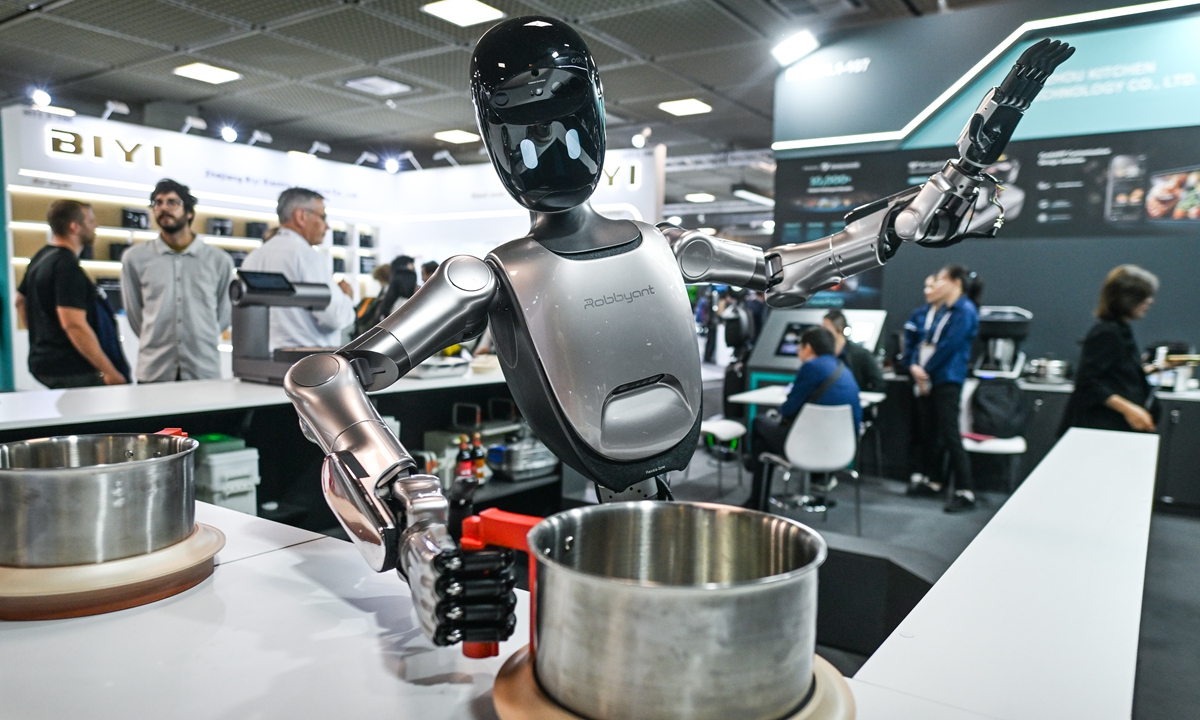
A Chinese-made humanoid robot is on display at the IFA 2025 in Berlin, Germany, on September 6, 2025. Photo: VCG
China filed 22,031 patent applications with the European Patent Office (EPO) in 2025, a year-on-year increase of 9.7 percent, according to the EPO Technology Dashboard 2025 report released on Tuesday. China rose to third place in patent applications for the first time, the Xinhua News Agency reported.
This rise reflects not only China's growing technological strength but also the deepening quality of China-EU economic collaboration.
The rise in Chinese patent applications is a natural outcome of Chinese businesses' focus on core technologies, and their active integration into the global innovation system. In recent years, China has steadily increased investment in science and technology, achieving breakthroughs in key areas such as digital communications, transportation, and semiconductors. These accomplishments are now making their way into the European market and participating in global competition.
According to the EPO report, digital communications accounted for the largest share of Chinese patent applications in Europe, while transport and semiconductors saw growth rates of more than 30 percent, underscoring the rising global competitiveness of China's new-energy vehicles and advanced manufacturing industries.
The technological momentum has been accompanied by the continuous improvement of the technological content in China's investment landscape in Europe. In the past, Chinese investment in Europe was often concentrated in market expansion, production capacity, and traditional sectors such as finance. Today, however, Chinese companies are integrating into local innovation ecosystems - from digital communications to transportation, and from semiconductors to new energy.
More Chinese firms are setting up research and development (R&D) centers in Europe, engaging with local innovation clusters, and collaborating with European universities and research institutions. This transition benefits Europe by injecting fresh vitality into its innovation landscape while offering local companies broader cooperation opportunities and enhanced supply chain resilience.
More importantly, China's technological ascendancy in Europe is deepening the complementarity between China and Europe in industrial and supply chains. China and Europe have highly complementary economic structures: Europe has profound accumulation and obvious advantages in high-end manufacturing, basic R&D and precision craftsmanship, while China has unique characteristics and great potential in application scenario expansion, large-scale production, and business model innovation.
As Chinese businesses apply for more patents and carry out more technology-intensive investments in Europe, the complementarity between the two sides is no longer limited to traditional trade or production capacity cooperation, but extends to higher levels such as technological R&D and innovation ecosystem coordination, thus providing strong support for the stability and sustainable development of industrial chains.
Yet, deeper technological engagement inevitably brings new issues. With the continuous landing of China's innovative achievements in the European market and their growing influence, whether the European market can continue to provide a favorable environment for the innovative achievements and development of Chinese companies has become an increasingly important issue in the process of deeper and more integrated China-EU industrial collaboration.
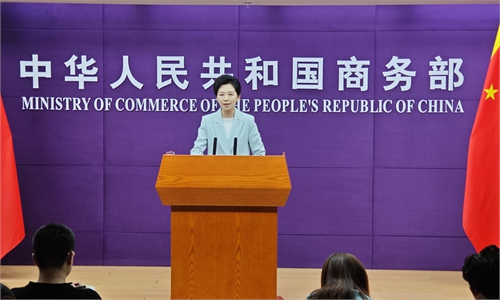
For instance, after the EU in early March released the Industrial Accelerator Act (IAA), which introduced restrictions on foreign investment in four emerging strategic sectors, China's Ministry of Commerce expressed serious concern over the IAA, saying that certain restrictive provisions could constitute significant investment barriers and institutional discrimination. It vowed to firmly safeguard the legitimate rights and interests of Chinese companies.
While global technology competition is indeed intensifying, innovation cooperation is never a zero-sum game, but a path that holds the potential for mutual benefit. The rise in Chinese patent applications in Europe not only provides strong support for Chinese companies expanding their global presence but also creates new opportunities for Europe's industrial upgrading, demonstrating the great potential of China-EU innovation cooperation.
Only when Chinese innovations are given due respect and effective protection in the European market can their full value be realized, enabling deeper integration and synergy between the industrial chains of China and Europe. Adopting protectionist, restrictive measures against Chinese companies and products will not only undermine China-Europe cooperation but will also harm Europe itself.
RELATED ARTICLES