ARTS / ART
From wilderness to kitchens, fresh greens shape season’s signature dishes
Spring on table
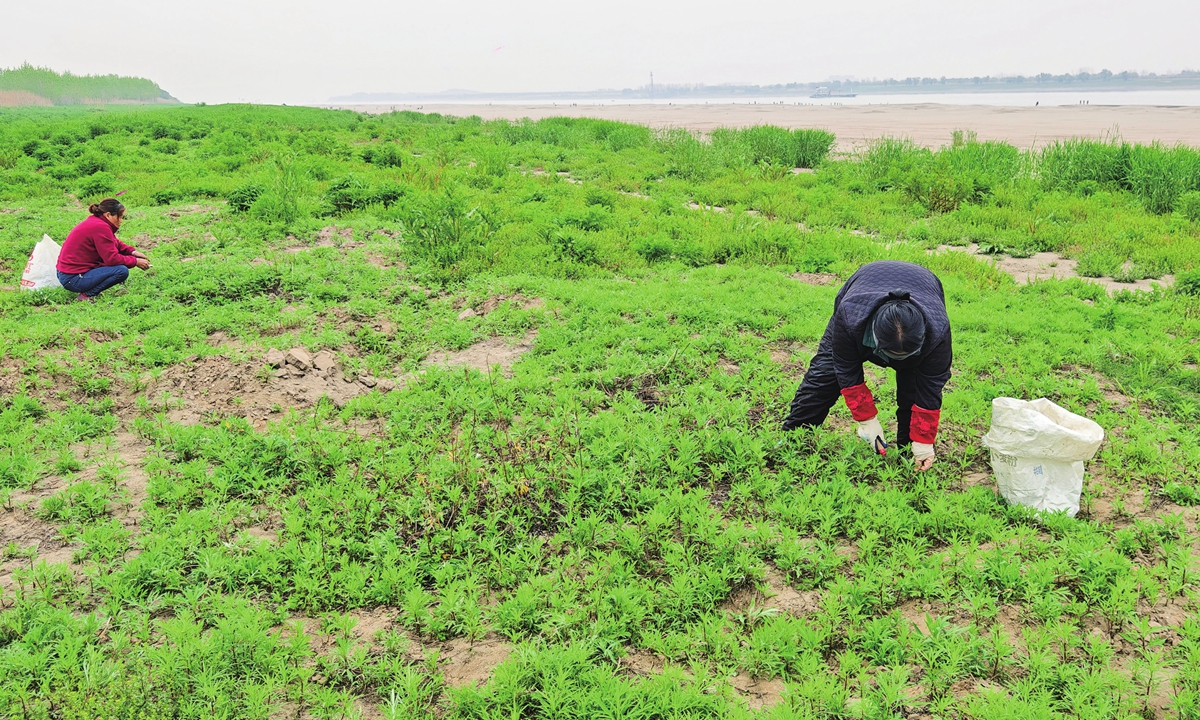
People dig for wild edible plants along the riverbank in Wuhan, Hubei Province. Photo: VCG
As the first shoots of spring emerge along Beijing's riverbanks, Mai Dou (pseudonym) is already there, tools in hand and child in tow, gathering wild greens and marking the season in her own way.On weekends, the 30-year-old and her child set off for riverbanks or wooded hills around the capital's suburbs, stretching out toward the Changping and Yanqing districts and the forests of Daxing district, in search of spring's tender bounty: shepherd's purse, Chinese onion, alfalfa, dandelion greens and even fresh goji shoots.
"It used to be just a simple fun," Mai told the Global Times. "But now it's become a kind of family tradition. We walk, talk, explore together … and come home with a basket of greens."
She snaps photos of the places she visits and the tools she uses, posting them to her social media account on China's lifestyle-sharing platform Xiaohongshu, where numerous users across the country share similar foraging stories and swap tips on routes, identification of the plants and recipes.
Mai is far from alone. A growing number of Chinese are rediscovering wild edible plants known collectively as chuncai in Chinese ("spring vegetables" or "spring greens"), gathering them in parks, fields, riverbanks and along trails.
Bu Xiting, an associate research fellow with the School of Cultural Industries Management at the Communication University of China, believes that foraging wild greens allows people to slow down and savor the moment.
"Unlike costly, curated camping trips, all you need is a small spade and a bamboo basket. Feeling the soil and discovering your harvest allows young people to reconnect with the simple joys of the surrounding natural world, often overlooked due to an immersive digital lifestyle," Bu told the Global Times.
In fact, foraging spring vegetables is hardly new in China. Farmers and villagers have long harvested wild greens to supplement their diets after winter, when fresh produce was scarce, explained Zhu Yi, associate professor at the China Agricultural University in Beijing.
"Eating spring vegetables is part of China's culinary DNA," said Zhu. "They reflect Chinese people's enduring connection to nature and the timeless wisdom of Chinese cuisine, which celebrates seasonal ingredients."
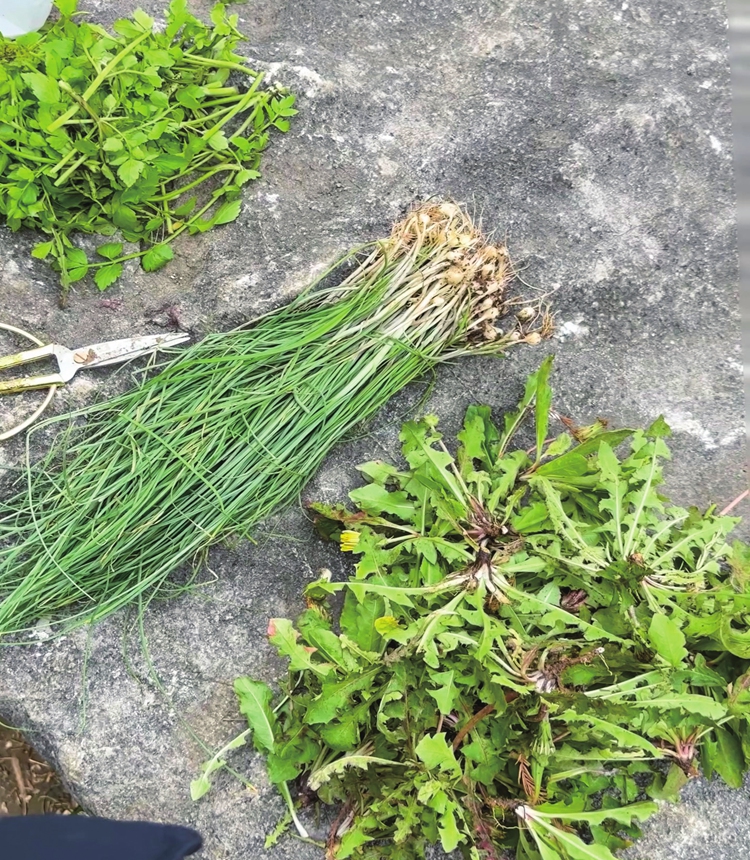
Wild spring vegetables foraged by Zhou Xinyue Photo: Courtesy of Zhou Xinyue
Hands-on delightsFor many who forage, it's not simply about eating, but about the experience that brings the most joy and fun.
"We don't go out just to dig up greens," said Mai. "It's a little hike, time together to take in the surroundings. The sunshine, the breeze and the fresh air make it special, and sometimes we just slow down and see what we can find along the way."
Over the past weekend, Mai and her child harvested a bundle of shepherd's purse and headed home to make a simple breakfast: hand-pulled flatbread folded with greens, glass noodles and eggs.
For others, foraging is spontaneous. "Picking greens is one of those simple pleasures," shared Zhou Xinyue, a 25-year-old resident in Nanjing, East China's Jiangsu Province, who also shared her foraging trips online. "When you walk, you find something, then you make something delicious with what you found - it's a very satisfying loop."
Zhou visited the edges of a park path with friends late in March and found that many greens had already gone to seed. But she still came away with dandelion, wild chives and small stalks of wild celery.
"I had done my research ahead of time, but a lot of the spring vegetables had already been picked up," she said. "Still, it was fun - picking whatever we could find, then going home to make stir-fried spring vegetables."
More market supply
Not everyone is digging. For most urban residents, fresh spring greens are more often bought than foraged.
Many markets in China offer tender Chinese toon sprouts, spring bamboo shoots, prickly ash buds and other seasonal vegetables that were once found only in specific regions.
Data from major online marketplaces show that searches for spring vegetable keywords have surged this season. Since March, search volumes for Chinese toon and bamboo shoots have shot up by roughly 180 percent and 150 percent respectively, while interest in broad beans and asparagus has also risen significantly, CCTV News reported.
Ran Li, 32, from Anyang in Central China's Henan Province, told the Global Times that her family has long embraced spring produce, mainly purchasing Chinese toon, bamboo shoots, and other seasonal greens or ordering them online. She uses them in dishes like scrambled eggs with Chinese toon or processes them into a savory paste for year-round use.
"We also buy bamboo shoots and other greens at the supermarket," she said. "When I was younger, we didn't have as big a variety. Now I can enjoy these seasonal tastes anytime."
According to Zhu, the improvements in cold chain logistics and distribution have broadened the market for seasonal vegetables, enabling urban consumers to experience seasonal flavors far from the fields where they originate.
Vegetables like Chinese toon and bamboo shoots are rich in vitamins. But she warns against overconsumption of certain greens, which can be bitter or even mildly toxic. For example, Chinese toon is best briefly blanched in boiling water before cooking. "Blanching helps remove bitterness and reduces irritation to the stomach," she said.
She also cautioned that not all wild plants are safe to eat. "Many wild greens are nutritious," said Zhu. "But correct identification is essential. Some look similar to edible species but can cause discomfort or worse if misidentified."
RELATED ARTICLES