Smart robots win acclaim at Boao forum
China’s supply chain, innovation and application pace drive rapid rollout
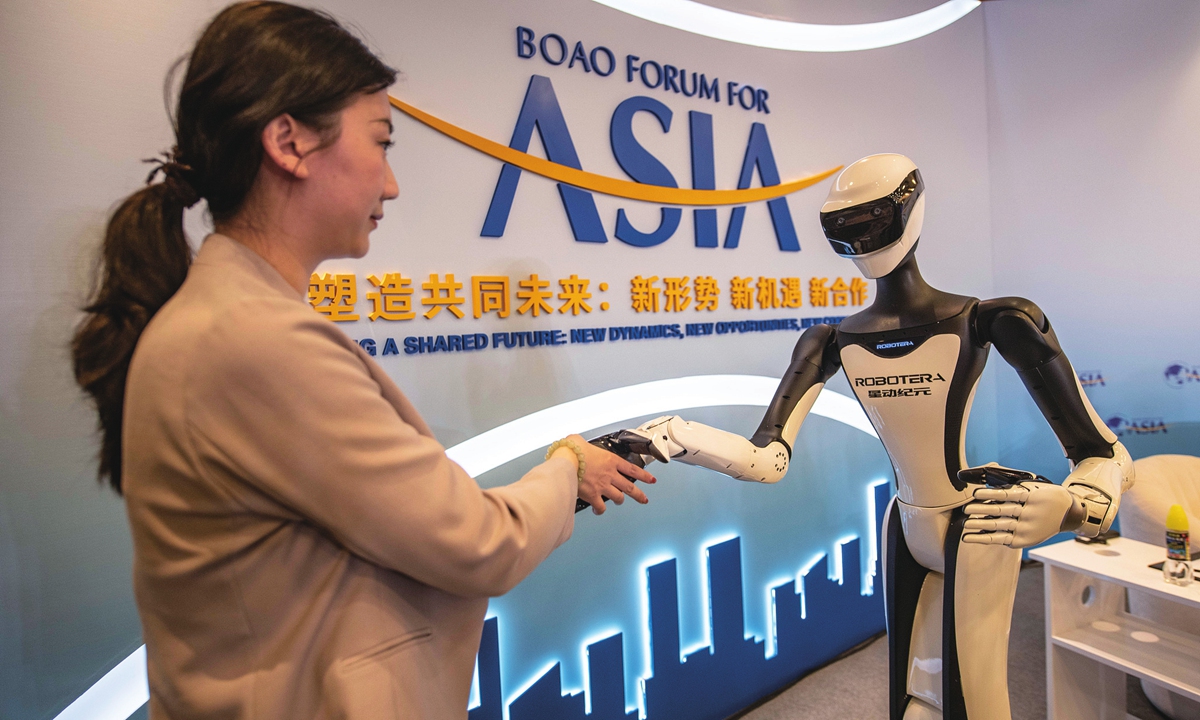
A humanoid robot interacts with an audience at the 2026 Boao Forum for Asia in Qionghai, South China's Hainan Province, on March 25, 2026. Photo: VCG
At a plaza outside the Boao Forum for Asia (BFA) venue, humanoid robots dance in sync to music, drawing crowds of Chinese and foreign guests who stop to watch and record the scene on their phones.
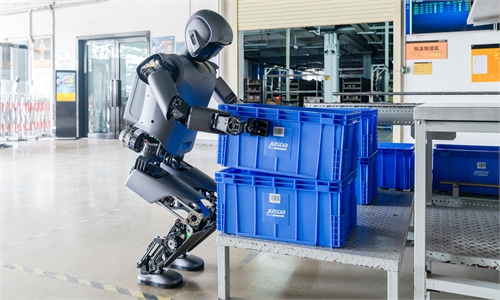
In Boao, on the shores of the South China Sea, robots are moving from showcases into real-world use. Inside the venue, they guide guests and draw crowds with interactive demos; outside, the path to large-scale deployment of humanoid robots has become a hot topic among officials, business leaders and experts.
The BFA Annual Conference 2026, held from March 24 to 27, has brought together more than 2,000 guests from about 60 countries and regions. BFA Secretary General Zhang Jun said on Tuesday that promoting innovation and transformation to unlock development potential is a major feature of this year's conference.
Many of the forum agenda centers on AI and robotics, including digitally driven industrial upgrading, evolution of humanoid robots, pathways to accelerate green transition, implementation of the UN Sustainable Development Goals, and the future of AI-aided health care, the Global Times observed.
At the seminar on the "Advancement and Breakthrough of Humanoid Robotics," international political figures and industry representatives discussed technological pathways, industrial progress, and governance challenges.
Jenny Shipley, former prime minister of New Zealand, told the Global Times that "China has invested for many years in smart technologies such as 5G and 6G, and is well positioned to deploy its innovations both in homes and across communities. The deployment of smart humanoid robots in industry will advance China's interests and help it move further and faster."
Supply chains drive deployment
Forum participants noted that China's strength in humanoid robotics extends beyond isolated technological breakthroughs, reflecting a broader, system-level advantage—spanning a complete supply chain, abundant application scenarios, and sustained policy support, which collectively accelerates the sector's move toward large-scale deployment.
Sam Daws, a senior advisor at the University of Oxford's Oxford Martin AI Governance Initiative and founding director of Multilateral AI, told the Global Times in Boao that China is already "a global leader" in humanoid robot development, noting that "one of China's key advantages lies in its strong manufacturing base, as well as the depth of skills within its population in developing and deploying new technologies."
From an industry perspective, large-scale deployment has become a central priority. Chen Jianyu, founder of RobotEra, told the Global Times that the true scale means real-world applications—not demonstrations—in which buyers are willing to pay for the value created, with deployment reaching at least thousands, if not tens of thousands, of units.
Chen noted that, at the current pace, there are no major barriers to large-scale deployment in China's industrial settings and that "it is only a matter of time," with breakthroughs likely to come first in this area. By contrast, household applications remain constrained by model capability and technological maturity, leaving near-term prospects uncertain.
When asked about robot application scenarios in China, Daws said that there are many promising areas, including factories, retail settings, caregiving for the elderly, and transportation.
On competitive strengths, Chen outlined three key advantages for China in humanoid robotics: a complete and efficient supply chain that plays a pivotal role; a strong pool of high-quality engineers supporting R&D and deployment; and a vast market spanning the world's largest industrial base and future consumer demand.
Industry participants noted that the combination of supply chain strength, engineering capability, and application scenarios gives China strong momentum in moving humanoid robots from demonstration shows to real-world deployment. At the same time, key challenges remain in generalization, reliability and cost, requiring continued breakthroughs.
Shen Dou, executive vice president of Baidu and president of Baidu AI Cloud Group, said at the seminar that China's well-established supply chain offers a unique advantage, and as robots are refined across various scenarios, the costs will "eventually drop to a level affordable for households."
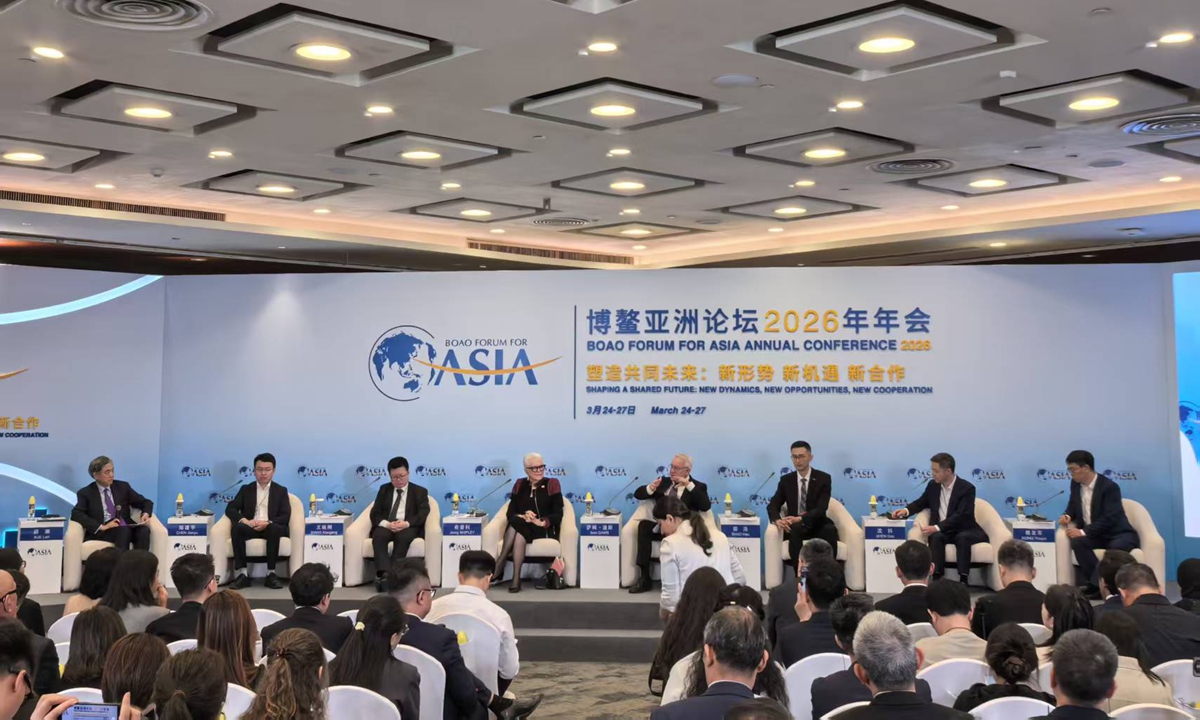
The seminar of the Advancement and Breakthrough of Humanoid Robotics Photo: Zhang Yiyi/GT
Competition, cooperation in parallel
In the global landscape of humanoid robotics, China and the US stand out as the two top players, with their relationship increasingly defined by a mix of competition and cooperation.
Daws told the Global Times that there is "significant potential for cooperation" between the two countries, particularly in advancing technologies that serve humanity, while noting that competition can also help accelerate innovation.
From an industry development perspective, Chen said that China and the US are likely to follow parallel paths in the near term, with Chinese firms focusing on domestic deployment while US companies prioritize their home market. As the sector matures and firms expand globally, competition will gradually emerge, though cooperation will persist—particularly in supply chains, as "any company seeking cost reduction and large-scale deployment can hardly do without China's supply chain."
Regional cooperation is advancing too. Chen noted that countries such as South Korea and Singapore are closely watching the sector and have engaged in collaboration with China. As China continues to step up its AI push, industrial synergy across Asia is expected to gain new momentum.
Former Slovenian president Danilo Türk told the Global Times on Wednesday that China has made "remarkable progress" in robotics development, adding that more efforts should be made to promote cooperation between Chinese and European companies through various channels.
As deployment accelerates, governance and employment challenges are coming to the fore. Former New Zealand prime minister Shipley told the Global Times that "the really challenging questions are how close we are prepared to let them into our human lives, and the ethical, moral and intellectual questions we need to consider," adding that "that's not only a challenge for China—it's a challenge for us all."
The participants said that as large AI models further integrate with embodied intelligence, humanoid robots are shifting from isolated capabilities toward more system-level advancement. Despite some lingering technological hurdles, China's strong industrial ecosystem is expected to accelerate commercialization, positioning humanoid robots as a key pillar of the next wave of China's technological transformation.
According to China's Ministry of Industry and Information Technology's data in January, the country had more than 140 robot manufacturers and had launched more than 330 models in 2025.
According to a draft outline of the 15th Five-Year Plan (2026-2030), China will accelerate the development of emerging strategic industries including next-generation information technology, new energy, new materials, smart connected new-energy vehicles, robotics, biomedicine, high-end equipment, and aerospace during the five-year period, the Xinhua News Agency reported.
RELATED ARTICLES