ARTS / CULTURE & LEISURE
Yueju Opera at 120: Role model of local theatrical art’s survival and thriving
By Published: Mar 29, 2026 10:25 PM
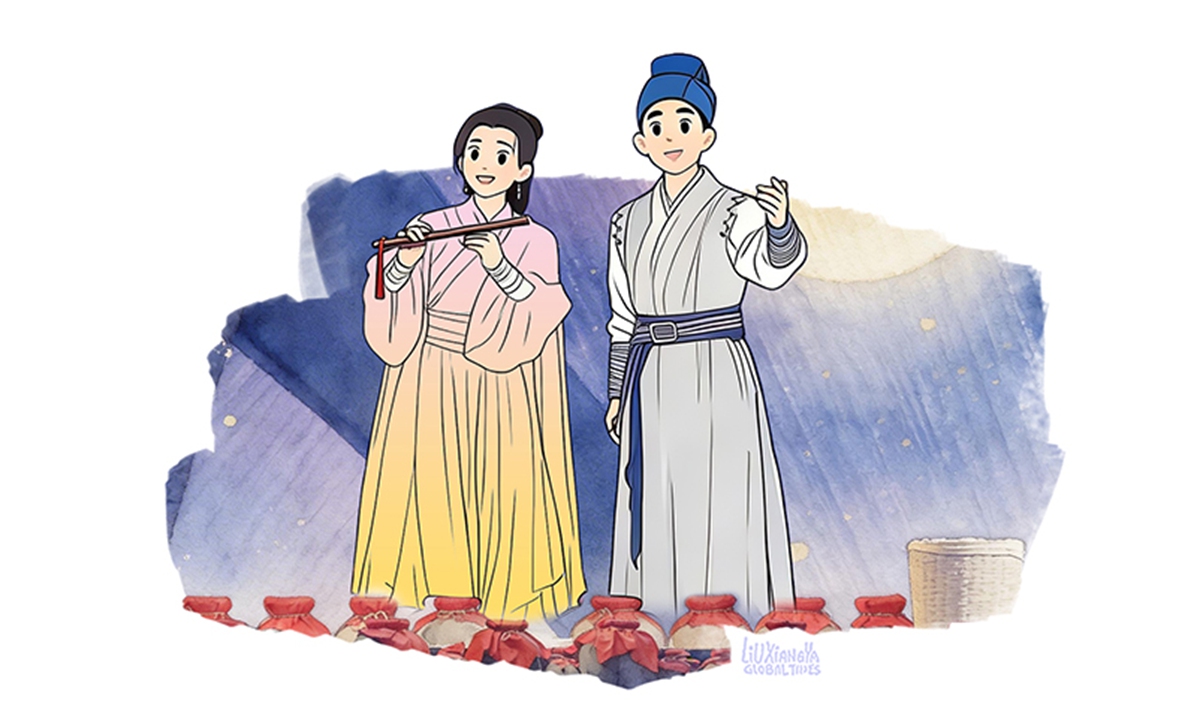
Illustration: Liu Xiangya/GT
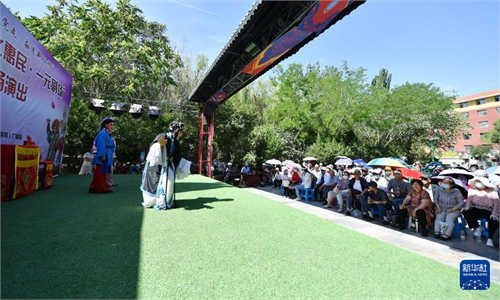
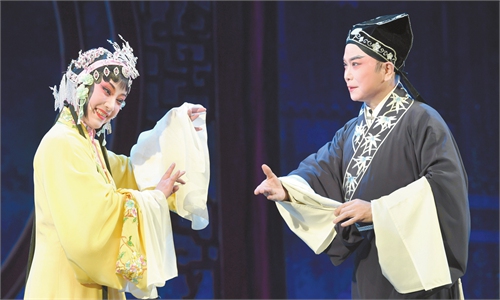
China's Yueju Opera, the graceful "southern sister" of Beijing Opera, celebrated its 120th birthday last week. What began in 1906 on a makeshift stage of upturned rice buckets in a village in East China's Zhejiang Province has become one of China's most vibrant theatrical arts, with professional troupes nationwide and amateur societies expanding from city theaters to rural stages.Its 120-year-old journey is more than a success story for one regional art form; it is a living blueprint for how traditional Chinese culture can thrive in the 21st century: by knowing exactly what it is, then fearlessly reinventing it.
The secret, as leading Yueju Yin School artist Mao Weitao told the Global Times, lies in three unwavering commitments. First, Yueju Opera preserves its xieyi (freehand) aesthetic, the poetic, suggestive style rooted in Eastern philosophy that values atmosphere over photographic realism. Second, it refuses to abandon the Wu dialect of Zhejiang Province, treating its lilting tones as the very soul of the singing voice. Third, it cherishes its signature all-female aesthetic, the exquisite yinrou (gentle and graceful) beauty that has defined the genre since its earliest days.
These "three perseverations" are not conservative brakes on progress; they are the fixed compass points that allow every innovation to remain recognizably Yueju Opera. Because the core remains steady, the changes feel exhilarating rather than disorienting. According to a seminar at the National Radio and Television Administration on Tuesday, Zhejiang Satellite TV's Yueju Opera Spring Festival Gala, now in its fourth year, has become a cultural phenomenon. Classic tales such as The Dream of the Red Chamber and Butterfly Lovers have been re-imagined with cinematic lighting, contemporary choreography and global live-streaming. The results speak for themselves: more than 130 million views online and 70 billion topics. What was once confined to the theater now pulses through smartphones and social feeds, turning ancient stories into shared moments for millions.
On stage, the same balance is at work. The immersive New Dragon Gate Inn reconfigures the audience-performer relationship, inviting viewers into the performance space itself. The contemporary drama Qiantangli uses Yueju Opera's delicate brushstrokes to portray ordinary heroes. The new historical play Su Dongpo draws on Zhejiang's literary heritage to celebrate patriotism and human feeling.
Each production proves that Yueju Opera's emotional range is limitless when its aesthetic boundaries are respected. The generational handover is equally encouraging. From Mao Weitao to rising stars Chen Lijun and Li Yunxiao, young performers are not merely inheriting roles, they are expanding the art form.
These achievements arrive at a critical moment. China's 348 opera schools include nearly 300 rare varieties; more than 200 are struggling with fragile ecosystems. Some 121 schools survive with only a single state-supported troupe - each a so-called "No.1 Troupe in the World" - while 106 have none at all.
The recent symposium on rare-opera protection in Boxing county, Shandong Province, and the launch of a three-year action plan by Chinese authorities to revitalize the theatrical arts, starting from 2026, signal a national resolve to act. Shaanxi's model - folding rare schools into the Qinqiang Opera festival, building an online exhibition platform, and urgently recording endangered repertoires - shows what targeted support can achieve.
Yueju Opera's trajectory offers the larger playbook: self-knowledge first, innovation second, dissemination everywhere. The lessons are clear and urgent. Confidence flows from self-awareness. Yueju Opera never tried to become "more like" another art form to win popularity. Instead it doubled down on what made it unique - poetic suggestion, dialect melody, feminine grace - and discovered that distinctiveness is its greatest asset. Every endangered school should take heart: Clarity of identity is the first step toward relevance.
Innovation requires a map. Yueju Opera's experiments - whether AI-enhanced visuals or cross-cultural fusions - never strayed beyond its aesthetic shoreline. This disciplined freedom prevents the common trap of chasing trends at the cost of soul. It is a reminder that boundaries, far from being restrictive, are liberating when they are understood and embraced.
Promotion matters more than mere inheritance. Yueju Opera has built an ecosystem that reaches beyond the stage: Cultural-tourism routes include Follow Yueju Opera to Tour Shengzhou (the cradle of Yueju), nationwide rural leagues, and digital platforms. Art lives when it becomes part of people's daily cultural consumption, not when it is preserved only in archives.
Youth is a state of mind. As young actress Chen Lijun has observed, a 120-year-old art can still feel vibrantly young when it speaks the language of each new generation - in form, feeling and medium. The key is emotional resonance, not chronological age. In an era when many traditional cultures worldwide wrestle with modernity, Yueju Opera's 120-year journey offers a quietly triumphant answer: protect the roots of culture, then let the branches dance in the wind.
As China steps forward with its theater revitalization plan, the rest of the world may well look to the graceful singers of Zhejiang Province for inspiration. A 120-year-old opera that still captivates teenagers and global audiences alike is not merely survival and revival; it is showing how living heritage protection is done.
The author is a reporter with the Global Times. life@globaltimes.com.cn
RELATED ARTICLES