China announces countermeasures against Japanese lawmaker Keiji Furuya for colluding with ‘Taiwan independence’ forces
China has decided to take countermeasures against Keiji Furuya, a member of the House of Representatives of Japan's National Diet, according to a decision released by the Chinese Foreign Ministry on Monday. Photo: Xinhua
China took another step to demonstrate its firm stance on the Taiwan question by imposing targeted countermeasures against Keiji Furuya, a member of the House of Representatives of the National Diet of Japan, over actions harming China's core interests. Chinese Foreign Ministry announced the move Monday, followed by further responses from a spokesperson of the Foreign Ministry and the State Council Taiwan Affairs Office.China has lodged serious protests with the Japanese side over the visit to China's Taiwan region by Keiji Furuya. In disregard of China's repeatedly stated position regarding the Japanese leader's erroneous remarks on Taiwan, Keiji Furuya failed to reign in his wrong behavior, and continued to collaborate with "Taiwan independence" separatist forces in taking provocative moves, which constitutes serious interference in China's internal affairs and violation of China's sovereignty and core interests, Foreign Ministry spokesperson Mao Ning said at Monday's regular press conference.
Zhu Fenglian, spokesperson for the State Council Taiwan Affairs Office, also stressed that the Democratic Progressive Party (DPP) authorities, for their own partisan interests, have fawned on external forces and betrayed national interests, and will ultimately face the judgment of history.
Amid the rise of far-right forces and "neo-militarist" thinking in Japan, and the lingering impact of Tokyo's flawed policies on key issues such as history and the Taiwan region, Chinese experts said sanctions on Keiji Furuya send a clear signal that China is determined to safeguard its sovereignty and resist external interference, serving as a deterrent to foreign politicians seeking to meddle in the Taiwan question.
According to the Chinese Foreign Ministry, Keiji Furuya repeatedly visited the Taiwan region and colluded with "Taiwan independence" separatist forces, violating the one-China principle and the spirit of the Four Political Documents between China and Japan. In line with China's anti-foreign sanctions law, China has imposed countermeasures against him, including freezing his assets in China, banning transactions or cooperation with Chinese entities and individuals, and denying him visas and entry to the Chinese mainland as well as Hong Kong and Macao. The measures take effect on March 30, 2026, the ministry said.
Takaichi's 'big brother'
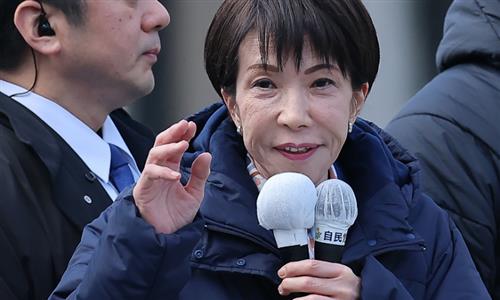
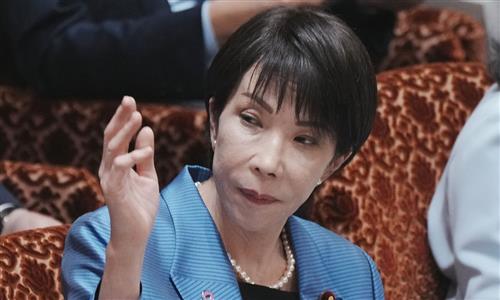
Analysts noted that Keiji Furuya has long maintained a notorious record in China-related affairs and has repeatedly visited the infamous Yasukuni Shrine. Japanese media describe him as Japanese Prime Minister Sanae Takaichi's "aniki," (big brother) or her most trusted confidant. Furuya has served as a recommender in all three of Takaichi's LDP presidential bids and held key posts in a Takaichi administration, including head of the Election Strategy Committee and Chair of the Commission on the Constitution.
According to a report republished on Yahoo Japan from the Japanese edition of the South Korean media outlet JoongAng Ilbo, Keiji Furuya is described as a so-called key figure among Japan's pro-Taiwan camp and the head of a group closely colluding with Taiwan region's secessionist forces. The report also noted that Furuya is a representative right-wing politician in Japan.
Furuya has visited the Taiwan region multiple times, most recently earlier this month to meet Taiwan regional leader Lai Ching-te in Taipei, Reuters reported Monday, noting in its headline that the sanctions were imposed on the "aide of Japan's PM" for his Taiwan trips.
"Keiji Furuya has ignored China's stern criticism and firm opposition, repeatedly visiting Taiwan region, colluding with 'Taiwan independence' separatist forces and making irresponsible remarks on Taiwan question. His actions, including attending the Yushan Forum, a forum associated with the DPP authorities, meeting with Taiwan regional leader, and promoting so-called exchanges among US, Japanese and Taiwan region military bands, constitute blatant interference in China's internal affairs and seriously touch on China's core interests and policy red lines," Da Zhigang, director of the Institute of Northeast Asian Studies at the Heilongjiang Provincial Academy of Social Sciences, told the Global Times on Monday.
Jiji News reported Monday evening that the Japanese side stated the countermeasure was "absolutely unacceptable and extremely regrettable," and requested a withdrawal through diplomatic channels.
Kyodo News, Asahi Shimbun and Sankei Shimbun, among other major Japanese media outlets, also reported China's countermeasure.
Meanwhile, Japan has recently stepped up its provocations. Besides allowing right-wing politicians to frequently visit the Taiwan region and collude with "Taiwan independence" separatist forces, it has accelerated constitutional revision. Militarily, Japan has abandoned its "exclusive defense" principle, boosted its defense budget, deployed offensive weapons such as Tomahawk cruise missiles, upgraded Type 12 anti-ship missiles, and hypersonic glide vehicles, developed "enemy base strike capabilities", and reorganized the Self-Defense Forces—including the largest-ever restructuring of the Maritime SDF and expansion of the space forces—advancing an offensive military transformation.
Da noted that Japan not only refused to admit its mistakes but even pretended to politely express regret while demanding a retraction—a series of actions that exposes the hypocrisy of its verbal calls for "dialogue."
As a key figure among Japan's right-wing constitutional revisionists, Furuya has used the Taiwan question to embolden "Taiwan independence" separatist forces and repeatedly visited Yasukuni Shrine, seriously hurting the feelings of the Chinese people and crossing the basic line expected of a politician.
Signals of countermeasures
Some Japanese media outlets also noticed that these countermeasures against Japanese political figures follow earlier sanctions on Shi Ping (also known as Seki Hei) and Shigeru Iwasaki, the former chief of the Joint Staff of Japan's Self-Defense Forces (SDF).
"The commonality among the three is that they are all deeply connected with 'Taiwan independence' forces, seriously crossing China's core interest red lines," Da Zhigang said, further citing the official notices announcing the countermeasures. "The reports noted that Shigeru Iwasaki and Keiji Furuya were accused of 'openly colluding with "Taiwan independence" separatist forces,' while Shi Ping, although not explicitly mentioned, has long spread false claims on Taiwan-related issues, constituting a continuous provocation."
Regarding the choice of sanction targets, China aims to send targeted signals through a "categorical strike": sanctioning Shi Ping serves as a warning to political opportunists seeking to profit from anti-China agendas; sanctioning former SDF chief Shigeru Iwasaki targets him personally while also deterring his underlying political-military network; and sanctioning Keiji Furuya, described as "showing no restraint, refusing to stop, and ignoring limits", is intended to clearly signal that China's red lines cannot be tested, and any crossing will be met with countermeasures, according to Da.
Since last year, China has imposed sanctions on these three individuals, sending three clear signals, said Xiang Haoyu, a distinguished research fellow at the China Institute of International Studies.
First, as the Taiwan question lies at the core of China's core interests, China maintains zero tolerance for any foreign politicians who make provocative visits to Taiwan region, collude with "Taiwan independence" separatist forces, or violate the one-China principle and the spirit of the Four Political Documents between China and Japan, and will take substantive countermeasures in accordance with the law, with no ambiguity or exceptions, Xiang said.
He added that China's countermeasures are carried out strictly under the Anti-Foreign Sanctions Law of the People's Republic of China, with clear procedures and precise targets, demonstrating China's determination to safeguard national sovereignty, territorial integrity and internal security through legal means, while making clear the measures target individual provocateurs rather than Japan as a whole.
"The consecutive actions also send a warning to Japan's right-wing forces and other external forces that attempts to exploit the Taiwan question for political gain or undermine regional stability will come at a real cost, while urging the Japanese side to rein in politicians' behavior, honor bilateral political commitments, and prevent the actions of a few individuals from eroding the political foundation of China-Japan relations," the expert stressed.
RELATED ARTICLES