ARTS / CULTURE & LEISURE
China, Italy explore deeper cooperation on cultural heritage conservation
Tech-driven restoration and talent devt highlighted as key areas of collaboration at roundtable
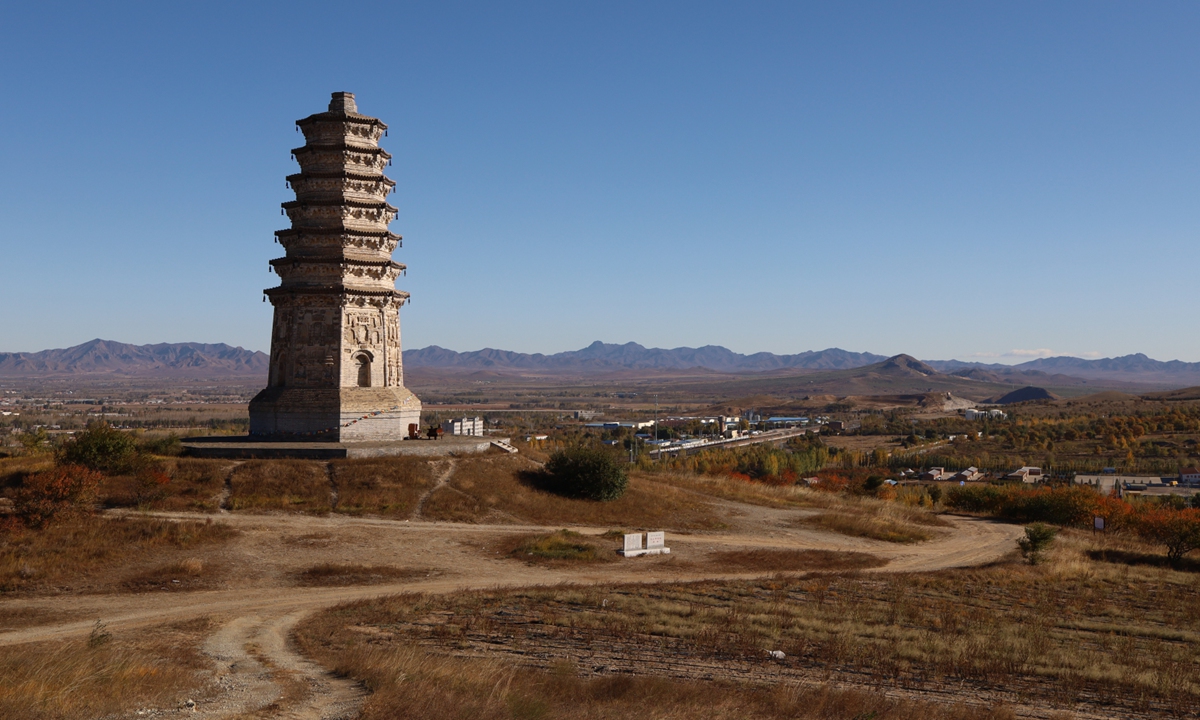
The ruins of Shangjing, the upper capital of the Liao Dynasty (916-1125) Photo: VCG
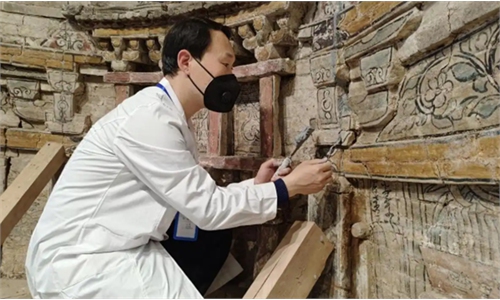
A central focus of the meeting was the role of science and technology in restoration, alongside the cultivation of skilled professionals.
China and Italy, both rich in cultural heritage and historical artifacts, play key roles in global heritage conservation, Dong Xinlin, deputy director of the Institute of Archaeology at CASS, said in his opening remarks. Monday's roundtable was convened precisely because of "the shared mission and values of China and Italy in the field of cultural heritage conservation."
Dong noted that the two countries bring complementary strengths: Italy brings long-established expertise in restoration theory, technical systems and professional training. China offers extensive archaeological resources, rapid advances in scientific applications and evolving institutional frameworks.
A case study presented at the meeting illustrated how scientific techniques are being applied in China. Zhou Xin, an associate research fellow at the CASS, described the excavation of a large architectural complex dating to the Liao Dynasty (916-1125) in northern China. Among the discoveries was a rare fragment of paper with ink writing, the only known example of its kind from the Liao-Jin period (916-1234).
Using a combination of fiber morphology analysis, scanning electron microscopy and infrared spectroscopy, researchers determined that the paper was primarily made from bast fibers, particularly mulberry. Additional characteristics, such as the presence of a gelatinous coating and fiber width, suggested links to plant materials commonly found in the southern regions of China.
Such interdisciplinary approaches demonstrate how modern science can reveal new insights into ancient materials, improving both conservation strategies and historical understanding, Lü Peng, deputy director of the Key Laboratory of Archaeological Science and Cultural Heritage Conservation at CASS, told the Global Times on Monday.
According to Lü, one particularly interesting point raised by both sides during the day's discussions was the restoration of paper-based artifacts. Experts from Italy tend to place greater emphasis on materials science and precision techniques, such as gel cleaning, laser applications, highlighting controllability and targeted intervention at the microscopic level.
While experts from China rely more on traditional materials and a holistic restoration system, including Xuan paper, mounting techniques, and an integrated approach that combines restoration with preventive conservation, placing stronger emphasis on preserving the structural integrity and historical continuity of artifacts, added Lü.
International cooperation was also discussed in the context of global risks, including climate change and natural disasters. Letizia Montalbano, head of the paper- and membrane-based cultural relics restoration division at the Opificio delle Pietre Dure in Florence, stressed the importance of not only cataloging and digitizing cultural assets but also developing emergency response mechanisms to protect them.
"We need not only to catalogue, digitize, and geolocate these heritage assets, but also, against the backdrop of rising global risks, to establish corresponding emergency response mechanisms," Montalbano told the Global Times.
She added that the institute currently has two Chinese students undergoing training, and that the two countries have significant room for cooperation in advancing new restoration methods, particularly in developing non-destructive and non-invasive techniques to enhance the scientific rigor and safety of cultural heritage conservation.
Peking University professor Sun Hua stressed the importance of talent development, calling for stronger discipline-building in cultural heritage studies and more systematic training of professionals.
Sun said the training of professionals in cultural heritage studies should primarily focus on master's-level graduate education. He also agreed that restoration specialists need direct, hands-on experience with artifacts, which calls for a seven-year integrated bachelor's-to-master's program. Research on certain theories, methods, and key materials could be extended to the doctoral level.
"The roundtable marks an early step in what is expected to become a longer-term partnership," Lü told the Global Times. Plans are underway to sign a memorandum of understanding aimed at strengthening collaboration and promoting mutual learning between Chinese and Italian institutions.
Italy and China will continue to strengthen cooperation between their cultural institutions and museums, while stepping up efforts to combat the illegal trafficking of artifacts and facilitate their recovery. The two countries will also collaborate on conservation and restoration work and share expertise in technological innovations in the field, Minister of the Italian Embassy Cristina Carenza said in her opening speech.
Other topics discussed at the roundtable included global trends in cultural heritage conservation, innovations and practices in restoration, education and training systems, and the application of research findings and material technologies.
RELATED ARTICLES