Improving China-Philippines ties requires more than Manila’s verbal gestures: Global Times editorial
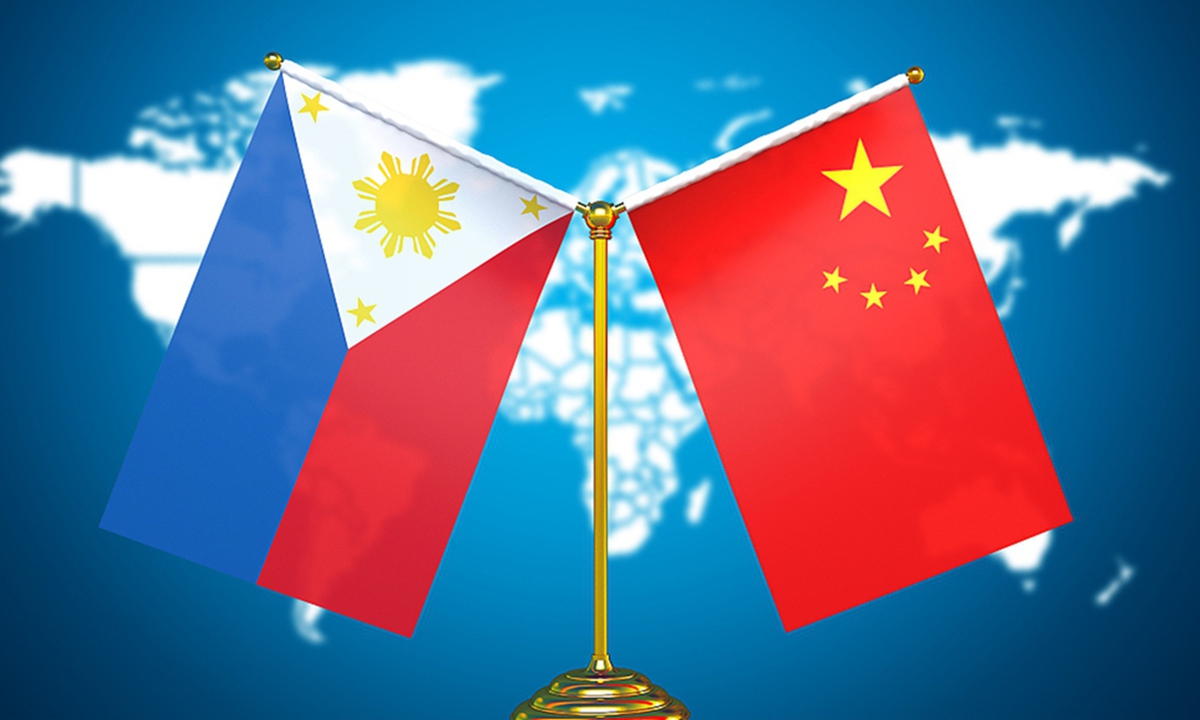
Photo: VCG
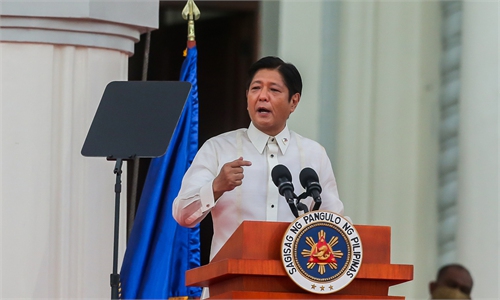
The Philippines, grappling with an energy crisis triggered by the conflict in the Middle East, has recently sent frequent signals of its desire to improve ties with China. Philippine President Ferdinand Marcos Jr., in a media interview, admitted that the Chinese side has been "very helpful with fertilizers" and clearly stated his hope to resume China-Philippines cooperation on oil and gas exploration in the South China Sea. Subsequently, during a new round of China-Philippines diplomatic consultations held over the weekend - the first in three years - Manila reiterated its adherence to the one-China policy and said that it would work to stabilize and improve bilateral relations. However, many analysts remain skeptical about whether China-Philippines ties, which have fallen to a frozen point, are truly turning a corner.
While Manila gestures goodwill toward China on one hand, it has not stopped provoking issues related to maritime and security matters on the other. Just days ago, the Philippine side once again assembled vessels to intrude into China's territorial waters off Huangyan Dao, attempting to provoke incidents, generate hype, and attract international attention. In addition, the Philippines has continued to strengthen military cooperation with external powers such as Japan and the US. It has even allowed Japan Ground Self-Defense Force to set foot on Philippine soil for the first time since the end of World War II to participate in the US-Philippines "Balikatan" joint exercises, while also accepting military equipment from outside powers.
Relying on such external forces, Manila has engaged in provocations and testing moves in the South China Sea and on Taiwan-related issues, further heightening regional tensions. Such wavering China policy is, in fact, a chronic problem for Manila.
Manila is eager to find a way out and escape the pressing energy crisis, and it is understandable to have such a mindset and expectation. However, if Manila merely resorts to last-minute fixes without any intention of strategically recalibrating the overall positioning of China-Philippines relations, and if it expects China to lend a helping hand on issues such as energy and agriculture while simultaneously engaging in behind-the-scenes maneuvers, then it is clearly miscalculating.
There are at least two key lessons Manila should draw from this crisis. First, a close neighbor is better than a distant relative. As a country highly dependent on foreign trade, the Philippines cannot withstand the direct shocks of geopolitical instability; it needs a peaceful and stable regional environment to ensure its own stable development. Second, the more US military bases it introduces, the more it ties itself to the US military chariot. Once conflict breaks out, the Philippines will undoubtedly be pushed to the very front line. Therefore, what Manila should do now is fundamentally abandon the beggar-thy-neighbor mentality and behavior.
As China has clearly pointed out in the negotiations, we attach importance to the Philippine side's willingness to stabilize relations and strengthen dialogue. We hope that the Philippines will work in the same direction as China and take concrete steps to create the necessary conditions and atmosphere for improving bilateral ties. This statement deserves careful consideration by Manila.
Out of goodwill and responsibility for maintaining regional peace and stability, China has always kept the door open for cooperation with the Philippines in the South China Sea. However, whether both sides can achieve the cooperation that Manila hopes for will depend on the actual actions taken by the Philippines. The foremost priority is to "create the necessary conditions and atmosphere for improving bilateral ties." Political mutual trust is the premise and foundation for all cooperation between the two countries. Whether the Philippines can earn China's trust through stable actions is key to whether the two sides can achieve cooperation moving forward.
90 percent of the Philippines' oil is imported from the Middle East. This singular energy structure leaves it vulnerable to disruptions in the global energy supply chain. For the Philippines, restarting oil and gas cooperation in the South China Sea is nearly the only viable long-term path to resolving its energy dilemma. The waters of the South China Sea, such as the Liyue Tan, are rich in oil and gas resources, and their development could fundamentally improve the Philippines' energy supply situation. However, deepwater oil and gas development poses high technical barriers and requires substantial investment, while the Philippines is severely lacking in technology, funding, and equipment. In contrast, China possesses advanced exploration equipment and has full-process development capabilities.
Additionally, the two sides signed a memorandum of understanding on cooperation in oil and gas development during the Duterte administration, providing a foundation for collaboration.
More importantly, China has not taken advantage of the Philippines' crisis; instead, it has demonstrated a willingness to cooperate, reflecting its responsibility and stature as a major power. Whether Manila can create the necessary political atmosphere for bilateral oil and gas cooperation will serve as a litmus test for its sincerity in collaboration.
Turning the energy crisis into an opportunity will test Manila's strategic wisdom and foresight. If the Philippine side can engage in deep reflection during the current crisis, respond sincerely to China's goodwill, and take action to strengthen mutual trust, then the China-Philippines relationship may soon return to a positive trajectory.
However, if it continues to repeat old patterns, it will only become more entrenched in difficulties and in an even deeper passive position. Hopefully the Philippines can recognize the situation and meet China halfway with sufficient sincerity.
RELATED ARTICLES