Patagonia’s ‘Earth usage fee’ on Tmall sparks questions, criticized by some Chinese shoppers as ‘shifting shipping costs to consumers’
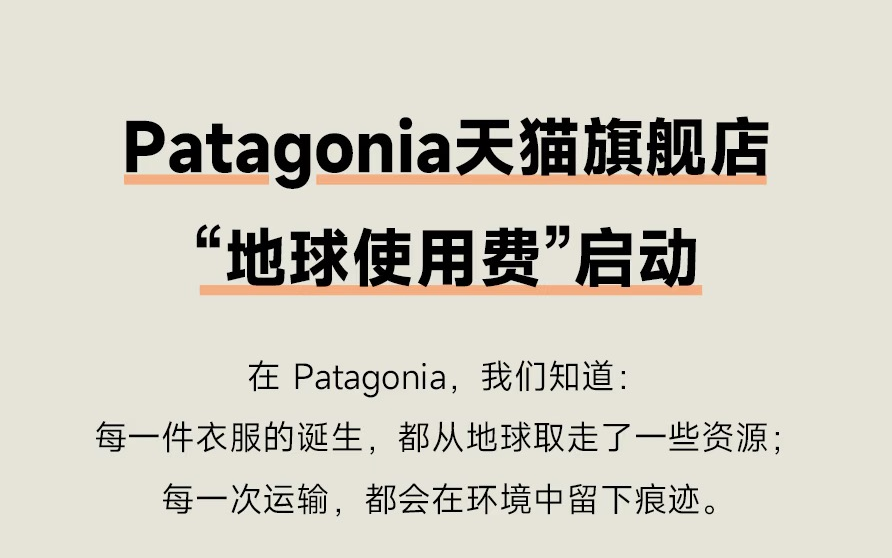
A statement from Patagonia’s Tmall flagship store on its “Earth usage fee” on March 31, 2026. Photo: Screenshot of the announcement
US-based outdoor brand Patagonia has sparked heated discussions online after introducing a new shipping policy dubbed an “Earth usage fee” on the Tmall online shopping platform in China, which officially took effect on Wednesday. Many Chinese netizens have questioned the charge, with some mocking it as “a way to dress up extra fees as something noble and grand.”
Patagonia is an outdoor apparel brand specializing in performance clothing. On Tuesday, the brand announced the policy on Chinese social media platform RedNote, outlining changes to its shipping rules.
Consumers purchasing from the brand’s official flagship store on Tmall will be charged 15 yuan for the first item and 5 yuan for each additional item, said the announcement. The fee will be refunded if no return is made; otherwise, 15 yuan will be deducted for returns or exchanges.
Any unrefunded shipping fees will be donated to the environmental program “1% For The Planet” under the SEE Foundation, the announcement said.
The company cited that as an outdoor apparel brand, it recorded a return rate of as high as 69.7 percent during the 2025 Double 11 shopping festival. From 2023 to 2025, shipments from its Tmall flagship store generated 190.36 tons of carbon emissions, while returns accounted for a further 40.9 tons. It even specifically cited the high return rate in women’s apparel.
“Therefore, we made a decision: during Earth Month this April, the Tmall flagship store will implement the ‘Earth usage fee’ policy,” the company said, adding that “it is not a punishment, but an invitation” for consumers to help reduce the environmental impact of online shopping.
The statement added that the move is not “a cold notice of shipping fee adjustment,” but rather an appeal for consumers to think twice before clicking “buy” or initiating a return.
Customer service staff from the brand’s Tmall flagship store said the policy had already come into effect on Monday.
However, most online comments have been critical. One self-described loyal customer wrote under the brand’s post that they had already tolerated the lack of shipping insurance, but found it “unacceptable” that the company fully passes logistics costs onto consumers, accusing the brand of using environmental protection as a “fig leaf.”
Sales staff said the brand’s Tmall flagship store has not offered shipping insurance for the past two to three years. Such insurance typically allows consumers to return goods without paying postage under certain conditions.
A check of the brand’s Australian website shows that free returns are still offered in that market. However, some commentators suggested the discrepancy may reflect differences in consumer scale, noting that return shipping fees are also charged in markets such as the US.
Some consumers also questioned why the company, if committed to environmental causes, does not cover such costs from its own profits, calling the policy an “absurd excuse.”
While the environmental message has resonated with some users—who acknowledge the need to address resource waste – many remain uncomfortable with what they see as being labeled “environmentally irresponsible” simply for returning ill-fitting clothes.
“Buying less is the best way to protect the planet, regardless of the brand. If this policy reduces consumption, it may have a real environmental effect – but companies should bear the costs themselves,” another Chinese user wrote on Sina Weibo.
“Companies that choose to sell online should be aware that return rates will not be low. Compared with in-store try-ons, online shopping encourages faster and sometimes less rational consumption, which also leads to more cases of items not fitting. The pros and cons are therefore shared by both businesses and consumers, and neither side is taking advantage of the other,” a user wrote on Chinese social media Sino Weibo.
The brand has long embedded environmental protection at the core of its identity, leveraging this ethos to attract Chinese consumers.
According to media reports, the brand has opted out of major Chinese shopping festivals such as Double 11 and other limited-time promotions, instead promoting a “buy less, think more” approach.
RELATED ARTICLES