MOFCOM calls for further leveraging of China-US economic and trade consultation mechanism
Facts have proven need for equal dialogue, spokesperson says
By Published: Apr 02, 2026 11:13 PM

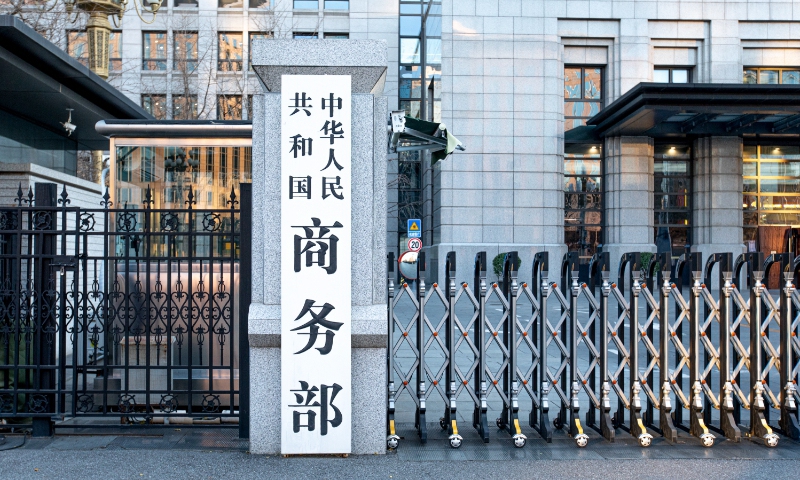
The Ministry of Commerce of China File photo: VCG
China's Ministry of Commerce (MOFCOM) on Thursday called for further leveraging the China-US economic and trade consultation mechanism and strengthening dialogue and communication so as to promote the healthy, stable and sustainable development of bilateral economic and trade relations.
The two sides should implement the important consensus reached by the two heads of state and the outcomes of previous economic and trade consultations, MOFCOM spokesperson He Yadong said at a regular press briefing.
He made the remarks in response to an inquiry on the anniversary of the US' "Liberation Day" tariffs and whether China, as a major trading nation, has changed its perception of its position. Some analysts believe that China now possesses greater capabilities in negotiating and competing with the US compared to President Donald Trump's first term in office.
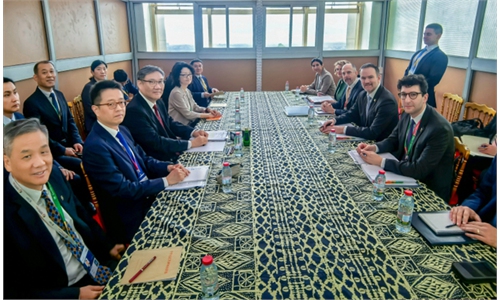
Guided by the important consensus reached by the two heads of state, China and the US have conducted six rounds of economic and trade consultations since last year, achieving a series of outcomes that have injected greater stability and certainty into bilateral economic and trade relations as well as the global economy, He said.
Facts have clearly proven that upholding mutual respect and engaging in equal dialogue and consultation is the best approach to bridging differences and resolving issues, the spokesperson added.
China has kept a consistent stance on economic and trade ties with the US, Zhou Mi, a senior research fellow at the Chinese Academy of International Trade and Economic Cooperation, told the Global Times on Thursday. The way to resolve bilateral economic and trade issues should be through equal-footed dialogue and consultation between major countries, rather than one side imposing its will on the other, Zhou noted.
Facts have proven time and again that through dialogue and consultation, it is possible for China and the US to find reasonable, mutually beneficial solutions to their differences, Zhou said. "Respecting reality, minimizing uncertainties for the businesses community and fostering greater trust in the market are essential for engagement between the two sides."
Such an approach is vital for long-term cooperation between China and the US, and for the stability of global supply chains and addressing current challenges and shocks, Zhou said.
Thursday marked the one-year anniversary of the "Liberation Day" tariffs imposed by the Trump administration.
However, the US Supreme Court ruled in February that many of the tariffs are illegal.
The US customs agency said on March 31 that it was making progress in setting up a streamlined process for refunding some $166 billion in tariff collections deemed illegal by the Supreme Court, but that its new system could take up to 45 days to review and process refund applications, Reuters reported.
In a filing with the US Court of International Trade, US Customs and Border Protection said some 26,664 importers of record had completed the process to receive electronic refunds, representing 78 percent of entries for which duties or deposits under the International Emergency Economic Powers Act had been paid, an amount totaling $120 billion.
Following the Supreme Court ruling, the Trump administration has recently launched multiple Section 301 and Section 232 investigations, attempting to reclaim tariff powers.
The Office of the United States Trade Representative on March 12 initiated a Section 301 investigation targeting China and 15 other economies on the grounds of so-called "structural excess capacity in manufacturing sectors." It then launched another Section 301 investigation on March 13, targeting China and 59 other economies over what it claimed was a failure to effectively prohibit imports of goods produced with forced labor.
On March 27, MOFCOM announced two reciprocal trade barrier investigations into US actions and measures that harm global production and supply chains as well as those that impede trading of green products.
The investigations were launched in response to the US actions, and to safeguard the interests of relevant Chinese industries in accordance with China's Foreign Trade Law and MOFCOM rules on foreign trade barrier investigations, the ministry said.
MOFCOM will take corresponding measures based on the findings to safeguard its legitimate rights and interests, a ministry spokesperson noted.
RELATED ARTICLES