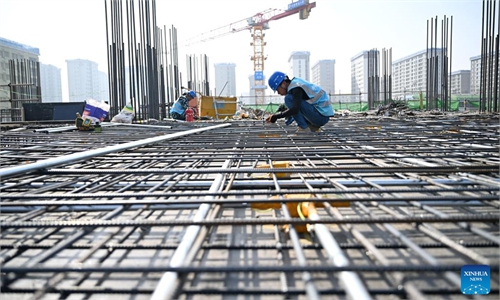
IN-DEPTH / IN-DEPTH
New settlers see Xiong’an as vibrant, tech-powered hub on 9th anniversary, dismissing ‘ghost city’ smear
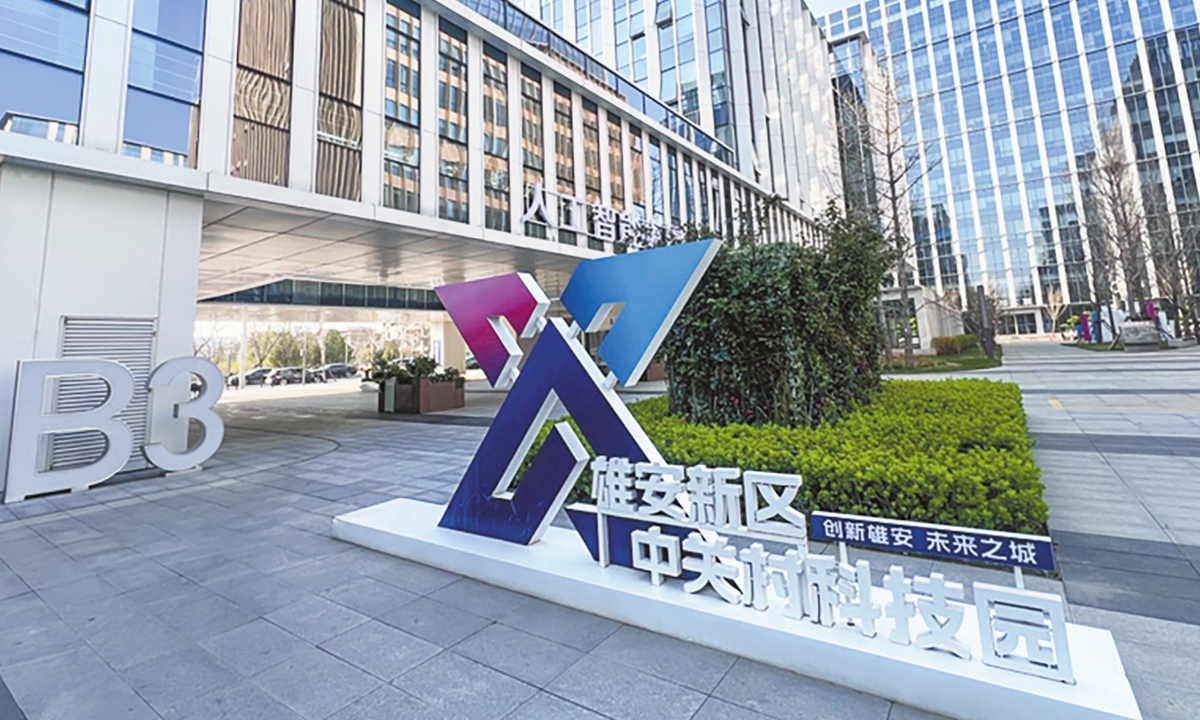
A view of the Xiong'an New Area ZGC Science Park on March 31, 2026 in Xiong'an, North China's Hebei Province. Photo: Pang Yue/GT
"Xiong'an is like the future city I imagined as a child - that's why I chose to come here," Ma Xiaoqian, a Gen Z employee at Mech-Mind Robotics, a tech startup in Xiong'an, told the Global Times.
Behind her, three robotic arms demonstrated their capabilities to visitors, using AI to identify, pick up and sort goods with precision. Outside the window, drones hovered along glass facades, cleaning building exteriors, while on the street below, autonomous taxis passed by every few minutes, forming a steady rhythm of a city still taking shape.
On Wednesday, Xiong'an New Area in North China's Hebei Province marked its ninth anniversary. Since its establishment in 2017, the "city of the future" has drawn global attention amid skepticism from some foreign media outlets that have smeared it as a "ghost city." Yet after nine years, this new area, once only a blueprint, is beginning to reveal its contours, powered by thousands of "new Xiong'an residents" who have chosen to build their lives here.
At this milestone, Global Times reporters visited the city to hear their stories - accounts of ambition, settlement, and a shared belief in a future still unfolding.
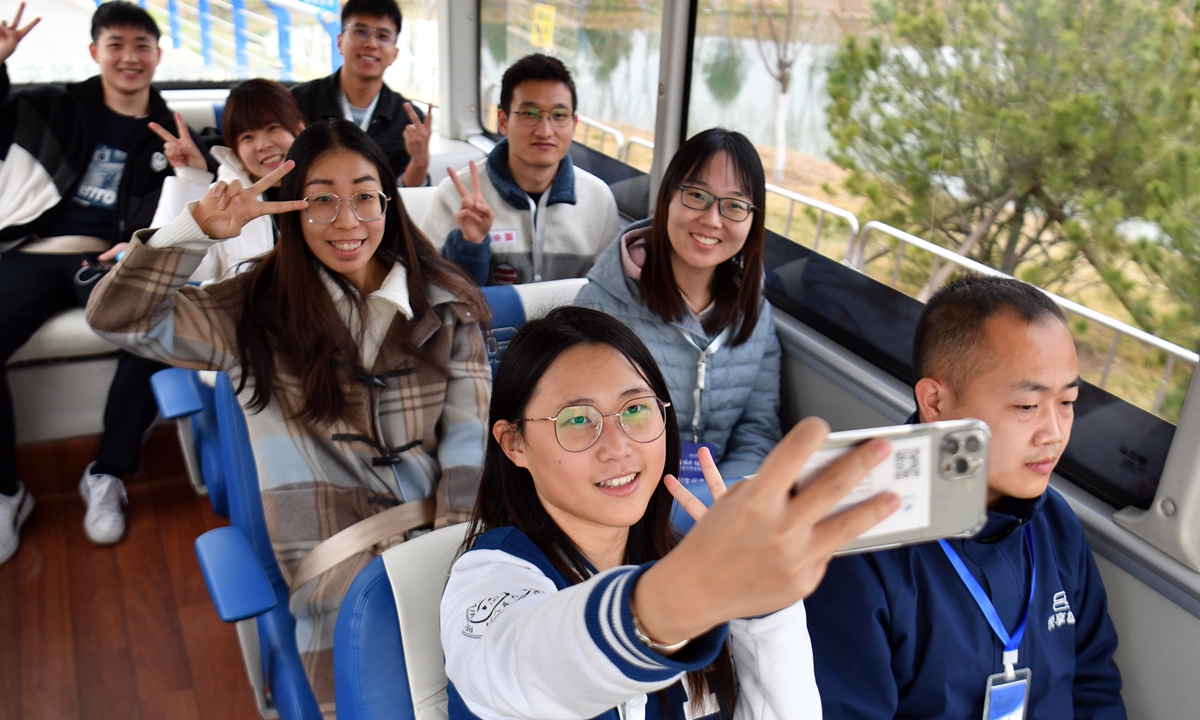
Student representatives take a test ride on an autonomous bus in Xiong'an on March 23, 2023. Photo: VCG
Pursuing careers
"In Xiong'an, innovation is highly valued. Tech companies here receive policy support and guidance, and simply meeting companies in the same building can spark new collaborations," Ma told the Global Times.
Her remarks came inside the Xiong'an New Area ZGC Science Park. ZGC stands for Zhongguancun, once a small village that grew into China's renowned Silicon Valley and nurtured global enterprises like Lenovo and Founder Group. Today, that spirit of innovation is being extended to Xiong'an.
On the exterior walls of the park, drones were at work cleaning the glass. The machines were jointly developed by companies inside the building, including firms specializing in flight control and visual recognition. Inside, startups and established enterprises alike are engaged in robotics, AI and the low-altitude economy.
Ma, who graduated from a university in Hong Kong in July last year, chose Xiong'an for its prospects and its emphasis on talent. "Xiong'an frequently hosts tech forums and competitions. There's a strong culture of innovation, and it offers us great opportunities," she said.
Mech-Mind, the robotics company where Ma works settled in Xiong'an in September 2024, and has already secured more than 2 billion yuan ($290 million) in financing. Its products are applied across industries including automobiles, logistics, engineering machinery, semiconductors and lithium batteries.
The science park now hosts over 200 tech enterprises. While varying in size, all benefit from policy support and development opportunities. According to the park, it has helped companies secure around 5.6 billion yuan in financing and obtain more than 60 intellectual property rights.
These figures reflect only part of Xiong'an's broader development. According to a People's Daily report on March 26, 2026, the area now has 33 "themed buildings" designed to cluster enterprises, with 767 innovative companies having signed agreements to settle there.
Beyond work, Ma said the city offers tangible quality-of-life benefits. "There are high-quality talent apartments and subsidies for graduates. Life here is very comfortable," she said, recalling her time in Hong Kong, where crowded living conditions and a fast pace left her feeling uneasy.
"Xiong'an is completely different. It takes me about five minutes to get from home to the office. There's a small wetland park downstairs, and a community center nearby where I can work out, play badminton, or even learn baking. Everything I need is within a 15-minute walking circle," she said.
This "15-minute living circle" is no coincidence. A deputy head of a branch of a well-known Hebei architectural design institute told the Global Times that Xiong'an was designed as a high-quality new city to relieve Beijing of non-capital functions. The concept aims to ensure that residents can meet most daily needs within a 15-minute walk or bike ride - a vision rooted in careful planning and meticulous execution.
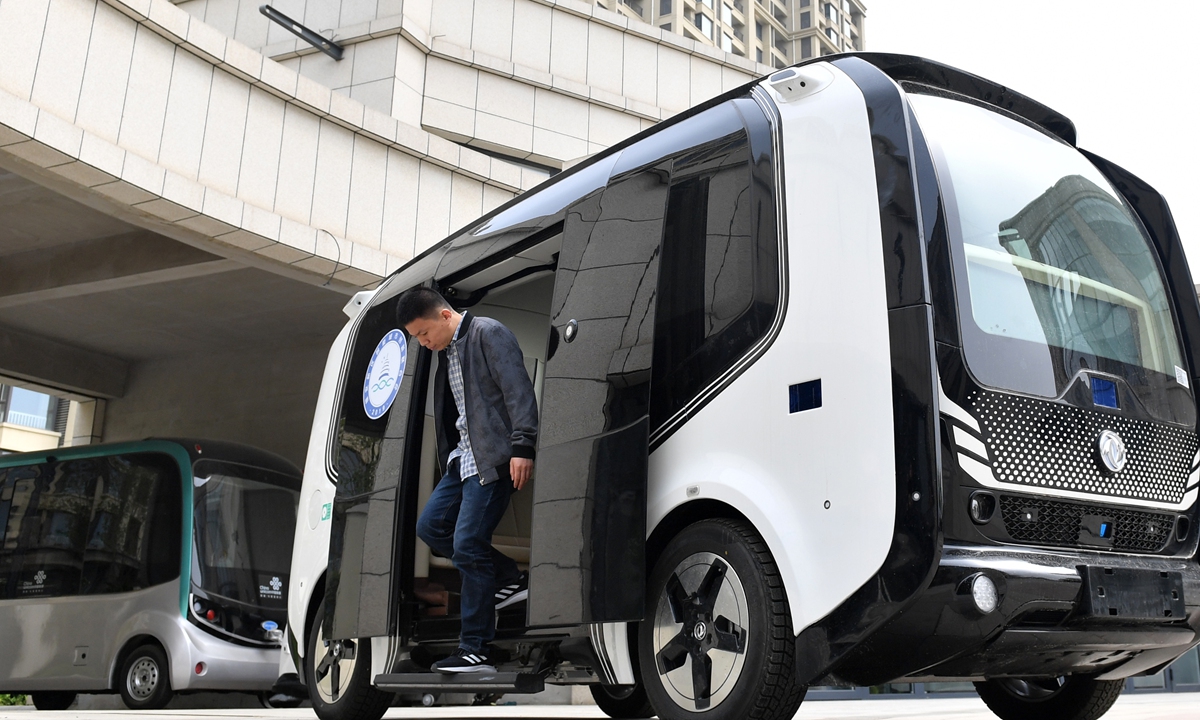
A staff member conducts a test ride on an autonomous bus at a science and technology park in Xiong'an on April 26, 2021. Photo: VCG
Settling with confidence
Traveling from Beijing by high-speed rail for about an hour brings visitors to Rongcheng County in Baoding, Hebei Province. Heading east from there, one soon encounters the iconic entrance to Xiong'an New Area - a grey gate emblazoned with golden Chinese characters.
Yet a more telling boundary lies in the details. On the streets of Rongcheng, traditional infrastructure such as utility poles and power boxes remains visible. In Xiong'an, however, these have largely disappeared.
This reflects the area's distinctive planning philosophy. Unlike cities that expand while planning, Xiong'an was designed from scratch - "carrying the blueprint through to the end."
"Construction here begins with roads and underground pipelines. There's no need to erect utility poles or repeatedly dig up roads to install heating or sewage systems, they are all planned and built in advance," the deputy head of the design institute said.
She added that Xiong'an's planners studied urban challenges at home and abroad, aiming to avoid common "urban diseases." "Xiong'an New Area is designed to be a city without urban ailments," she said.
Responding to claims that Xiong'an is "not fully inhabited" or even calling it a "ghost city," she told the Global Times that the goal of Xiong'an was never to replicate overcrowded megacities filled with high-rise clusters, but to create a comfortable, high-quality living environment.
"Urban development takes time. Xiong'an has existed for only nine years, and its pace has already exceeded that of cities like Shenzhen and Shanghai in comparable stages," she noted, adding that development is inherently gradual.
As more young people move to Xiong'an for work, the next challenge is helping them settle, and bring their families with them. The city's planning, which incorporates eldercare and childcare services, is increasingly drawing residents to relocate.
A 64-year-old retired teacher surnamed Wang, who moved to Xiong'an last year with his daughter's family, told the Global Times that the city's design appealed to him. "The housing is mainly mid-rise, with no overcrowded high-rise clusters or dilapidated neighborhoods. The environment is excellent, and there is a strong concentration of highly educated people. It's a good place for my family, and especially for my grandson's growth," he said.
As more elderly residents like Wang settle in, public eldercare services have expanded accordingly.
Fan Qingqing, head of a community eldercare center in Rongdong area of Xiong'an, said the facility draws dozens of seniors daily for free cultural and recreational activities, including calligraphy and painting classes. On weekends, attendance can exceed 100 people.
"We offer choirs, traditional Chinese painting, calligraphy activities, as well as daytime care services and health lectures. We also organize holiday celebrations," Fan said. She noted that thanks to the city's design, elderly residents can access the center via underground passages and dedicated elevators, ensuring convenient travel even in rain or extreme heat.
According to local media reports, during the 14th Five-Year Plan period (2021-2025), 53 eldercare service facilities were built in Xiong'an and over 870 home adaptations for seniors were completed, providing services ranging from daily care to smart healthcare and cultural activities.
The modern design of Xiong'an is instantly felt on its streets. Yet it has not yet reached the stage of driving prosperity in surrounding areas, with its vibrancy confined to the core zone. Just beyond its borders, the surrounding urban areas are Hebei cities, lacking the same technological integration as the new area. Local residents eagerly anticipate its long-term radiating effects. While Xiong'an boasts high construction and planning standards, it remains uncertain if these advantages can extend outward to boost broader regional development.
Education for future generations
"We have inherited the educational philosophy of Beijing No.4 High School in Xiong'an," Guo Bingqing, a music teacher and homeroom teacher at its Xiong'an campus, told the Global Times. "All students take drama classes, and there is daily physical education. We provide many opportunities for students to perform and develop."
Her description reflects a broader effort to bring not only jobs but also high-quality public services to Xiong'an - a key factor in turning newcomers into long-term residents.
Beijing No.4 High School, one of the most prestigious secondary schools in the capital, officially launched its Xiong'an campus and began enrollment in the autumn of 2023. The move came alongside the relocation of multiple Beijing-based institutions to the new area, ensuring that the children of incoming professionals have access to top-tier educational resources.
According to the People's Daily, the Xiong'an campus carries forward the school's long-standing traditions, guided by people-centered educational philosophy and follows principles of "a comprehensive development system, an open learning process, and visible all-round growth," aiming to build a holistic curriculum that nurtures talent for the country.
Stepping into the campus, what stands out is not only the modern facilities but also the environment - deer grazing in the school garden and pigeons wandering freely. One of the school's teachers told the Global Times that the design aims to create a learning environment where students can grow not only academically, but also develop a sense of connection with the natural world.
Inside the school, further details reveal a strong emphasis on well-rounded education. At a corner on the first floor, students have access to an open space for free activities during breaks, with even fencing equipment provided for practice. On the third floor, booklets showcasing student research projects are displayed - students are encouraged to independently design scientific experiments, select their own research topics, and complete full academic processes including proposals and presentations, resembling university-level training.
Yet as Xiong'an is still in its early stages of development, some new residents worry about uncertainties and changes in some future policies. Education policy is an example. How to ensure their children remain competitive in the highly intense college entrance exam in Hebei, while growing up in an environment that prioritizes holistic education over the exam-oriented model, is one of the concerns and ongoing discussions among parents.
For Guo, the decision to come to Xiong'an was almost immediate. Having previously taught in Beijing's Haidian district, she said she did not hesitate when she saw the recruitment notice. "Because Beijing No.4 High School is one of the best schools, I wanted to teach at the best," she said.
Now settled in Xiong'an with her family, Guo sees the city's development reflected in her own life. "My child studies at a nearby primary school. I believe Xiong'an can provide educational resources comparable to Beijing, so I feel confident bringing my family here," she said, adding that her husband has also started a business locally.
"Xiong'an is a city of the future with limitless potential. To be able to contribute to its development as a teacher is a great honor," she said.
From classrooms filled with music and theater to neighborhoods designed around a 15-minute living circle, Xiong'an is increasingly offering not just opportunities for work, but the conditions for people to settle, raise families and envision a long-term future.
"When I was young, a future city meant automated systems and convenience - self-driving cars, drone deliveries, unmanned stores, and robot waiters," Ma said. "In Xiong'an, the first few have already become reality. I hope that in the future, I can also enjoy services from the robot waiters we are developing - and take part in building this city of the future."
As the day ends, office building lights fade, and daily life takes over. The Global Times reporters noticed that at the newly opened Xiong'an Outlets, residents walk, chat and shop; some bring their kids to pick snacks or browse supermarkets. This spot has quickly become a popular gathering place for nearby communities.
Just as the city attracts new residents, its streets are full of simple, warm daily moments. Laughter fills the evening air - like in any other Chinese city, people savor the present and look forward to the future.
RELATED ARTICLES