ARTS / CULTURE & LEISURE
Live from the stage: How ‘Ride the Wind 2026’ is reinventing entertainment shows
By Published: Apr 07, 2026 10:39 PM

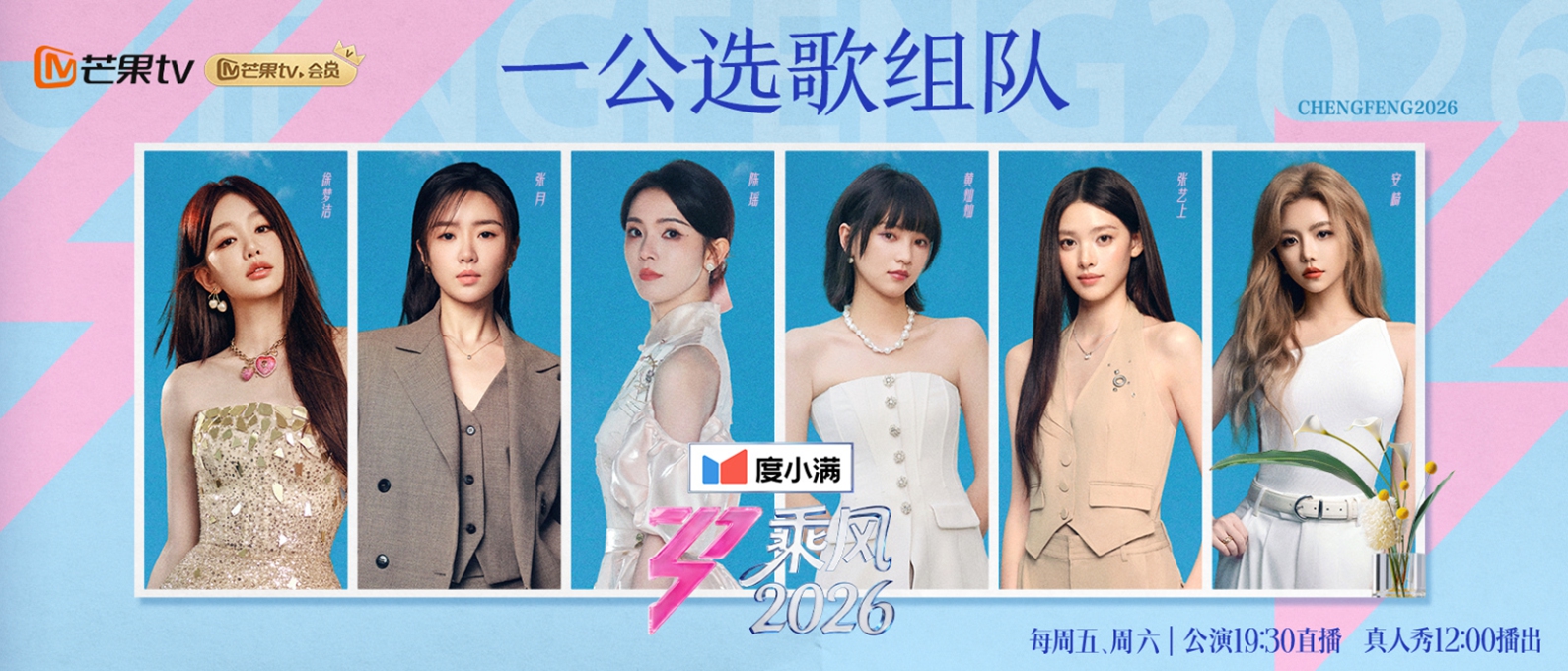
Ride the Wind 2026
In an era when polished variety shows have long dominated Chinese screens, Ride the Wind 2026, a show from China's Mango TV, has thrown open its studio doors. By broadcasting performances live without cuts, auto-tune or post-production polish, the show has become the talk of the town.What began as a bold technical experiment has quickly evolved into something deeper: A live laboratory for the kind of "new forms of literature and art for the general public" envisioned in China's 15th Five-Year Plan (2026-30). It is not merely entertainment; it is a cultural statement about authenticity, collective creation and the resilience of women in the spotlight.
For decades, domestic variety shows perfected the art of the "finished product." Audiences received glossy, tightly edited packages designed to impress. Ride the Wind 2026 flips the script. The 33 female contestants - singers, athletes, actors and cultural figures from China and abroad - step onto the stage raw. Viewers have witnessed singer Christine Fan's occasional off-key notes, Olympic short track speed skating champion Wang Meng's unfiltered rap delivery, actress Sun Yi's breathless moments and other unscripted "flops" that would have been scrubbed in the past. Rather than damaging the show, these moments have sparked laughter, memes and a surprising warmth. Netizens call it "finding new fun in the flaws." The rawness feels liberating.
This approach has transformed the audience from passive consumers into active co-creators. Real-time voting and instant feedback can influence song choices and even the flow of the competition. The show has moved from a "past-perfect" narrative to a "present-continuous" dialogue. In doing so, it embodies the 15th Five-Year Plan's call to promote new forms of literature and art for the general public. Art is no longer handed down from above; it grows from the "we-community" of viewers and participants alike. The result is a genuine sense of shared ownership rarely seen in heavily industrialized entertainment.
The emotional payoff is immediate. Contestants like He Xuanlin and Dai Si have emerged as dark horses through sheer grit. Tang Yixin's comeback story, Kan Qingzi's tearful performance and Hou Yu's stunning Chinese-style rendition have become living chapters in a contemporary chronicle of female strength.
The live format captures the sweat, the hesitation and the triumph in real time, forging an intimacy that pre-recorded shows simply cannot replicate. No wonder the program has dominated trending lists and sparked round-the-clock discussions long after each broadcast ends.
The parallel with the Super Girl phenomenon two decades ago is unmistakable. Back then, live voting ignited a nationwide frenzy. Ride the Wind 2026 has revived that spirit, but with far more sophisticated technology and a deeper cultural self-awareness. The long-tail effect is already evident: Online forums buzz with analyses of vocal techniques, stage presence and even the fairness of the rules.
Yet the very openness that generates excitement also introduces risks. Freshness can fade. Without tight control over pacing, firm rules and smooth on-site management, lengthy broadcasts risk testing audience's patience. One "out-of-control" moment may delight; repeated chaos could breed cynicism. The dilemma is clear: How to preserve the thrill of authenticity while safeguarding the seriousness and fairness that any true competition demands.
These challenges, however, do not diminish the experiment's value. In an industry long criticized for formulaic perfection, Ride the Wind 2026 proves that embracing imperfection can still deliver massive market resonance. It demonstrates that Chinese cultural production has matured enough to trust its audience with unvarnished truth. More importantly, it shows how technology, 5G, real-time interaction platforms and seamless live streaming, can serve higher cultural goals: Deepening the bond between creators and the public, amplifying women's voices across generations and nationalities, and rooting artistic expression firmly in the soil of collective experience.
As the competition heads toward its finale, Ride the Wind 2026 stands as more than a TV event. It is a vivid case study in how China's entertainment industry is navigating the transition to a new cultural paradigm.
This show is putting that vision into practice, one unedited, heartbeat-accelerating moment at a time. The road ahead will require careful steering. But the early returns are encouraging. In choosing courage over cosmetic perfection, Ride the Wind 2026 has reminded us that the most powerful cultural moments often arrive not when everything is flawless, but when everything feels authentic.
The author is a reporter with the Global Times. life@globaltimes.com.cn
RELATED ARTICLES