Intl community should work together to promote the return of peace, stability in the Gulf region: Global Times editorial
Listen
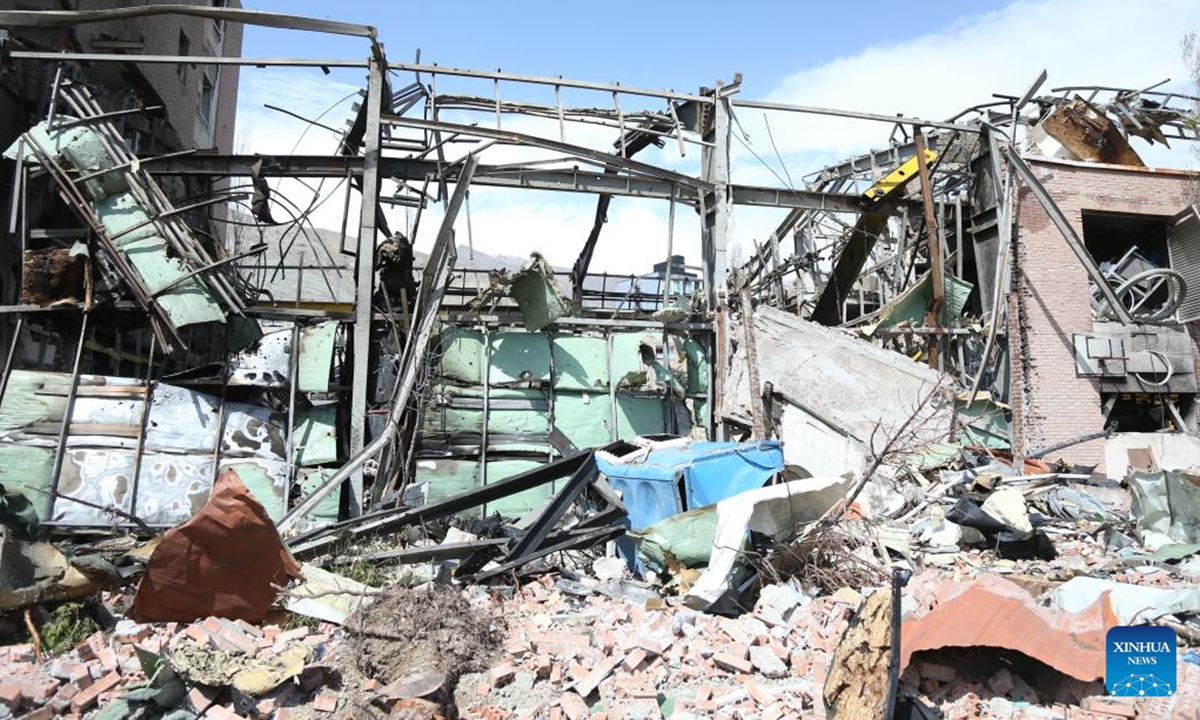
This photo taken on April 4, 2026 shows a building destroyed in a U.S. and Israeli airstrike at the Shahid Beheshti University in Tehran, Iran. Iran's Minister of Science, Research and Technology Hossein Simaei-Sarraf said on Saturday more than 30 Iranian universities have been directly attacked by the United States and Israel since the beginning of the war in late February. (Xinhua/Shadati)
Prior to the expiration of Washington's "ultimatum" on Wednesday, the US and Iran announced a two-week interim ceasefire; delegations from both sides are scheduled to hold negotiations in Pakistan on Friday. Israel has also expressed its support for the US-Iran ceasefire. The world's highly tense nerves have been slightly relaxed. However, public opinion remains pessimistic regarding the prospects for these negotiations. The US side has claimed that its troops stand ready to resume fighting, while the Iranian side has declared that "its soldiers' hands remain on the trigger." It is evident that, although a peace process has indeed been initiated, successfully transforming this ceasefire into a stable, long-term peace mechanism will likely remain a formidable challenge.
Despite the uncertain prospects for negotiations, three fundamental facts have become abundantly clear as the conflict involving the US, Israel and Iran has unfolded: First, there are no winners in war. Whether it be the US, Israel, Iran, the neighboring Arab Gulf states or the entire international community, all have been impacted by the conflict to varying degrees. Second, the greatest victims are civilians. Statistics indicate that since the outbreak of hostilities on February 28, millions of people have been displaced; the deaths of students and other unfolding humanitarian crises have caused deep anguish across the globe. Third, the pursuit of absolute security may lead to a security dilemma. "Live and let live" - this is a simple, fundamental truth that is not difficult to grasp.
Currently, the US, Israel and Iran have all expressed a willingness for a ceasefire, with the US and Iran poised to sit down for talks. This constitutes positive news. A two-week period is not long, and all parties must make the most of this brief window of opportunity. The greatest test lies in whether they can demonstrate sincerity in dialogue and a genuine desire to achieve peace, with the first hurdle being the commitment to uphold the ceasefire. If negotiations are treated merely as a means to stall for time and build strength, and if the temporary ceasefire is viewed as a "delaying tactic," the conflict could escalate at any moment, posing a grave threat to peace and stability throughout the Middle East and the wider world. The US, Israel and Iran should exercise rationality and restraint, actively exploring pathways to transition from a brief ceasefire to the realization of long-term peace.
Throughout this process, while adhering to their respective core positions, all parties must also give due consideration to the concerns of the other side. In particular, they must strive to avoid hastily interpreting any aspect of the negotiations as an act of "capitulation" or "defeat," thereby introducing fresh complexities into the talks. This is, of course, a challenging undertaking; nevertheless, the relevant parties - especially the major powers - should demonstrate, throughout this process, the sense of duty and responsibility toward peace that is rightfully expected of them.
The temporary ceasefire between the US and Iran is also a phased outcome of diplomatic efforts by all parties. The international community should seize this rare window of opportunity to build broader consensus and stronger collective action, contributing to easing current tensions and restoring peace and stability in the Gulf and the Middle East at an early date.
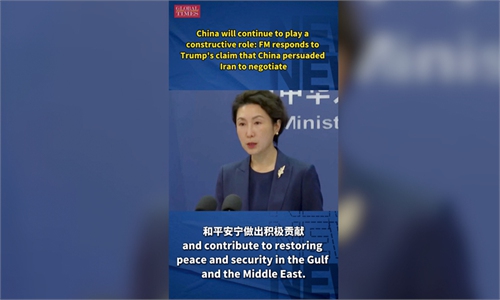
Previously, China and Pakistan jointly put forward a Five-Point Initiative, which includes immediate cessation of hostilities, start of peace talks as soon as possible, security of nonmilitary targets, security of shipping lanes, and primacy of the United Nations Charter. The initiative aligns with the purposes and principles of the UN Charter and reflects the shared aspiration of regional countries for peace and stability. It therefore deserves wide recognition and active support from the international community. As a responsible major country, China will continue to maintain close communication with Pakistan and other relevant parties, play a constructive role, and once again call on all countries and international organizations to support and participate in the Five-Point Initiative, jointly promoting to build a common, comprehensive, cooperative and sustainable security architecture in the Middle East and helping the region move beyond the shadow of conflict and instability.
This conflict represents a concentrated eruption of longstanding tensions among the US, Israel, and Iran. Looking back over the past decades of turmoil in the region, it underscores the challenges facing traditional global security governance models, a warning with broad implications for the international community. There is an increasingly urgent need for reform and improvement in global security governance. The Global Security Initiative, proposed by China in 2022, provides a profound response to questions of our times such as what security concept the world needs and how countries can achieve common security. It offers a Chinese approach to addressing global security challenges, tackling the root causes of international conflicts, and achieving lasting peace and stability.
From the Iraq War to the turmoil in Libya, from the Syria crisis to the Israel-Palestine conflict, the Middle East has endured decades of devastation, and its people have a deep and pressing desire for peace. The situation in the Middle East is closely linked to global peace and development. Yet peace never arrives automatically; it requires genuine sincerity and courage from all parties. We hope all sides will cherish the hard-won opportunity for dialogue, take a responsible approach to advancing substantive progress in negotiations, and transform the temporary ceasefire into a long-term peace mechanism. This is both the shared expectation of the people of the region and the common aspiration of the international community.
RELATED ARTICLES