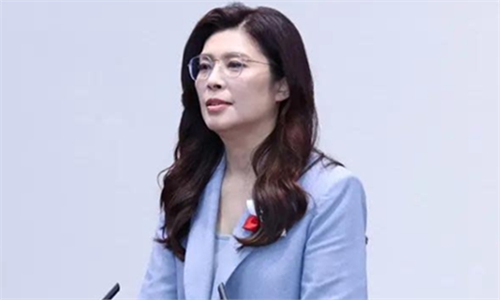
Keep the future of cross-Straits ties firmly in Chinese people’s own hands: Global Times editorial
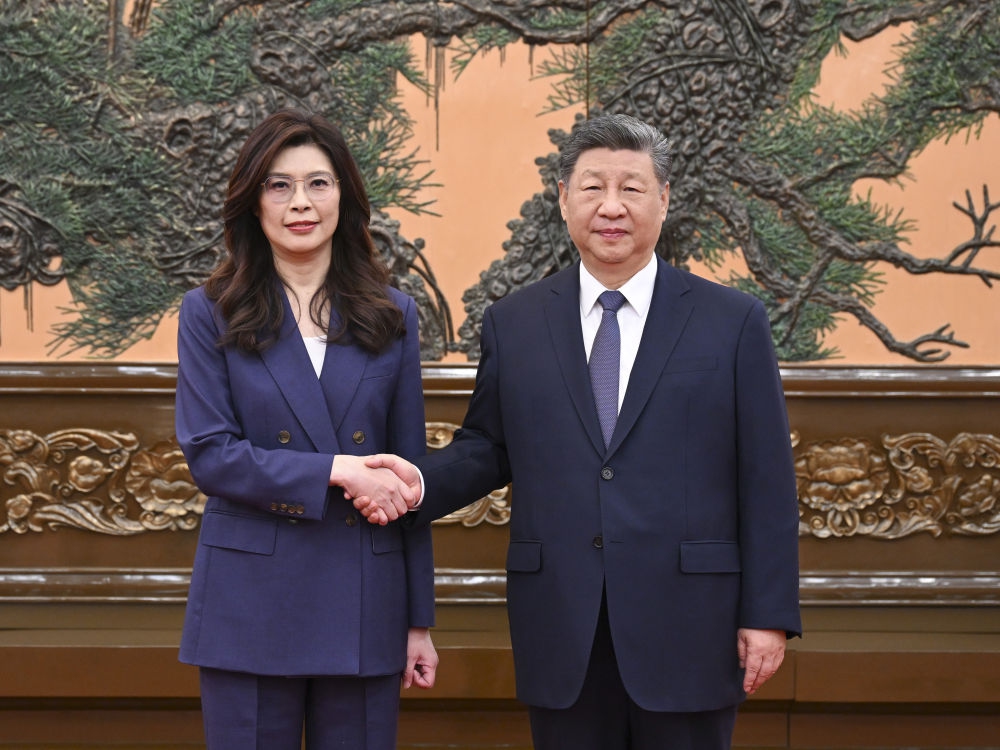
Xi Jinping, general secretary of the Communist Party of China (CPC) Central Committee, meets with a delegation of the Chinese Kuomintang (KMT) party led by its chairwoman Cheng Li-wun in Beijing, capital of China, April 10, 2026. (Xinhua/Xie Huanchi)
Xi Jinping, general secretary of the Communist Party of China (CPC) Central Committee, on Friday met with the visiting delegation led by Cheng Li-wun, chairwoman of the Chinese Kuomintang (KMT) party, in Beijing. This reunion of leaders of the CPC and the KMT, after a gap of 10 years, has attracted great attention and carries profound significance.
Xi stressed that no matter how the international landscape and the situation across the Taiwan Straits may evolve, the overarching trend toward the great rejuvenation of the Chinese nation will not change, and the prevailing momentum for the Chinese on both sides of the Strait to come together will not change. His sincere and heartfelt words have pointed the way forward for relations between the two parties and for cross-Straits relations.
Xi made four points about the development of cross-Straits relations - forging closer bonds across the Straits by upholding a correct understanding of identity, safeguarding the shared homeland through peaceful development, fostering the well-being of the people through exchanges and integration, and making joint efforts to achieve national rejuvenation.
The four points form a logical progression and constitute a complete, systematic framework. From the four dimensions of shared identity as the foundation, the pursuit of peace, the well-being of the people, and national rejuvenation, they draw a clear blueprint for the development of cross-Straits relations, chart a definite path forward, and inject firm confidence into compatriots on both sides of the Taiwan Straits as they work together to create a better future.
Compatriots on both sides of the Taiwan Straits are one family. They share the same roots, the same origin, the same language and writing, the same bloodline, and are a community of shared future with weal and woe linked together. Although the Democratic Progressive Party (DPP) has continuously used various means to create barriers and restrict exchanges since it came to power, the willingness of compatriots on both sides to get closer as family, draw nearer, and come together has become even stronger. When social media platform Xiaohongshu was added by the DPP to the "risk list," its download volume instead soared; the popular AI short video "Rescuing the Fox on Snow Mountain" and other hot topics spreading across the Straits further illustrate that compatriots on both sides naturally connect and highly resonate in cultural aesthetics and taste expression.
During the recent Qingming Festival holiday, many Taiwan compatriots came to the mainland via the Mini Three Links to trace their roots, honor their ancestors, and visit relatives and friends. The steady incense burning in ancestral halls in southern Fujian, the solemn rites at the Confucius Temple in Qufu in East China's Shandong Province, and the dignified ceremonies at the Mausoleum of Yellow Emperor all reflect the shared remembrance of our forebears. Behind these scenes are unbreakable blood ties and a deep sense of national belonging, cultural identity and historical continuity. When family members get along, as long as we communicate with respect and discuss issues through consultation, there will be no contradictions or differences that cannot be resolved. Differences in social systems should not be used as an excuse for division. At present, the situation across the Taiwan Straits is complex and severe, and cross-Straits relations are facing headwinds. "Taiwan independence" is the root cause. The Communist Party of China and the Chinese KMT, as well as compatriots on both sides, should uphold the greater national interest, oppose "Taiwan independence" separatism and external interference, and firmly keep the future of cross-Straits relations in Chinese people's own hands. This reflects the shared will to safeguard a common home.
The Chinese mainland, with its magnificent landscapes, vast market, and bright prospects, has always been a strong backing and a broad stage for Taiwan compatriots to invest, build careers, grow, and realize their dreams. "Taiwan compatriots are welcome to visit the mainland, young people in Taiwan are encouraged to seek development opportunities on the mainland, and Taiwan agricultural and fishery products, as well as other high-quality goods, are welcome to enter the mainland market." These warm yet firm words convey deep bonds of kinship, reflect a genuine sense of family, and send a clear signal of deepening integration and sharing the glory of national rejuvenation. These tangible opportunities make deeper industrial alignment and closer people-to-people ties across the Straits inevitable. More and more Taiwan compatriots will come to recognize that Taiwan's development prospects lie in a strong motherland, and that their well-being is tied to the great rejuvenation of the Chinese nation. At the start of the 15th Five-Year Plan period (2026-30), compatriots on both sides of the Straits will share development opportunities, achievements, and work together to strengthen the Chinese nation's economy, with broader space, stronger momentum, and more promising prospects.
During the half century of Japanese colonial rule, Taiwan compatriots endured great hardships but never yielded. All Chinese people made tremendous sacrifices to defeat Japanese militarism, defending national sovereignty and national dignity with their blood and lives. This shared historical memory of compatriots on both sides standing together against external aggression has never been, and must never be, erased. Today, we have successfully embarked on path of Chinese modernization, and the great rejuvenation of the Chinese nation is unstoppable. As long as compatriots on both sides of the Straits continue to strengthen their confidence, resolve, and pride as Chinese people, they will surely join hands to create a grand future of national reunification and national rejuvenation.
RELATED ARTICLES