ARTS / CULTURE & LEISURE
Turning tradition into local IPs, craftsmen inject vitality into villages
Guiding hands
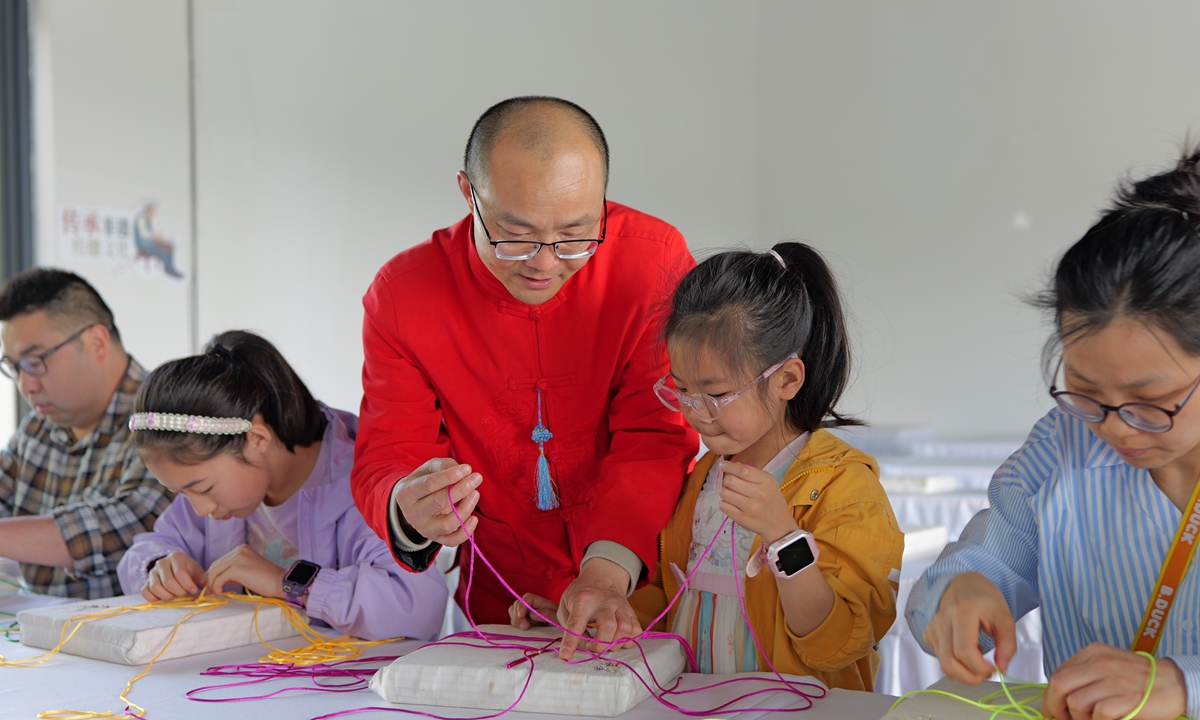
Rural craftsman Yang Wenyi (center) teaches students in Xinjin, Southwest China's Sichuan Province. Photo: Courtesy of Yang Wenyi
A total of seven national departments, including China's Ministry of Agriculture and Rural Affairs, have moved to continue supporting the cultivation of rural craftsmen across the country in 2026. From traditional knots to stationary and on to food, the total number of China's rural craftsmen has surpassed 130,000.Many of these craftsmen remain rooted in far-flung villages that one might not be able to find even if you were to zoom in all the way on a map.
Yet it is these very individuals who are quietly becoming cultural nodes, connecting villagers with new professions and even sending local folks to international platforms.
Born and raised in the countryside of East China's Anhui Province, Zhang Wennian, a 58-year-old craftsman of traditional writing brushes, is one of them.
'Hardest work is the work unseen'
A lamp hangs above him and a brush-shaping knife rests in his hand. For the past 43 years, Zhang has focused on one task: making a Xuan writing brush, weighing no heavier than a few dozen grams, the best it can possibly be. A Xuan writing brush is a type of traditional Chinese writing brush produced in the Xuanzhou district in Xuancheng, Anhui.
The craft of making Xuan brushes dates back more than 2,000 years. During the Sui (581-618) and Tang (618-907) dynasties, with the rapid economic and cultural growth of the time, Xuanzhou became the national center for brush-making.
They became so notable for their quality that Xuan writing brushes were also presented as tributes to the imperial court. "I'm familiar with these tales since I was a child," Zhang told the Global Times. A fifth-generation inheritor of the craft, Zhang started learning from his father at the age of 15.
To the untrained eye, a handcrafted Xuan brush resembles a factory-made one. But, creating it requires six major processes and more than 100 individual steps.
The most exacting of these, the one that truly separates the master from the machine, is called the "water basin," where the very soul of the brush tip takes shape.
"Water basin" actually describes the craftsman's work. Hunched over a basin of clear water, Zhang combs and rinses the brush hairs again and again. The water's buoyancy lifts each strand apart, and his trained eyes and knowing fingers do the work that no machine can: Selecting, one by one, hairs finer than a thread. At last, he gathers them into a brush tip, as plump and poised as a flower bud on the verge of opening.
This craft, like building a miniature structure from small hairs, is irreplaceable. A qualified Xuan brush tip must be sharp yet be able to hold ink, while the hairs must be resilient.
These standards also reveal the ancient humanistic spirit of "concealing one's sharpness while remaining unyielding." As Zhang put it: "The spirit of the craftsman is that the hardest work is the work unseen."
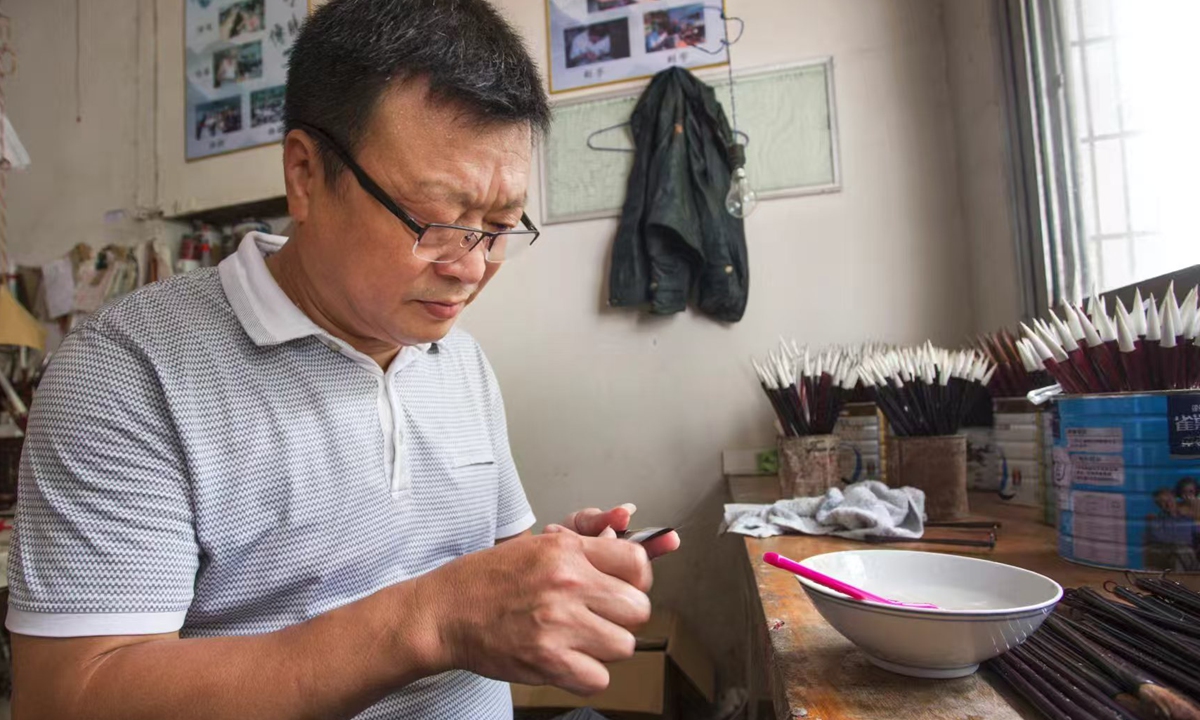
Craftman Zhang Wennian Photo: Courtesy of Zhang Wennian
Unique waysThis spirit of carrying out work unseen is not the personal pursuit of one rural craftsman, but a shared skill among them. In the Linxia Hui autonomous prefecture, Northwest China's Gansu Province, Ma Junxiang is an inheritor of the local meal called the "Eight Bowls of Hezhou." Hezhou is what the autonomous prefecture was called in ancient times.
The eight-bowl meal includes classic dishes like the desert-like "eight-treasure rice" and "silver-ear fungus and pigeon egg soup."
Since the late Qing Dynasty (1644-1911), these eight dishes have been served at local weddings, funerals and banquets. Their recipes have never changed , but mastering them is another story. Consider the broth.
Ma said that a rich meat broth must look as clear as water, yet taste as complex and layered as ever. "The only way to keep people coming back is to take the inherited flavors to the extreme," Ma said.
Unlike Ma's pursuit of extreme perfection in tradition, Yang Wenyi, a rural craftsman in Southwest China's Sichuan Province, has chosen to reimagine tradition. Yang is an inheritor of "Xinjin Shengbian," a type of string knotting with a history of 4,500 years.
The craft is known for its more than 120 traditional knots, including the "Pipa button" knot. Yang told the Global Times that to memorize all these knots takes time, but he is more focused on "recombining them to create new designs."
Drawing on Sichuan's local cultural IPs, he has woven a fish head for a hotpot, lifelike giant pandas and even brought his works to the Chengdu Universiade, giving global youth a hands-on taste of traditional Chinese fun.
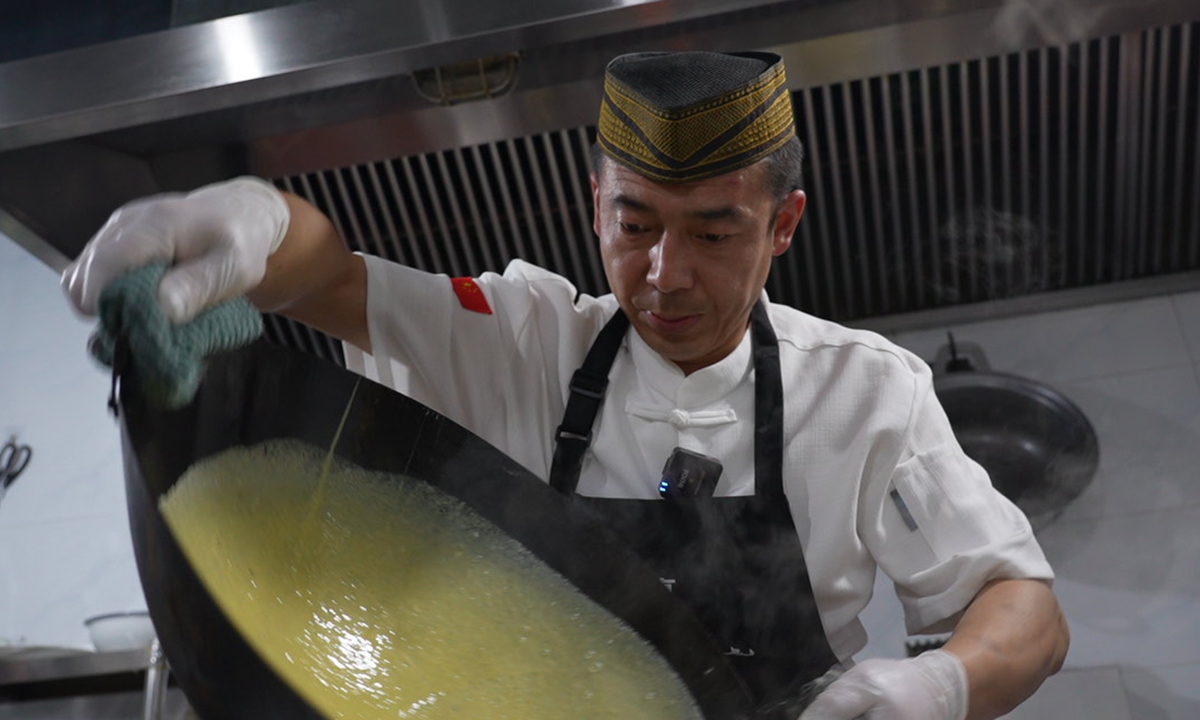
Craftman Ma Junxiang Photo: Courtesy of Ma Junxiang
Heritage's extra valueKeeping their creative spirit alive, Zhang, Yang and Ma have each found their own way to put their craft into more people's hands.
Anchored by Zhang's brush factory, a local industrial chain has emerged, supplying packaging and raw materials such as animal hair.
Farmers have taken up side work by providing him with wool, and those who once left their homes for employment elsewhere have now returned, taking on orders for the factory's brush packaging.
Over the past years, Yang has taken his string knots as far as Monaco and South Korea. Back home, he made it a flagship project that put Anxi Village on the local tourism map, bringing in other heritage craftsmen such as wood carvers to settle there.
There was a time when the village didn't even have a proper connecting road or reliable gas stations, and young folks had to leave to find work. Not anymore.
"Pairing tradition with tourism has given villagers side jobs - restaurants, homestays, coffee shops. And the women around here have become the backbone of making our string knots," Yang said.
RELATED ARTICLES