ARTS / BOOKS
How reading shaped a deliveryman’s life, inside and out
Editor's Note:
In an age of information overload, reading remains a necessary channel to invigorate the mind, provide inspiration and cultivate virtue. Whether it is childhood enlightenment or the pursuits of adulthood, everyone's reading journey carries unique emotions and life experiences. The Global Times has specially launched the "100 Avid Readers" series, inviting guests from various fields to share their connections with books, stories of growth and sparks of thought.
In this fifth installment, we meet a deliveryman-author. For him, books have not only nourished his mind but also inspired his signature work. Reading has become inseparable from who he is.
By day, Zhang Sai weaves through the crowded streets of Wuhan, the capital of Central China's Hubei Province, delivering food from restaurants to apartments. By night, after hours of cycling and climbing stairs, he retreats into a quieter world of books and writing, preparing for his second personal book.
At 39, Zhang has held a string of jobs, including factory worker, security guard, courier, and deliveryman, but one thing has remained constant: his love of reading.
"Reading is like a window," Zhang told the Global Times in an interview on Wednesday.
"It lets me see a wider world and enriches my inner life."
For him, books have not only nourished his mind but also inspired his signature work. Reading has become inseparable from who he is.
Between work and words
Born in a rural village in Zhumadian, Central China's Henan Province, Zhang's reading habit started early.
His mother kept a cabinet of classic Chinese literature, from Dream of the Red Chamber to the works of Zhuangzi.
In an era before television reached most homes, books became his greatest source of entertainment and education.
By the age of 16, Zhang left home for Guangdong to work in factories, carrying with him a single book: Fortress Besieged by Qian Zhongshu.
He recalls the novel's clever metaphors, wordplay, and humor as leaving a lasting impression on his imagination, lessons that would later influence his own writing.
Even in the demanding environment of factory life, Zhang maintained his reading habit.
As an introvert who doesn't like social gatherings, books became his "refuge."
His dedication was sometimes met with skepticism; co-workers wondered why a laborer would read classics like Madame Bovary or Boule de Suif.
But he remained undeterred.
He would walk five kilometers to a library after night shifts, carrying two buns for sustenance along the way.
After borrowing books, he would return to the factory, fall asleep immediately, and wake with the comfort of a book in hand.
Over the years, half his luggage was filled with books, the other half with clothes.
Zhang's reading tastes are broad. He devours the works of Chinese poets Zhu Shuzhen and Li Qingzhao, the US poet Emily Dickinson, and British novelist Virginia Woolf.
But Eileen Chang holds a special place in his heart.
Even after switching to courier and delivery work, he kept a copy of Chang's Little Reunions on his pillow.
From reading to writing
Reading didn't just shape Zhang's imagination; it influenced his life path.
According to Zhang, his interest in writing began in school.
"I started with classical literature. In elementary school, I was drawn to poetry," he told the Global Times.
"Sometimes I would take the poems in my textbooks, keep the original rhyme, but change the content. That was my first attempt at creating something of my own."
It wasn't until he graduated from middle school and went to work in a factory that he began writing seriously.
At the time, the rise of Han Han - the high school dropout who became a famous writer - was a huge inspiration for him.
"Seeing someone my age achieve that made me think I could have a dream of becoming a writer too," Zhang said.
He began with daily journal writing as a way to practice his craft.
"I wanted to write a great work, something like Fortress Besieged - a fun, fictional story, maybe even a martial arts novel. That was my goal."
In fall 2021, a leg injury forced him to pause his delivery work.
He returned to a factory and began documenting the experience in Dreaming Beyond the Factory, a non-fiction work capturing three years of labor, the challenges of failed worker interviews, and long-distance parenting.
The book was published in August 2025 by Shanghai Translation Publishing House in collaboration with One-Way Street Magazine.
After publishing his book, Zhang's material life hasn't changed much, but he feels more motivated to keep writing.
Zhang said he plans not only to earn enough to pay off his mortgage but also to push his writing to new heights in the future.
He returned to Wuhan's streets, delivering food once again.
Yet he continues to write, this time exploring experiences beyond factory life.
His reading habit remains unchanged, and his nightly routine includes poring over literature and jotting down notes for his next project.
At home in Henan, his two children are growing up surrounded by books, just as he did.
Zhang does not impose reading rules but creates an environment rich in literature, allowing his children to develop a natural interest.
"I never tell them what to read," he said. "I just want them to enjoy it as I did."
"Reading has become part of my life," Zhang said. "Even now, delivering food and writing, books are still at the center of everything I do."
In an age of information overload, reading remains a necessary channel to invigorate the mind, provide inspiration and cultivate virtue. Whether it is childhood enlightenment or the pursuits of adulthood, everyone's reading journey carries unique emotions and life experiences. The Global Times has specially launched the "100 Avid Readers" series, inviting guests from various fields to share their connections with books, stories of growth and sparks of thought.
In this fifth installment, we meet a deliveryman-author. For him, books have not only nourished his mind but also inspired his signature work. Reading has become inseparable from who he is.
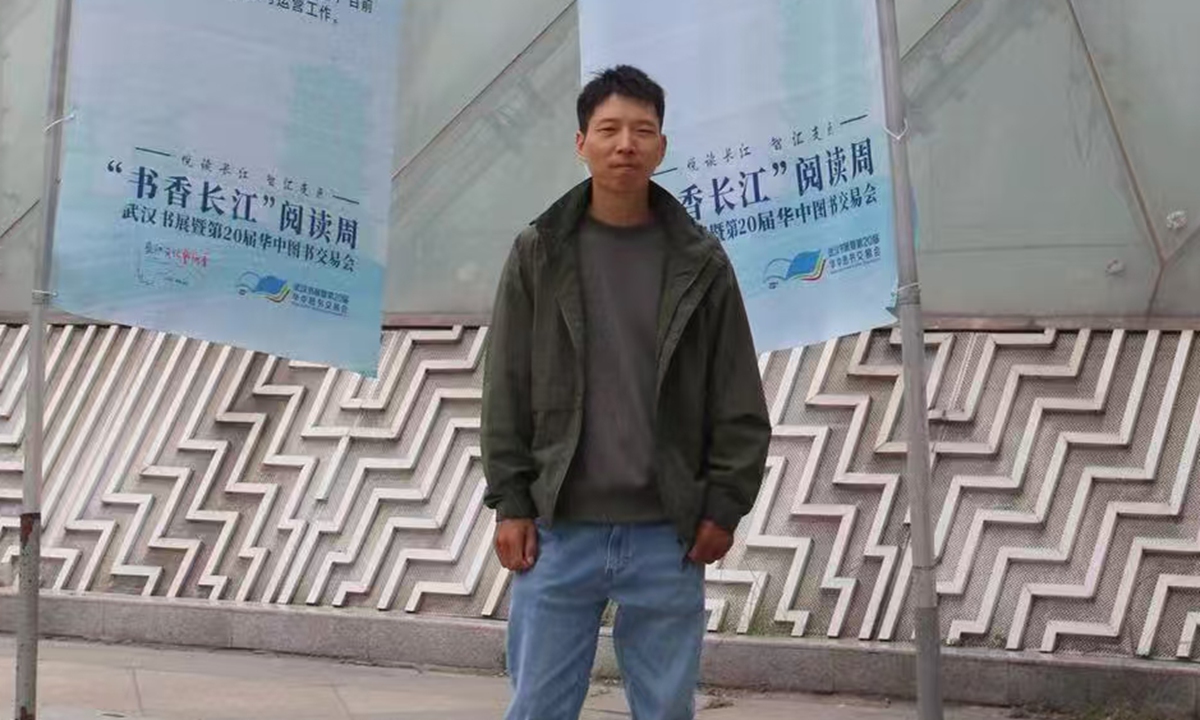
Zhang Sai attends a reading promotional event in Wuhan, Central China's Hubei Province in September 2025. Photo: Courtesy of Zhang Sai
By day, Zhang Sai weaves through the crowded streets of Wuhan, the capital of Central China's Hubei Province, delivering food from restaurants to apartments. By night, after hours of cycling and climbing stairs, he retreats into a quieter world of books and writing, preparing for his second personal book.
At 39, Zhang has held a string of jobs, including factory worker, security guard, courier, and deliveryman, but one thing has remained constant: his love of reading.
"Reading is like a window," Zhang told the Global Times in an interview on Wednesday.
"It lets me see a wider world and enriches my inner life."
For him, books have not only nourished his mind but also inspired his signature work. Reading has become inseparable from who he is.
Between work and words
Born in a rural village in Zhumadian, Central China's Henan Province, Zhang's reading habit started early.
His mother kept a cabinet of classic Chinese literature, from Dream of the Red Chamber to the works of Zhuangzi.
In an era before television reached most homes, books became his greatest source of entertainment and education.
By the age of 16, Zhang left home for Guangdong to work in factories, carrying with him a single book: Fortress Besieged by Qian Zhongshu.
He recalls the novel's clever metaphors, wordplay, and humor as leaving a lasting impression on his imagination, lessons that would later influence his own writing.
Even in the demanding environment of factory life, Zhang maintained his reading habit.
As an introvert who doesn't like social gatherings, books became his "refuge."
His dedication was sometimes met with skepticism; co-workers wondered why a laborer would read classics like Madame Bovary or Boule de Suif.
But he remained undeterred.
He would walk five kilometers to a library after night shifts, carrying two buns for sustenance along the way.
After borrowing books, he would return to the factory, fall asleep immediately, and wake with the comfort of a book in hand.
Over the years, half his luggage was filled with books, the other half with clothes.
Zhang's reading tastes are broad. He devours the works of Chinese poets Zhu Shuzhen and Li Qingzhao, the US poet Emily Dickinson, and British novelist Virginia Woolf.
But Eileen Chang holds a special place in his heart.
Even after switching to courier and delivery work, he kept a copy of Chang's Little Reunions on his pillow.
From reading to writing
Reading didn't just shape Zhang's imagination; it influenced his life path.
According to Zhang, his interest in writing began in school.
"I started with classical literature. In elementary school, I was drawn to poetry," he told the Global Times.
"Sometimes I would take the poems in my textbooks, keep the original rhyme, but change the content. That was my first attempt at creating something of my own."
It wasn't until he graduated from middle school and went to work in a factory that he began writing seriously.
At the time, the rise of Han Han - the high school dropout who became a famous writer - was a huge inspiration for him.
"Seeing someone my age achieve that made me think I could have a dream of becoming a writer too," Zhang said.
He began with daily journal writing as a way to practice his craft.
"I wanted to write a great work, something like Fortress Besieged - a fun, fictional story, maybe even a martial arts novel. That was my goal."
In fall 2021, a leg injury forced him to pause his delivery work.
He returned to a factory and began documenting the experience in Dreaming Beyond the Factory, a non-fiction work capturing three years of labor, the challenges of failed worker interviews, and long-distance parenting.
The book was published in August 2025 by Shanghai Translation Publishing House in collaboration with One-Way Street Magazine.
After publishing his book, Zhang's material life hasn't changed much, but he feels more motivated to keep writing.
Zhang said he plans not only to earn enough to pay off his mortgage but also to push his writing to new heights in the future.
He returned to Wuhan's streets, delivering food once again.
Yet he continues to write, this time exploring experiences beyond factory life.
His reading habit remains unchanged, and his nightly routine includes poring over literature and jotting down notes for his next project.
At home in Henan, his two children are growing up surrounded by books, just as he did.
Zhang does not impose reading rules but creates an environment rich in literature, allowing his children to develop a natural interest.
"I never tell them what to read," he said. "I just want them to enjoy it as I did."
"Reading has become part of my life," Zhang said. "Even now, delivering food and writing, books are still at the center of everything I do."
RELATED ARTICLES