ARTS / CULTURE & LEISURE
Chinese online literature ‘an important pillar of new forms of literature and art for the general public’: report
‘An important pillar of new forms of literature and art for the general public’
By Published: Apr 13, 2026 11:15 PM


Photo: VCG
China's online literature has achieved a historic leap, emerging as a vital engine of cultural innovation and global outreach, according to the Report on the Development of Chinese Online Literature 2025 released on Monday by the Chinese Academy of Social Sciences (CASS).The report explicitly positions online literature as "an important pillar of new forms of literature and art for the general public," underscoring its deepening integration into the national cultural strategy during the 14th Five-Year Plan (2021-25) period. It is now set to be formally incorporated into the country's overall cultural development blueprint for the 15th Five-Year Plan (2026-30) for national economic and social development.
The numbers tell a story of explosive growth. By the end of 2025, China's network literature reading market reached 50.21 billion yuan ($7.35 billion), a year-on-year increase of 16.6 percent. Even more striking is the intellectual property adaptation sector, which ballooned to 367.6 billion yuan, up 23.13 percent from the previous year. These figures reflect not only commercial success but also a maturing industry that is producing works of genuine artistic and social value.
"2025 marked a new milestone for network literature on the path of premiumization," said Tang Qiao, deputy director of the Online Literature Research Office at CASS' Institute of Literature, at a press conference to announce the report in Beijing on Monday. "It has taken significant steps forward in both artistic quality and societal recognition."
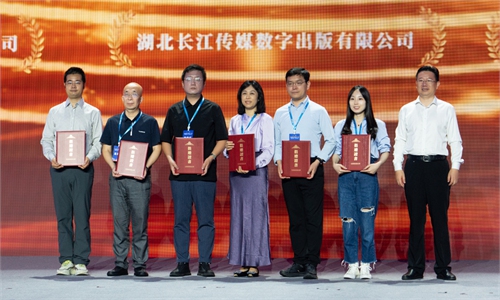
Nowhere was this more evident than in national awards. During the sixth China Publishing Government Awards, the highest honor in the country's publishing sector, two web novels, Binjiang Police Affairs and When Will You Request the Long Tassels, claimed the Online Publication Award. Since Great Power, Heavy Industry became the first online work to win the prize in 2021, such breakthroughs have become a powerful validation of the industry's premiumization drive, the report notes.
What makes online literature uniquely powerful is its inclusivity. On online literature platforms, more than 470 scientific researchers have infused rigorous academic thinking into narrative structures; over 3,100 university teachers seamlessly switch between scholarly writing and fiction; 6,100 delivery riders channel the raw energy of everyday life onto the page; and more than 4,000 ride-hailing drivers, freight haulers, and substitute drivers bring the rhythms of the road into virtual worlds. "The comprehensive expansion of the creator base and the high degree of professional diversification allow online literature to truly take root in real life and stay close to the masses," Tang told the Global Times.
Beyond domestic resonance, Chinese network literature is rewriting the rules of global cultural exchange. Overseas, the original creator community now exceeds 1.3 million people, producing more than 2 million works across 15 major genres, from fantasy and romance to science fiction and suspense. Overseas revenue hit 5.64 billion yuan in 2025, up 11.2 percent, while nearly 200 million active users across more than 200 countries and regions consume Chinese stories daily.
The brightest star in 2025's "going global" narrative was Latin America. Among the top 10 countries by monthly active user growth on platform WebNovel, nine were Latin American nations. Brazil led the charge with a staggering 779 percent surge in monthly active users, vaulting its user traffic five places to claim a spot alongside the US and India in the global top three.
"This rise is not an isolated industry phenomenon but is deeply embedded in the broader context of increasingly close exchanges between China and Latin America," the report states.
Meng Xiayun, director of the Center for Spanish-Speaking Countries Studies at China Foreign Affairs University, told the Global Times that "people in Latin American countries are more willing to believe and trust China's narrative. Seeing how well China is developing now, they are more convinced that the China model is worth learning from, and therefore they seek to understand China from various aspects. Online literature is one of these ways."
In 2025, online literature joined online dramas and online games as part of the "new trio of Chinese cultural exports."
Sun Jiashan, a research fellow from the Department of Chinese Culture Teaching and Research at the Central Institute of Socialism, told the Global Times that these digital products represent a new stage of the cultural industry: works that are high-frequency, lightweight, and deeply embedded in daily life.
"Unlike past cultural exchanges confined to specific settings, today's content seamlessly enters the everyday entertainment routines of ordinary people overseas," Sun explained.
China has moved from broad "displaying China" campaigns to precise, region-specific strategies, Sun said. Games and short dramas, for instance, are tailored differently for markets in the Middle East, Southeast Asia, and South America, marking the arrival of a refined, localized operational phase.
"Chinese cultural products are transitioning from merely showing China to truly entering local scenes and daily lives," Sun added.
RELATED ARTICLES