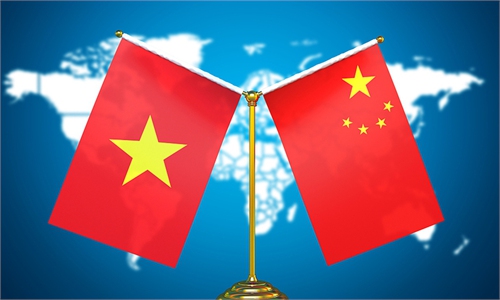
A new chapter expected in building a China-Vietnam community with a shared future: Global Times editorial
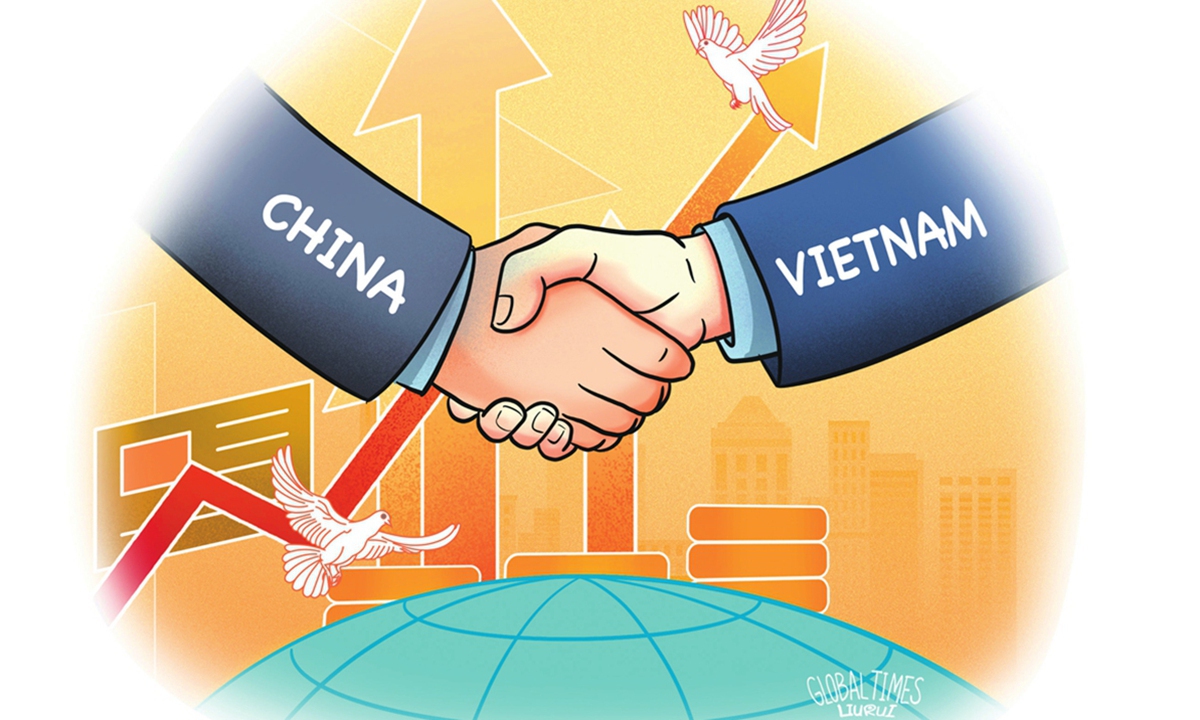
Illustration: Liu Rui/GT
At the invitation of General Secretary of the Communist Party of China (CPC) Central Committee and Chinese President Xi Jinping, General Secretary of the Communist Party of Vietnam (CPV) Central Committee and Vietnamese President To Lam will pay a state visit to China from Tuesday to Friday. This marks the third exchange of visits between the top leaders of the two parties and two countries in less than two years. This year also marks the beginning of China's 15th Five-Year Plan (2026-30) and the implementation of the Resolution of the CPV's 14th National Party Congress. The Vietnam News Agency noted that bilateral relations are "entering an unprecedented period of historic opportunity." There is growing expectation that, under the strategic guidance of the top leaders of the two parties and countries, China-Vietnam comprehensive strategic cooperation will advance to a higher quality and deeper level, and that both sides will accelerate the building of a China-Vietnam community with a shared future that carries strategic significance, injecting stronger momentum into regional stability and development.
The strategic guidance of the top leaders of the two parties and countries is the biggest advantage of and the most important political guarantee for the development of China-Vietnam relations. Observers have noted that General Secretary To Lam was elected President of Vietnam on April 7 and announced his visit to China on April 9. In addition, after assuming the position of General Secretary of the CPV in 2024, his first overseas visit was also to China. This fully reflects the strategic nature and high level of China-Vietnam relations. Under high-level strategic guidance, the two parties and countries have established a comprehensive, multi-tiered and multidimensional framework for dialogue and cooperation. A series of institutional arrangements ensures that both sides can conduct timely, in-depth and effective communication and coordination on issues concerning each other's core interests and major concerns.
Since the announcement of the building of China-Vietnam community with a shared future that carries strategic significance in December 2023, bilateral relations have entered a new stage marked by stronger political mutual trust, more substantive security cooperation, deeper practical collaboration, a firmer public foundation, closer multilateral coordination, and more effective management of differences. Comprehensive strategic cooperation has delivered substantial results. From Chinese photovoltaic and new energy equipment supporting Vietnam's green transition, to high-quality Vietnamese agricultural products steadily entering the Chinese market; from smart ports improving customs efficiency, to cross-border economic cooperation zones unleashing development vitality, China and Vietnam have achieved robust growth in fields such as trade, investment, and tourism.
Under the guidance of the China-Vietnam Steering Committee for Bilateral Cooperation, mutually beneficial collaboration in emerging sectors such as new energy and artificial intelligence has continued to deepen. The "China-Vietnam community with a shared future" has brought tangible benefits to the peoples of both countries.
Not long ago, the first ministerial meeting of the China-Vietnam "3+3" strategic dialogue on diplomacy, defense and public security was successfully held. This institutional innovation signals an upgrade in strategic mutual trust and sends a clear message of the two countries working together to safeguard political system security and pursue national development and rejuvenation. Facts have repeatedly shown that building China-Vietnam community with a shared future that carries strategic significance serves the common interests of both sides and contributes to regional and global peace, stability, and prosperity.
Building a China-Vietnam community with a shared future carries important international significance. As China and Vietnam, with a combined population of over 1.5 billion, advance toward modernization, they offer valuable reference for other developing countries and emerging economies pursuing similar goals. Meanwhile, the steady expansion of exchanges across political, economic, and cultural domains has strengthened both countries' role in global governance and regional stability. In international stage, both sides stress the importance of safeguarding peace and security in the Asia-Pacific, insist on practicing open regionalism, and will continue to strengthen coordination within multilateral frameworks such as the United Nations, APEC, the Asia-Europe Meeting, and ASEAN, while working together under key initiatives including the building of a community with a shared future for humanity, the Global Development Initiative, the Global Security Initiative, and the Global Civilization Initiative. This coordinated multilateral effort not only enhances their international influence, but also provides broader space for advancing the China-Vietnam community with a shared future.
"China is ready to better align its development with that of its neighbors, and work with them together to build a community with a shared future and deliver a better life to all." The building of a China-Vietnam community with a shared future is also a reflection of the overall relationship between China and its neighboring countries. The China-Vietnam relationship continues to achieve leapfrog development, and bilateral strategic mutual trust is deepening. China's relations with its neighbors are at their best level in modern times. This is both a result of China's practice of the principles of amity, sincerity, mutual benefit and inclusiveness, as well as the guidelines of developing friendship and partnership with our neighbors. It also lays a solid foundation for further deepening cooperation with neighboring countries and building a community with a shared future with neighboring countries.
Unlike many major powers in history, China has taken a completely new approach to engaging with its neighbors. The fundamental reason is that China will never take the beaten path of seeking hegemony as its strength grows, but instead consistently adheres to the original aspiration of building a community with a shared future in its dealings with neighboring countries. As a result, it has gained widespread trust and respect from them.
Currently, China is endeavoring to build itself into a stronger country and rejuvenate the Chinese nation on all fronts by pursuing Chinese modernization. Vietnam is about to embark on a new era of national development, moving toward the "two centenary goals" of building the party and the country. From the traditional friendship of "comrades and brothers" to the contemporary positioning of "a community with a shared future that carries strategic significance," China-Vietnam relations are standing at a new historical starting point. We welcome General Secretary To Lam's visit to China and look forward to the new chapter in the building of the China-Vietnam community with a shared future, which will bring tangible benefits to the peoples of both countries and inject positive energy into the region and the world.
RELATED ARTICLES