ARTS / CULTURE & LEISURE
Lost for 1,800 years, Qi version of Confucian ‘Analects’ unveiled to public
By Published: Apr 15, 2026 10:48 PM

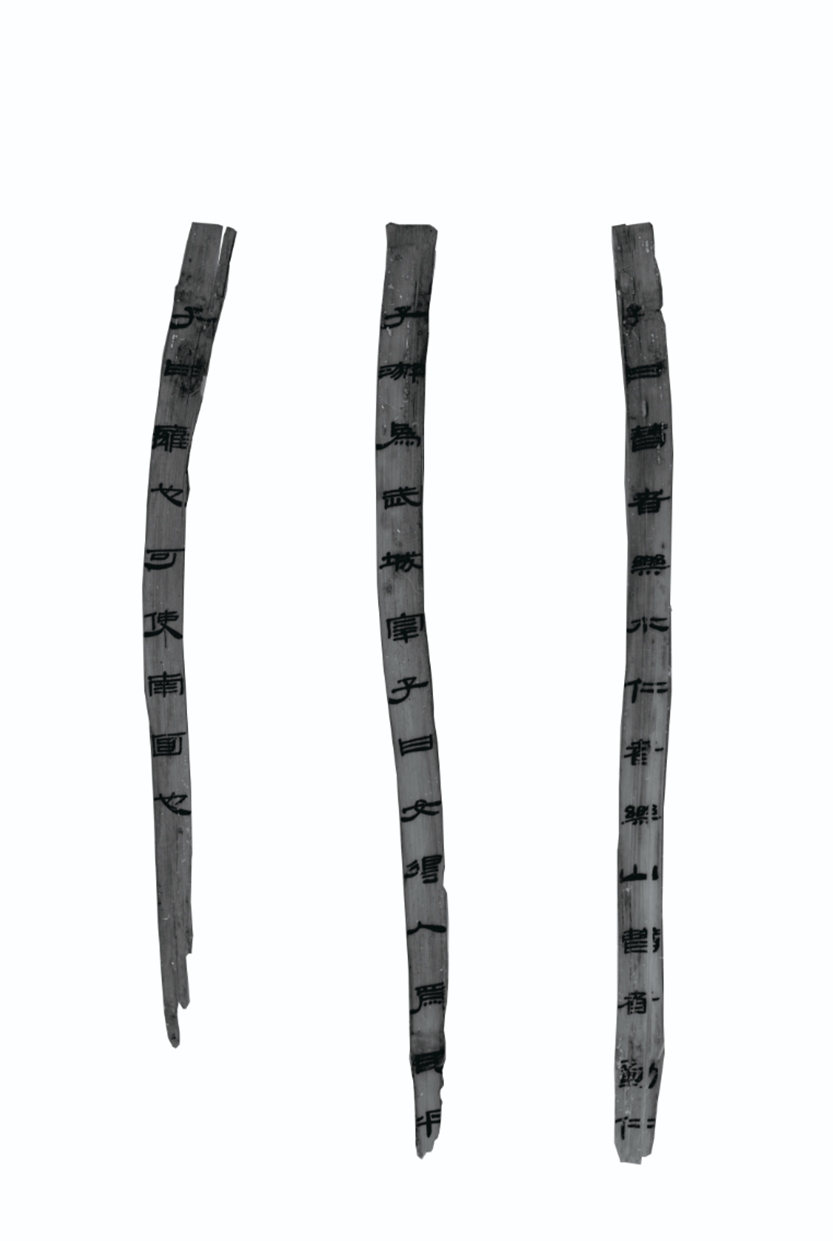
Photo: Courtesy of Yang Jun
Bamboo slips containing the long-lost chapter of The Analects of Confucius, the Qi version's "Zhi Dao" (lit. knowing the way), missing for more than 1,800 years, were unveiled to the public for the first time at the Nanchang Relic Museum for the Haihun Principality of the Han Dynasty (206BC-AD220) on Wednesday. The relics fill a major void in the textual history of one of China's most influential philosophical works, according to a press release the museum sent to the Global Times on Wednesday.The exhibit opened as part of a major renewal of the museum's "scholarly splendors of Haihun" hall. More than 100 newly restored bamboo and wooden slips, tablets, labels and seals are on show for the first time since the Haihunhou excavation, covering classics, philosophy, poetry, mathematics, medicine and divination. Among them, the bamboo slips with the Qi version of The Analects have drawn the most intense scholarly interest.
"The text of the bamboo slips closely matches the characteristics of the lost Qi version of The Analects, which vanished from circulation after the Han and Wei (220-265) dynasties," Yang Jun, lead archaeologist of the Haihunhou tomb excavation, told the Global Times on Wednesday.
"The discovery of the Qi Analects in Liu He's tomb is of immense value for understanding the evolution of Confucian thought and the intellectual history of the Western Han Dynasty (206BC-AD25)," Yang added.
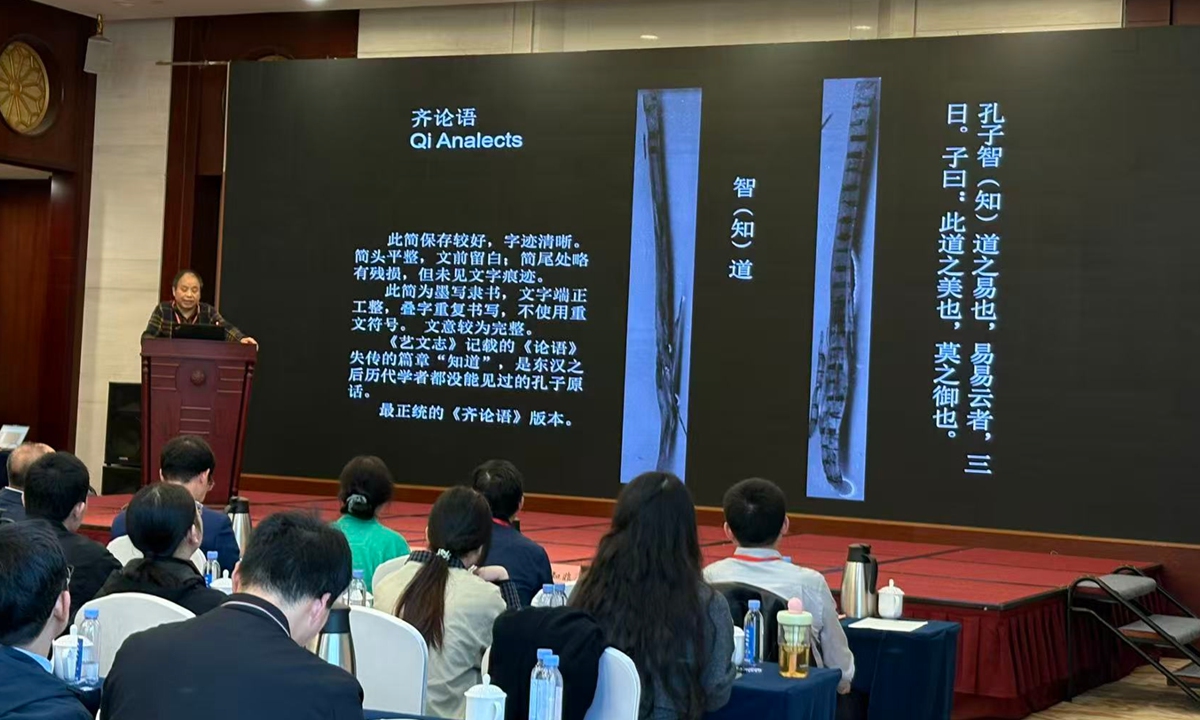
Photo: Courtesy of Yang Jun
The famous tomb, excavated in 2011, belonged to Liu He, a deposed emperor of the Western Han Dynasty who was granted the title Marquis of Haihun (Haihunhou).More than 500 slips recording The Analects were recovered from an archival library in the tomb's western annex.
Bound by three cords, each slip is 25.8 centimeters long and 0.9 centimeters wide. Intact slips hold roughly 24 characters. The calligraphy is uniform without shorthand marks or punctuation, the document noted.
About one-third of the transmitted Analects text is readable on these slips, including the newly recovered "Zhi Dao." Each chapter forms an independent scroll, with titles inscribed on the back of the first slip.
"During the Han Dynasty, there were three main versions of The Analects: the Lu, the Qi and the Ancient Script versions. The Qi version, transmitted by Confucian scholars in the Qi state, contained two extra chapters compared to the other versions. But it was lost by the Han-Wei period," Yang said.
Yang further explained that the standard Analects seen today were compiled by the late Western Han official Zhang Yu, who primarily followed the Lu version while incorporating some elements from the Qi version.
The Eastern Han scholar Zheng Xuan later produced his annotated Analects using Zhang's text, cross-referenced with the Qi and Ancient Script versions. By that time, the Qi original was already fading.
The first clue came during initial infrared scanning of the slips in the conservation lab after the excavation in 2015, when researchers spotted a slip bearing the chapter title "Zhi Dao" on its back.
"We immediately realized this could be the lost Qi version," Yang said. "This is a passage that no scholar since the Eastern Han had ever seen - Confucius's own words, lost for eighteen centuries."
According to Yang, the find sent ripples through Western academia and even entered middle-school history textbooks in China in 2026.
With over 5,000 slips unearthed, the tomb of the Marquis of Haihun has yielded the first large-scale collection of such artifacts in Jiangxi's archaeological history. This exhibition, the first large-scale display of the original slips since the tomb's excavation, offers a rare window into the education system, ritual beliefs and cultural prosperity of the Western Han Dynasty, said Yang.
RELATED ARTICLES